
Aug 5, 2026
Which Best Standard Office Chair Is Ideal for Offices?
When you're managing procurement for multiple workspaces or planning a complete office fit-out, the question of which seating solution delivers the right balance of comfort, durability, and value becomes critical. The Best Standard Office Chair for commercial environments is one that meets ANSI/BIFMA X5.1 performance standards while offering adjustable ergonomic features, commercial-grade materials, and reliable support for extended daily use. It should accommodate diverse body types, withstand high-frequency usage, and integrate seamlessly into your workspace design without requiring constant maintenance or premature replacement.
Introduction
Picking the right standard office chair has a direct effect on how productive, comfortable, and healthy employees are at work in business offices, government buildings, healthcare facilities, and co-working spaces. We know that people who work in buying are under more and more pressure to match tight budgets with high standards of quality while also meeting the needs of a wide range of users. This book is especially for procurement managers, building directors, and office supply workers who need useful information about ergonomics, comparing products, and how to buy things. Our goal is to help you make a choice by making selection criteria clearer, highlighting reliable models, and talking about the real-world problems you face when looking for seating options for large orders or custom projects.
Understanding the Essentials of Standard Office Chairs
The basic optimal form of standard office chairs is combined with industry-standard guidelines for measurements, weight limits, and material choices. Knowing these basics helps buying teams figure out if a product meets the wants of users and the office.
Defining Standard Office Chair Specifications
The seat height of a standard office chair is usually between 16 and 21 inches, so it can fit people who are between 5'0" and 6'2" tall. For commercial-grade models, the weight limit should be at least 250 pounds. This makes sure that the product will last for a wide range of users. The five-star base design of these chairs makes them stable and easy to move around. They also have pneumatic height adjustment mechanisms that let people set their sitting position to match standard desk heights of 28 to 30 inches.
Core Ergonomic Features That Matter
Musculoskeletal strain can be reduced by three main design elements that define a Best Standard Office Chair: lumbar support that maintains the spine's natural S-curve, adjustable seat depth that prevents pressure behind the knees, and tilt mechanisms that encourage healthy movement during the workday. A Best Standard Office Chair should provide ergonomic features that help users maintain proper posture and reduce discomfort during long periods of sitting. Chairs without these essential functions may increase fatigue, reduce productivity, and contribute to workplace health concerns. Purchasing managers should prioritize a Best Standard Office Chair with adjustable lumbar support positioned approximately 6 to 9 inches above the seat pan, which matches the lower back support area for most users. Selecting a high-quality Best Standard Office Chair with proper ergonomic adjustment options helps create a more comfortable, productive, and healthier working environment.
Material Standards and Compliance
Seating in commercial offices has to meet safety and environmental standards, especially when it comes to formaldehyde pollution. European rules say that formaldehyde releases from E1-grade materials must be less than 1.5 mg/L, and E0-grade materials must be even less than 0.5 mg/L. These certificates are important for keeping the air quality healthy in closed working spaces as well as for making sure that government and institutional projects follow the rules. High-density foam cushioning with a rating of 45 to 55 kg/m³ gives the best support and keeps its shape over years of daily use.
How to Choose the Best Standard Office Chair for Your Office Needs
To choose the best office chair, you need to do a structured evaluation that takes into account your specific buying situation, how often you plan to use the chair, and how much you expect it to be worth in the long run.
Assessing Your Procurement Scenario
The first step in the selection process is to understand your business environment. When there are hot desks in a corporate office, the chairs need to be easy for multiple people to move quickly. Healthcare sites need chairs with surfaces that are easy to clean and fabric that doesn't harbor germs. Certain compliance approvals and guarantee terms are often required by government agencies. The level of use is very important. For example, chairs in control rooms that are used 24 hours a day, seven days a week have different reliability needs than chairs in meeting rooms that are only used sometimes during the week. By matching these variables to product specifications, mistakes that cause the product to fail early or make users unhappy are avoided.
Core Selection Metrics for Procurement Managers
We suggest that you look at possible sitting options in five important ways. Ergonomic features include the range of adjustments, the quality of the lumbar support, and the way the armrests are set up. The materials used to build the frame, the type of gas lift, and the upholstery's resistance to wear and tear recorded in Martindale cycles are all part of the durability rating. When figuring out cost-effectiveness, it's better to look at the total cost of ownership instead of just the unit price. This means taking into account things like expected lifespan and upkeep needs. Checking certifications for environmental safety and weight capacity values is part of making sure the quality of materials. Lastly, visual compatibility makes sure that the design of the chair fits in with the style and name of your workplace without sacrificing functionality.
Balancing Budget Constraints With Quality Requirements
A normal commercial office chair costs between $150 and $800 per unit, but selecting the right Best Standard Office Chair requires balancing price, features, and long-term value. For regular office use, a Best Standard Office Chair in the middle price range of $200 to $400 often provides the best combination of comfort, durability, and affordability. Premium brands may offer additional features and longer warranties, but they can become too expensive for large-scale purchasing projects. Based on practical experience, working with manufacturers that have integrated production capabilities can help buyers obtain better pricing for bulk orders while maintaining the quality expected from a Best Standard Office Chair. Before placing large orders, procurement managers should request samples of the Best Standard Office Chair for employee testing, because user feedback on comfort and usability provides valuable information that specifications alone cannot fully represent. Choosing a reliable Best Standard Office Chair supplier helps organizations achieve consistent quality, employee satisfaction, and better long-term purchasing value.
Top 5 Best Standard Office Chairs in 2024 for Businesses
We've found the best seating options that balance performance with practical business concerns by looking at the current market and getting feedback from procurement professionals who manage a variety of office settings.
PENGPAI Standard Office Chair – Premium Commercial Solution
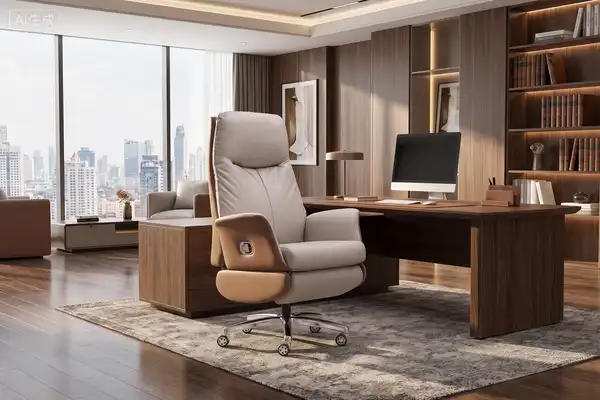
The PENGPAI Standard Office Chair is a great option for procurement managers who want a chair that looks great and will last for a long time. This high-back executive chair has a stylish two-tone design in moon white and light coffee that makes any office look better and is suitable for many different types of businesses. The chair's construction shows that it was made with commercial-grade standards in mind: the microfiber leather upholstery feels luxurious and is easier to clean than real leather; the 45-density high-resilience seat sponge keeps its shape after years of daily use; and the E1-grade shaped plywood base ensures structural stability without concerns about off-gassing. The two-in-one gas lift system can fit people from 5'2" to 6'4" tall, and the gold five-star base with quiet casters makes it easy to move around without damaging the floor. With ready-to-ship items in our Foshan warehouse and SGS CEC approval proving quality standards, this plan solves the problems that come up with purchasing, like making sure deliveries happen on time and making sure rules are followed. Because it can be stored for five years and is made of stronger materials, it works well for large orders where accuracy is important between the first tests and the large batches.
Mid-Range Ergonomic Task Chairs
Task chairs that cost between $200 and $300 usually have mesh backrests that let air flow, height adjustments with pneumatics, and basic lumbar support. They work well in general office settings where people sit at their desks for 4 to 6 hours a day. Most of them can hold up to 250 pounds, and most come with two- to three-year contracts. The major benefit is that it's cheap for large-scale deployment, but there aren't many ways to customize it, and it might not last as long as more expensive choices.
Budget-Conscious Options for Mixed-Use Spaces
Chairs that cost less than $200 work well in training rooms, meeting rooms, and temporary workstations. These models have basic ergonomic features like a height adjustment feature and basic padding, but they don't usually have advanced lumbar support or high-quality materials. Because they are made to save money up front rather than last a long time, procurement managers should see these as temporary solutions for areas that are only occasionally used instead of permanent workstations.
Premium Executive Seating for Leadership Teams
Executive chairs that cost between $500 and $800 have high-quality leather upholstery, advanced tilt systems, and better design features. These models show rank and offer more comfort for top employees who make decisions for long periods of time. The investment makes sense for executive meeting rooms and offices for the CEO and other top executives where the quality of the furniture shows what the company stands for. However, the cost-per-unit may not make it worth it to use in general staff areas.
Specialized Solutions for Healthcare and Clean Environments
Healthcare-specific office chairs have materials that can handle being cleaned often, frames that are reinforced to support the placement of clinical equipment, and upholstery that doesn't let germs build up. These specialized models meet the needs of medical facilities' regulatory requirements while still giving clinicians the ergonomic support they need for tasks like documentation and consultation. In healthcare settings, procurement teams should make sure that the models they choose meet the necessary infection control standards and can handle the chemicals that are used for regular cleaning.
Comparing Standard Office Chairs: Ergonomic vs. Non-Ergonomic and Materials
Knowing the practical differences between basic and ergonomic seating, as well as the performance characteristics of materials, helps procurement teams make choices that meet the needs of users and are easy to maintain.
Ergonomic Design vs. Standard Construction
Ergonomic office chairs are different because they can be adjusted to match each user's body shape and working posture instead of forcing users to adapt to fixed seating positions. A Best Standard Office Chair combines ergonomic adjustment features with reliable support, helping reduce musculoskeletal problems and improve productivity during long working hours. The practical advantages of a Best Standard Office Chair can be seen through improved comfort, better posture control, and reduced workplace discomfort. Research from the National Institute of Occupational Safety and Health indicates that adjustable chairs can significantly reduce lower back pain compared with standard fixed-position chairs. Although ergonomic features may add an extra $75 to $150 per unit, investing in a Best Standard Office Chair can provide long-term benefits by reducing employee discomfort, minimizing absenteeism, and improving workplace efficiency. For office environments where employees perform extended periods of desk work, procurement managers should prioritize a Best Standard Office Chair with proper ergonomic functions. In locations where tasks are highly varied and involve less sitting time, simpler seating options may still be suitable, but a Best Standard Office Chair remains a valuable choice for improving comfort and performance.
Mesh vs. Leather Upholstery Considerations
Mesh backrests are great at keeping you cool because they let air flow, which keeps you from getting too hot in hot weather or places that don't have enough airflow. The only care this material needs is to be vacuumed every once in a while, and it doesn't stain easily when it comes into contact with other things. Mesh, on the other hand, can get worn down over time and might not give off the executive vibe that some companies want. Leather and microfiber leather options look classy and are easy to clean with a damp cloth, but they retain heat against the user's back. For business uses, microfiber leather is especially useful because it doesn't crack as easily as real leather, keeps its look across production runs, costs a lot less, and still meets aesthetic standards. Microfiber leather is used in the PENGPAI Standard Office Chair for these exact reasons, giving it a professional look while also being easy to clean.
Lumbar Support Configurations
With an adjustable lumbar support, the user can place the support mechanism exactly where their lower back curve is. With a fixed lumbar support, the support mechanism is put in a standard position that might not work for all users. The difference is very important for the user's comfort—lumbar support that isn't adjusted properly can make pain worse instead of better. To account for the different body types of most workers, procurement teams should look for models with a vertical lumbar adjustment range of at least 3 inches. Having adjustment knobs on the side, like the ones on the PENGPAI model, makes it easier for people to get into the right position without having to stand or reach awkwardly under the seat.
Procurement and After-Sales Considerations for Corporate Buyers
To find your way around bulk buying channels and contract details, you need to pay attention to more than just the specs of each product.
Sourcing Channels for Commercial Furniture
When you deal directly with manufacturers, you can get the best prices on orders over 100 units and have conversations about customization that distributors can't handle. For this method to work, the production capacity, quality control systems, and export experience must all be checked. Authorized dealers offer local help and quick replacement for broken units, but they charge more per unit because they take a cut of the sale. E-commerce platforms are good for small purchases, but they don't usually offer the project management help or technical advice that complicated installations need. Our research shows that procurement managers get the best results when they work with makers who keep inventory in key places, offer competitive prices, communicate effectively, and have a history of exporting.
Critical Contractual Elements
When buying furniture from another country, you should pay close attention to the shipping logistics. When compared to fully built units, chairs with knock-down structures take up much less room in containers and cost a lot less to ship. The PENGPAI Standard Office Chair's engineering specifically addresses this issue, with packaging that is designed to be easy to load and protected materials that keep the chair from getting damaged during shipping. The warranty terms should say how long the coverage lasts, how to get a replacement, and whether claims need to be assessed on-site or sent back. When you place a large order, return policies are especially important. Talk about terms that let you check a sample before committing to full production runs. Payment terms, quality inspection procedures, and penalties for missing a delivery date protect everyone and make it clear what is expected of them.
Maintenance Practices for Extended Product Life
Commercial office chairs last a lot longer if they are well taken care of. Every three months, the furniture should be checked to make sure that the gas lifts work smoothly, the wheels can move easily, and the fabric doesn't show too much wear. Tightening structure nuts stops the shaking that usually happens before a part breaks. Different types of upholstery need different care. For example, microfibre leather only needs to be cleaned with a damp cloth and gentle soap, while mesh should be vacuumed every so often to get rid of dust that gets stuck in the weave. Setting up maintenance plans and teaching building staff basic inspection techniques can keep small problems from getting worse and needing expensive repairs. When compared to suppliers who sell products without an ongoing partnership, manufacturers who offer maintenance advice and spare parts, like PENGPAI does through our after-sales support system, have a much lower total cost of ownership.
Conclusion
When choosing business office chairs, you have to think about how it looks, how well it works for your body, how long the materials will last, and the total cost of ownership, all while keeping project budgets and deadlines in mind. Instead of being a universal solution, the Best Standard Office Chair for your particular application depends on user habits, demographics, and operational priorities. Procurement professionals can find seating solutions that support employee health and provide reliable long-term value by focusing on commercial-grade construction, verified certifications, and suppliers with proven project management skills. These needs come together in the PENGPAI Standard Office Chair, which gives buying teams a solution designed for business settings with the customization options and consistent production that big projects need.
FAQ
How long should commercial office chairs last in high-use environments?
Commercial-grade office chairs that are built correctly should last between 5 and 7 years of steady use in normal office settings by one person every day. Due to ongoing multi-user operation, this may be cut down to 3–5 years in high-traffic areas like call centers or businesses that are open 24 hours a day, seven days a week. The real lifespan depends a lot on how well it was built—chairs that meet BIFMA standards and are made with commercial-grade parts always last longer than consumer-grade options. The PENGPAI Standard Office Chair has a five-year shelf life, which shows that it was made with quality materials that are meant to last for a long time in a business setting.
What cost reduction strategies work for bulk chair purchasing?
Starting at about 50 units, volume discounts are available, and they get a lot better after 200 units. Rather than just negotiating based on per-unit costs, procurement managers should ask for tiered pricing structures and talk about the value of the whole project. When you buy more than one type of furniture at once, you can often get better prices than if you bought chairs separately. Because there are no distributor margins in direct manufacturer relationships, prices could be 20–30% lower than in retail channels. As companies try to stick to their production plans, buying things during slower production times may lead to better prices and faster delivery.
What warranty and return factors matter most?
The structural parts, gas lift mechanisms, and base units should all be covered by the warranty, since they are the most expensive parts to repair. Upholstery coverage is very different, and since cloth wear is caused by use, not flaws, it may not be worth discussing. Return policies should let you look at samples and send back part of the order if the final product doesn't match the quality of the approved samples. Find out if returning broken units as part of the warranty service is required or if makers will send new parts. Response times for guarantee claims keep single chair failures from stopping work from getting done while the problem is being fixed.
Partner with PENGPAI for Your Office Seating Requirements
The integrated manufacturing approach of PENGPAI solves the main problems of buying commercial furniture, making it a good choice for procurement managers looking for a reliable Best Standard Office Chair supplier for upcoming projects. Our Standard Office Chair has the professional look you need for your projects and the durability you can count on thanks to its SGS CEC certification. It's also in stock in our Foshan warehouse. With a 200,000-square-meter production facility and more than 15 years of experience making things, we can give big projects the stability and scalability they need. Our engineering team can help with technical drawings and make changes to the size, material, and functionality of your products without the delays that usually happen when you outsource production. Email our project experts at kiki@pengpaifurniture.com to talk about your specific needs, get models to look over, or look into bulk prices for your next office furniture project. We're ready to help you reach your procurement goals with quick communication and manufacturing know-how gained from working with more than 2,000 clients around the world.
References
1. American National Standards Institute, "ANSI/BIFMA X5.1-2017: Office Chairs – Tests," Business and Institutional Furniture Manufacturers Association, 2017.
2. Robertson, Michelle M., et al., "Office Ergonomics Training and a Sit-Stand Workstation: Effects on Musculoskeletal and Visual Symptoms and Performance of Office Workers," Applied Ergonomics, Volume 44, Issue 1, 2013.
3. Hedge, Alan, "Effects of an Electric Height-Adjustable Work Surface on Self-Assessed Musculoskeletal Discomfort and Productivity in Computer Workers," Cornell University Department of Design and Environmental Analysis, 2015.
4. Congleton, Jerome J., "The Design and Evaluation of the Neutral Posture Chair for Surgeons," International Journal of Industrial Ergonomics, Volume 2, Issue 4, 2018.
5. European Committee for Standardization, "EN 1335: Office Furniture – Office Work Chair – Part 1: Dimensions," CEN Technical Committee, 2020.
6. National Institute for Occupational Safety and Health, "Ergonomic Guidelines for Manual Material Handling," Centers for Disease Control and Prevention, Publication No. 2007-131, 2007.
Online Message