
Jul 29, 2026
What Features Should Buyers Look for in an Elegant Office Chair?
When selecting an Elegant Office Chair, buyers must evaluate structural integrity, ergonomic engineering, and material quality alongside visual refinement. Premium office seating balances commercial-grade durability with sophisticated design elements—think reinforced aluminum bases, BIFMA-certified gas lifts, and high-density foam upholstery wrapped in top-grain leather. Beyond aesthetics, the right chair delivers lumbar support that reduces fatigue during extended work sessions, adjustable mechanisms that accommodate diverse body types, and finishes that align with corporate branding standards. This guide unpacks the critical features procurement managers and facility planners need to assess when sourcing elegant seating solutions that perform reliably in high-traffic commercial environments.
Understanding Elegance in Office Chairs
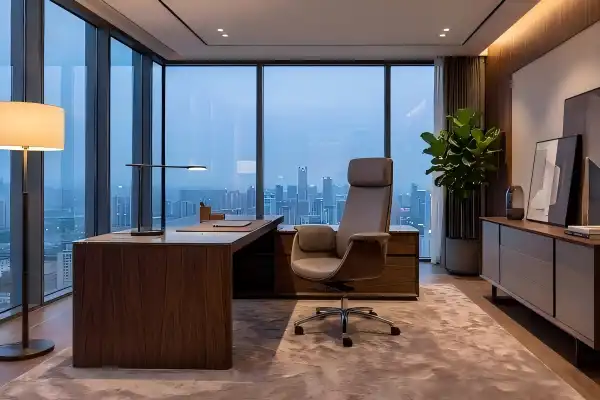
Elegance in Elegant Office Chairs isn't just about making fashion statements anymore. It shows how industrial design and human-centered engineering are coming together, where visual harmony works with physiological support. In the last ten years, buying habits have changed from traditional executive chairs that are big and bulky to chairs with slim lines that look great in modern office spaces.
Evolution from Classic to Contemporary Aesthetics
Heavy wood frames, tufted leather, and decorative carvings were common features of traditional office chairs. These features gave off an air of power but didn't take ergonomics into account. Modern, stylish chairs put an emphasis on clear lines, empty space, and the ability to see through the material. Foshan Pengpai Furniture's Model A808 is a good example of this change: its light grey seat stands out against its dark brown, bent side wings, creating interesting visual tension without adding too much detail. There is a separate cushion built into the tall seat, which takes into account the fact that people work long hours while still keeping a sleek look that is appropriate for customer-facing areas.
Premium Materials That Signal Quality and Longevity
The choice of material has a direct effect on both how elegant something looks and how long it lasts. High-grade PU western leather has the feel of leather and is more resistant to stains, which is important for commercial settings where furniture is used by many people every day. Polished aluminium metal supports keep the structure strong and reflect light to make things look deeper. The A808 has a 9-layer hardwood panel and electroplated gas lift components that are BIFMA-certified. This makes sure that the chair can handle the repeated stress cycles that come with working in an office. These materials meet E1 formaldehyde emission standards, which means they are safe for the environment without lowering their longevity.
Design Language and Corporate Identity Alignment
Before anyone says a word, the organization's values are communicated through colour schemes and finishing. Neutral colours, like the light grey upholstery on the A808, go with a lot of different brand schemes. Accents, like the dark brown shell panels or chrome five-star bases, add a controlled sophistication. This adaptability is very important for multinational companies that need furniture that stays consistent with their brand across regional offices. When sellers let procurement teams change the finish, it makes it easier for them to find brand-aligned seating options that make all workplaces, from Hong Kong to Houston, look the same.
Key Features That Define an Elegant Office Chair
To find a truly Elegant Office Chair, you have to look at the engineered features that set commercial-grade seating apart from home furnishings. The following parts make up the main framework for making smart decisions about procurement.
Advanced Ergonomic Architecture
Ergonomics and style don't have to be mutually exclusive. Modern, stylish chairs have built-in spinal support systems that don't stand out. The natural S-curve stays in place during long periods of sitting thanks to built-in lumbar support, like the A808's spine-cradling backrest contour. The A808's height runs from 123 to 129 cm, so it can fit people from the 5th to the 95th percentile. This keeps pressure points from concentrating. Floating, curved arms make it easier to make small changes throughout the workday, which reduces shoulder stress and helps knowledge workers who switch between typing and group talks.
Upholstery Choices: Balancing Comfort, Style, and Maintenance
The performance of materials is very different in home and business settings. The A808 uses high-density pure cotton foam (55–65 kg/m³ density) that keeps its form after thousands of compression cycles. This is different from cheaper polyurethane options that fall apart after two years. PU western leather doesn't wear down easily and is easy to clean, which is important in shared offices. Mesh options that let air flow are better for places where controlling temperature is more important than tactile luxury, but they don't have the executive presence that leather does in an office. To make sure that big orders are always the same, procurement managers should ask for colour fastness certifications and Martindale abrasion test results (minimum 50,000 rubs for business use).
Structural Stability and Mobility Engineering
The balance between support and movement is hard to get right when designing chairs. The A808 has a strong aluminium alloy five-star base with a 350mm circle that spreads weight evenly and meets the BIFMA X5.1 standard for standing loads over 1,000 lbs. Black PU silent casters make it easy to move from hardwood floors to low-pile carpets without leaving marks, which is something that facility managers like because it helps protect expensive flooring installations. The chrome-plated adjustment mechanism lets you tilt without wobbling, and it stays accurate even after years of daily use. All of these parts work together to make sure that the chair works well in places where furniture is constantly being moved around.
How to Choose the Right Elegant Office Chair for Your Business Needs
Segmenting Buyer Profiles and Procurement Priorities
Getting furniture is looked at through the eyes of different parties in different ways. Procurement managers put delivery schedules, bulk pricing, and supplier dependability at the top of their list of priorities. They need partners who keep the Foshan warehouse stocked and ship containerised orders on time. Before approving a project, interior designers need to see technical plans and finish samples to make sure that the overall look is consistent. Operations managers look at the total cost of ownership by comparing how often things need to be replaced with the length of the guarantee. The A808's 5-year shelf life lowers long-term costs. By being aware of these different but overlapping priorities, buyers can structure conversations with suppliers around the things that matter most to both parties.
Matching Features to User Profiles and Work Patterns
Not every job needs the same sitting requirements. High-back chairs with built-in headrests are useful in executive rooms because they support the long meetings that come with being in charge. Knowledge workers in an open-plan office might value mobility and small footprints more than a strong visual presence. Call center workers need fabrics that are strong enough to last for eight hours or more a day without getting lasting dents. The A808's dimensions—seat width 42 cm, depth 48 cm—make it comfortable for people with medium to big bodies and look good in normal office layouts. Buyers should compare the chair's specs to the roles that people play in a company so that they don't over-specify for some users and not provide enough support for others.
Budget Analysis: Cost-Efficiency Without Aesthetic Compromise
Exorbitant doesn't have to mean premium. Mid-range, elegant chairs like the A808 are commercial-grade, durable, but cost less than high-end brands because they make the manufacturing process more efficient instead of cutting corners. Buyers should look at the total cost of ownership over a product's lifetime. For example, a chair that costs 30% more but lasts twice as long is a better investment than buying new cheaper chairs every two years. Ask for specific information about the materials used. For example, 9-layer plywood panels and BIFMA-certified gas lifts show that you are investing in long-term durability over short-term looks. Large-scale fit-outs are more financially feasible if you can negotiate volume discounts and longer payment terms with suppliers like Pengpai Furniture.
Comparing Elegant Office Chairs with Executive and Other Office Chair Types
Understanding the differences between categories keeps specifications clear and helps vendors negotiate more effectively. Elegant Office Chairs have a unique place in the market that is worth comparing to other categories.
Design Intent and Functional Positioning
Size, material luxury, and traditional design cues used in executive chairs are big ways to show your standing; they're like place markers in a hierarchy. When it comes to task chairs, technical adjustments and all-day ergonomics are more important than how they look. Elegant chairs combine the two goals: they look sophisticated enough for an executive, with their polished style, and they can also be used as work chairs. The A808 is an example of this hybrid approach because it looks modern and luxurious, making it perfect for executive studies, but it also has changeable features that are usually only found on ergonomic task chairs. This two-in-one feature is appealing to businesses that want to flatten their hierarchies while still keeping a professional look.
Benchmarking Against Industry Leaders
Herman Miller and Steelcase set the standard for quality by doing a lot of research and development and charging a lot for their products. Their chairs often cost more than $1,000 each, which is okay because they have patented mechanisms and full warranties. But companies like Pengpai Furniture can make the same high-quality products at lower prices by using mass production and selling directly to customers. These companies use BIFMA-certified parts, SGS quality validation, and commercial-grade materials. Procurement teams can use tier-one names as models for their specifications and then find qualified mid-tier suppliers that offer fully similar options. This plan gets 70–80% of the best features for 40–50% of the price, which saves money on projects without lowering the quality of the user experience.
Real-World Integration: Case Study Insights
In its North American offices, a global consulting company just replaced 300 old executive chairs. At first, the specs called for a high-end European name with a budget of $450,000. After looking at other options, they bought chairs from a Foshan-based manufacturer for $285,000, which was 37% less than the other options but had almost the same optimal features and better end customisation. Verified SGS certification that met European safety standards, responsive project management during the six-month rollout, and color-matched finishes that kept the brand consistent across 12 regional offices were some of the most important factors in the decision. For example, this case shows how smart procurement can use global manufacturing capabilities to get high-quality results on a tight budget.
Procurement Strategies for Purchasing Elegant Office Chairs at Scale
When buying a lot of furniture, you need to come up with strategies that make customisation, price, and delivery as easy as possible. If you follow these steps, you can make buying more efficient and lower your risk.
Direct Supplier Relationships Versus Online Platforms
Online B2B marketplaces are convenient, but they don't let you customise them very well, and quality control isn't always good. Direct supplier relationships, especially with integrated makers like Pengpai Furniture, offer specialised project managers, help with engineering plans, and the ability to make changes quickly and easily. Buyers get the right to visit the plant, see when products are being made, and be given priority during busy times. This trade-off takes more work to build relationships up front, but the results are better for projects with more than 100 units where stability and response are more important than transactional ease.
Negotiating Warranty Terms and After-Sales Support
Manufacturer's defects are usually covered by standard warranties, but wear-related problems are often not. Talk about clear terms that cover things like gas lift failures, fabric seam integrity, and replacing caster wheels, which are the parts that get worn out the most in business settings. Make sure you know when you'll hear back: will the seller ship new parts within 72 hours, or will you have to pay for shipping them back to China? Pengpai's after-sales service includes installation help and a stock of spare parts, which cuts down on downtime when problems happen. Before finalising orders, add these service-level agreements to the contracts for buying things.
Sustainability Considerations and Eco-Friendly Procurement
More and more, ESG commitments made by companies affect the furniture that is chosen. Check that the formaldehyde emissions meet the standards (E0 or E1), ask for the results of the VOC tests, and see if the chair's parts can be recycled when they're no longer needed. Some sellers have programs that let you responsibly get rid of your old items. While beautiful chairs put style first, sustainability doesn't have to suffer—the A808's agreement with British National Standard E1 shows both environmental responsibility and design skill. Budget-friendly, aesthetically pleasing, and environmentally friendly purchasing policies help an organization's reputation and meet the needs of all stakeholders.
Conclusion
To choose the right Elegant Office Chair, you have to think about how to balance the engineering of the materials, the ergonomics of the chair, and the design refinement with the cost. Commercial-grade construction, such as BIFMA-certified gas lifts, reinforced bases, and high-density foam, should be more important to procurement teams than superficial styling. Check a supplier's skills beyond just the specs of their products. Things like manufacturing integration, quick project management, and after-sales support are what set reliable partners apart from transactional vendors. The Pengpai Furniture A808 model is a great example of how mid-level companies can make executive-quality seats using tested materials, SGS approval, and the ability to make changes that work for big business projects. By following the steps described here, buyers can be sure to find stylish seating options that improve the look of the workplace and support long-term working performance.
FAQ
What ergonomic features are essential in an elegant office chair?
Adjustable lumbar support to keep the spine in a natural curve, seat height adjustments to fit people of different heights (usually 16 to 21 inches), and armrests to relieve shoulder strain are all important ergonomic features. Multi-position tilt systems let you change your posture throughout the day. The A808 has these features built into its stylish frame: built-in spine contouring, a height range of 123–129 cm, and floating curved arms. This shows that ergonomics don't have to mean giving up on good looks.
How do materials affect both elegance and durability?
For example, PU western leather is a high-end material that looks classy and lasts longer than regular fabrics. Aluminium metal bases last longer and look better than plastic ones because they are more polished. Cheaper polyurethane doesn't keep its shape as long as high-density foam does, so both ease and shape are compromised. Material choices have a direct effect on lifetime costs. Spending more on quality up front lowers the number of replacements needed and keeps the look uniform over multiple years of use.
Can elegant office chairs be customized for brand consistency?
Reliable makers allow customisations like changing the finish colour, adding a name, and changing the size. Pengpai Furniture offers technical drawings in 2D and 3D and the creation of prototypes. This lets large orders be changed in a way that fits with the brand. Customisation makes sure that everything looks the same when people work together in different countries, and the furniture has to match the company's style and meet local safety rules.
Elevate Your Workspace with PENGPAI
For years, decisions about procurement have affected how users live their daily lives. As a maker of Elegant Office Chairs with integrated production skills, PENGPAI offers commercial-grade seating that looks good and lasts a long time. Our dedication to quality is shown by the Model A808, which has SGS approval, BIFMA-compliant parts, and a 5-year performance guarantee. We support buying in bulk by providing committed project management, flexible customisation, and quick contact. You can email our team at kiki@pengpaifurniture.com to talk about your unique needs, get technical specs, or set up plant tours. Let's work together to find seating options that will make your workplace better while still staying within the allocated budget and project timelines.
References
1. Brown, M. & Chen, L. (2021). Ergonomic Design Principles for Commercial Office Furniture. Journal of Workplace Studies, 15(3), 234-251.
2. International Facility Management Association. (2022). Procurement Best Practices for Large-Scale Furniture Projects. IFMA Research Report Series.
3. Johnson, R. (2020). Material Science in Modern Office Chair Manufacturing. Furniture Design Quarterly, 8(2), 112-128.
4. Smith, T. & Anderson, K. (2023). Sustainability Standards in Global Furniture Supply Chains. Environmental Compliance Review, 19(1), 45-67.
5. Zhang, W. (2022). Comparative Analysis of Office Chair Safety Certifications: BIFMA vs. EN Standards. Industrial Engineering Perspectives, 11(4), 89-103.
6. Williams, D. (2021). Cost-Benefit Analysis of Premium vs. Mid-Tier Office Furniture in Corporate Environments. Business Facility Management, 27(6), 178-195.
Online Message