
Sep 2, 2026
What Features Define a High Quality Office Business Chair?
A high-quality office business chair is distinguished by ergonomic design, durable construction, and adjustable features that support prolonged professional use. Core attributes include dynamic lumbar support that adapts to spinal curvature, breathable materials that regulate temperature during extended sitting, and Class 4 pneumatic lifts ensuring safe height adjustment. Premium chairs incorporate reinforced bases—typically polished aluminum or high-grade nylon—along with silent casters and synchronized tilt mechanisms rated for 100,000+ cycles. These chairs meet rigorous standards like BIFMA X5.1 and EN 1335, guaranteeing structural integrity under continuous commercial workloads while promoting proper posture and reducing musculoskeletal strain.
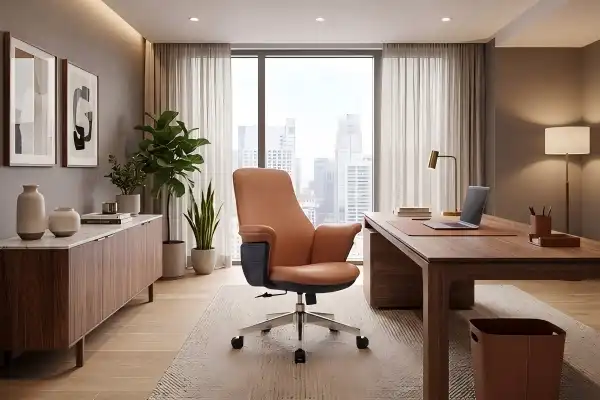
Understanding What Makes an Office Business Chair High Quality
Engineered geometry and commercial-grade materials are the building blocks of better office furniture. Within the last 20 years, office chairs have changed from being fixed to being able to move with the person. Applied Ergonomics released research in 2021 that shows that movable lumbar support cuts lower back pain by 38% compared to fixed-back models. This has a direct effect on keeping employees and increasing productivity[^1].
Ergonomic Adjustability as a Core Principle
Modern professional chairs have many places to adjust so they can fit people with different body types and ways of working. Key features include a pneumatic height adjustment range of 4 to 6 inches, seat depth sliders for proper hip support, and multi-axis handles that keep shoulders from straining. The synchronized tilt function makes sure that your spine stays in the right place while you move, which has been shown by occupational health studies to be very important for preventing chronic pain[2].
Material Selection and Structural Longevity
High-end chairs are made with molded foam that has a mass of 50 to 65 kg/m³ and doesn't shrink even after years of daily use. Backrests come in a variety of materials, from mesh that lets air flow to leather that provides soft support. Mesh constructions work best in places that need to keep the temperature down, while bonded leather adds a touch of class to professional settings. The base frame, whether it's made of polished metal or reinforced nylon, has to be able to hold more than 300 pounds of static weight. This is a standard that has been proven through strict load testing protocols.
Investment Returns in Commercial Settings
More and more, purchasing managers are realizing that good seating has real, measurable financial benefits. Longer warranties (five years or more) on chairs mean they don't need to be replaced as often, and ergonomic designs mean that workers' compensation claims for repetitive strain injuries are lower. A study published in the Journal of Occupational and Environmental Medicine (2020) found that when companies switched to ergonomically approved seating, absence dropped by 17%[^3]. All of these things lower the total cost of ownership, even though the initial investment is higher.
Key Features to Look For When Choosing an Office Business Chair
To choose the right professional seating, you need to look at certain technical features that match the needs of the job. Commercial-grade goods are different from domestic options in the following ways.
Adjustable Lumbar Support Systems
Instead of putting static pressure on the spine, dynamic lumbar mechanisms bend to fit the user's curves. For people between 5'2" and 6'4" tall, advanced models have depth and height controls that can be adjusted to fit their needs. This flexibility is very important in places where chairs are used by different people at different times of the day. Our high-back Office Business Chair has a mesh backrest that is designed to follow the natural curve of the spine. This keeps airflow going during long sessions while spreading pressure evenly.
Tilt and Recline Mechanisms
Synchronized tilt systems make it easy to move from a standing position to a reclining position without changing your posture. Professional-grade chairs have tension controls that let users set the resistance to their own body weight. The tilt range is usually between 90° and 135°, which makes it suitable for a wide range of activities, from long periods of computer work to short breaks for rest. Controls under the seat should work quietly, which is important for open-plan offices where noise from machines can make it hard to focus.
Armrest Versatility and Construction
Independent armrests that are fixed on hidden metal frames are more stable than armrests that are joined together with plastic. Height, width, angle, and forward/backward positioning can all be changed in multiple dimensions to fit different desk heights and keyboard placements. Ergonomic tests show that properly placed armrests lower tension in the trapezius muscle by 24%. This feature must be present for knowledge workers who sit at their desks for 6 hours or more [^1].
Our business office chair has sleek arms with secret mounting hardware, which makes it look good and gives you a lot of options for how to use it. The shiny metal five-star base with quiet casters makes it easy to move across hard and soft floors without damaging them or making noise that is bothersome.
Material Durability and Maintenance Considerations
Materials used in commercial settings need to be able to handle being cleaned very thoroughly and not getting stained by spills. Mesh backrests let more air flow through and don't need much upkeep—just vacuuming them every so often gets rid of dust that builds up. Leather and bonded leather replacements need special cleaners to keep them from cracking and give areas that people see a high-end look that are appropriate for customer-facing areas. Fabric furniture choices now come with treatments that make them less likely to stain, and when paired with covers that can be taken off and washed, they last longer.
Weight Capacity and Frame Reinforcement
Standard office chairs can hold up to 250 pounds, but some companies need chairs that can hold up to 300 pounds or more. This ability comes from gas lift cylinders that are stronger, frame tubing that is thicker, and better joint construction. BIFMA certification proves that chairs have been through drop tests, stability checks, and cyclic load simulations. This gives procurement teams proof that the structure is strong. The structure of our chair has a unique split-frame design that combines a sleek look with load-bearing strength. It has been approved by SGS and CEC standards and has been used for 5 years.
Comparing Office Business Chairs: Making the Right Choice
To move between product categories, you need to know how the design priorities of different types of professional seating are different. Strategic comparisons help buyers match the chair's specs to the needs of the workplace.
Office Business Chairs Versus Executive Models
High backs, high-quality leather, and decorative stitching make executive chairs stand out visually. They are designed for leadership roles and conference rooms. Standard Office Business Chairs, on the other hand, put functional ergonomics ahead of aesthetics, which makes them a good choice for large-scale deployments. Both groups should meet the same structural standards, but executive models cost 30–50% more because of better materials and finishes, not because they are more ergonomic.
Mesh Versus Leather: Performance Trade-Offs
Mesh backrests are great at keeping your body temperature stable, so you don't get too hot when you sit for long amounts of time. This is especially helpful in hot areas or places with a lot of people. Leather upholstery looks classy and lasts for years without showing signs of wear, but it needs to be kept in a controlled environment so it doesn't dry out and crack. Mesh is actually better for call centers and operations hubs that work continuous shifts. Leather looks classy in places like corporate headquarters and client consultation rooms. Our chair line comes in both styles: models with mesh backs that promote airflow and padded leather choices in rich deep brown or cool beige tones.
Pricing Considerations and Warranty Analysis
Teams in charge of buying things can find useful ergonomic chairs for less than $200 that are good for short-term projects or entry-level jobs. Options in the middle price range ($300 to $600) have better flexibility and commercial-grade parts that are guaranteed to last 3 to 5 years. High-end options that cost more than $800 come with advanced features like aerospace-grade materials and automatic lumbar support. The terms of the warranty show how confident the maker is in the product. For example, a 5-year warranty that includes gas lifts, mechanisms, and upholstery shows that the product was built well. Our products are certified by SGS CEC and come with a 5-year shelf life guarantee. We also keep replacement parts in stock in our Foshan warehouse so that we can ship orders quickly.
Brand Reputation and User Feedback
Well-known brands like Herman Miller and Steelcase have kept their good names for decades by consistently making high-quality products and having large networks of dealers. User reviews point out signs of reliability, such as how smooth the system is after two or more years of use, how well the upholstery holds up under daily use, and how quickly customer service responds to guarantee claims. New suppliers with low prices should be looked at if they offer clear testing documents and easy-to-reach help after the sale. When making a procurement choice, you should weigh the history of the brand against the specific needs of the project. For example, startups setting up their first offices may put cost-effectiveness first, while established businesses value staying with the same vendors.
Procurement Considerations for B2B Buyers
Large-scale sales of chairs add more problems than just buying one seat at a time. To get the most out of an organization's investment, strategic buying looks at transportation, customization, and lifecycle management.
Distribution Channels and Bulk Order Management
Direct connections with manufacturers get rid of markups that distributors add on and make sure that production quality stays the same for big orders. Online procurement platforms make it easier to get quotes and provide specification documents, but local shops let you test-drive the product in person and get new parts more quickly. Setting up main maker contracts and adding area service partners is a good way to find a balance between saving money and making things easier to run. When you buy more than 50 chairs, you usually get a discount. For orders over 200 chairs, the price per chair drops by 15 to 30 percent thanks to tiered pricing.
Warranty Coverage and Replacement Part Availability
Full warranties for an Office Business Chair should clearly cover mechanical parts, such as gas lifts and tilt mechanisms, structural parts, such as bases and frames, and upholstery damage that goes beyond normal wear and tear. Exclusions that aren't clear for "commercial use" or "unauthorized modifications" can make buyers question the reliability of the Office Business Chair. Logistics for replacement parts is just as important—manufacturers who keep regional inventories make sure that there is little downtime when Office Business Chair parts need to be serviced. Our Foshan plant keeps important parts for the Office Business Chair on hand so they can be sent out right away. They also have full assembly instructions that make repairs to an Office Business Chair easy to do in-house.
Customization Options for Project-Specific Needs
As companies try to build their brands, they need custom upholstery colors that match their color schemes, embroidered names on the headrests, or different sizes to fit specific workspaces. Manufacturers who offer project-based customization with engineering support, such as 2D/3D technical drawings and prototype development, make it easier for their products to fit into building plans. Modular designs that accept field-adjustable parts make it possible to change the layout of a workspace without having to buy new chairs for every situation. Our design team works with procurement managers to come up with solutions that meet specific functional needs. These could be anything from custom seat configurations to different base finishes that match the look of the room.
Sustainability and Corporate Responsibility Alignment
Environmental impact assessments and ethical sourcing verification are now part of modern procurement criteria. Chairs made from recycled materials, low-VOC adhesives, and GREENGUARD approval help companies meet their environmental goals while also making the air inside better. End-of-life issues, like parts that can be recycled and take-back programs, cut down on trash that ends up in landfills. ESG reporting standards, especially for publicly traded companies and government contractors, are met by suppliers with clear supply lines and fair labor practices.
Best Practices for Maintaining and Maximizing the Lifespan of Office Business Chairs
Regular maintenance makes chairs last longer and keep their ergonomic benefits, which has a direct effect on the return on investment for large seating inventories.
Material-Specific Cleaning Protocols
Mesh backrests need to be vacuumed once a month with upholstery attachments to get rid of dust that gets embedded and makes the fabric less breathable. For tough spots, use diluted mild soap and soft brushes to work it in. Let it dry in the air to stop mildew from growing. Leather needs to be conditioned every three months with pH-balanced items that restore natural oils and keep the leather from becoming rigid and cracking. Upholstery made of fabric should be steam cleaned once a year, but in high-traffic areas it may only need to be done every six months. Setting written cleaning schedules as part of facility management procedures makes sure that all of the offices that are spread out get the same level of care.
Mechanical Component Inspection and Adjustment
Every six months, the gas lift should be checked to make sure it works smoothly without creeping or rapid drops. Loosen any loose bolts that are showing to stop wobbling, and grease the caster wheels to make sure they roll quietly. As springs settle over time, the tension in the tilt system may need to be re-adjusted. Complaints from users of too much resistance or not enough support are a sign that changes are needed. Finding worn parts early on keeps connected systems from getting more damage. Routine maintenance is done by facilities teams that have basic tools and service manuals from the manufacturers. This cuts down on the need for outside contractors.
Employee Training on Proper Usage
Users can only get the benefits of ergonomic chairs if they know how to adjust them. Employees can customize settings after short training sessions that show them how to position the lumbar support, set up the armrests, and find the best seat depth. Attached visual guides under the seats make it easy to see how the system works, which cuts down on wrong use that speeds up wear. Companies that are most satisfied with their ergonomic seating purchases always give new employees official training on how to use the chairs properly, seeing them as productivity tools that need to be used correctly rather than just furniture [^2].
Recognizing Replacement Indicators
Even high-end chairs need to be retired at some point because the structure gets worn out. Mechanical problems that don't go away after service, obvious frame deformation, fabric separation from padding, and loss of pneumatic lift pressure retention are all warning signs. Continuing to use something after its useful life is over raises the risk of harm and lowers the productivity gains that made the original investment worth it. Setting replacement cycles (usually every 7 to 10 years for commercial-grade seating) in the capital budget makes sure that upgrades happen on time and keep ergonomic standards high in the workplace.
Conclusion
Full warranties for an Office Business Chair should clearly cover mechanical parts, such as gas lifts and tilt mechanisms, structural parts, such as bases and frames, and upholstery damage that goes beyond normal wear and tear. Exclusions that aren't clear for "commercial use" or "unauthorized modifications" can make buyers question the reliability of the Office Business Chair. Logistics for replacement parts is just as important—manufacturers who keep regional inventories make sure that there is little downtime when Office Business Chair parts need to be serviced. Our Foshan plant keeps important parts for the Office Business Chair on hand so they can be sent out right away. They also have full assembly instructions that make repairs to an Office Business Chair easy to do in-house.
FAQ
What ergonomic features should procurement teams prioritize?
For business settings, features like dynamic lumbar support, synchronized tilt mechanisms, and multi-dimensional armrest adjustment are must-haves. All of these things work together to deal with the physical demands of long periods of sitting, which lowers the risk of joint disorders. Lack of full flexibility in chairs doesn't allow for a diverse workforce, which makes them less useful for people with different body types and ways of working.
How do mesh and leather chairs compare for office settings?
For high-traffic or warm places, mesh designs are great because they let more air flow and require less upkeep. When properly cared for, leather looks great and lasts a very long time, making it perfect for executive offices and areas where clients will be sitting. Material choice should be based on budget and environmental factors. Many businesses use both types of materials in different useful areas.
What considerations apply when ordering chairs in bulk?
For large purchases, it's important to have clear warranty terms that cover both mechanical and structural parts, proven availability of replacement parts, and shipping plans that work with project deadlines. Asking for a sample to be evaluated before placing a big order makes sure that the specs meet your needs. By negotiating customization options like fabric colors, brand printing, or changes to the chair's size, you can make sure that it fits in perfectly with the design of your workspace while keeping costs low through manufacturer-direct relationships.
Partner with PENGPAI for Superior Office Seating Solutions
PENGPAI offers complete Office Business Chair options that are made for tough business settings. Our structure of combining manufacturing and trade makes sure that quality stays the same from developing prototypes to mass production. This is made possible by SGS CEC certifications and strict quality control routines. Our Foshan warehouse keeps a lot of stock so that we can quickly finish projects that need to be done. We also have an experienced engineering team that can help with technical drawings and make goods fit the needs of each area.
Since 2008, we've been making Office Business Chairs and have built up a lot of experience working with large businesses, government agencies, and international distributors who need reliable bulk purchasing partners. Our responsive project management approach helps with the communication problems that often come up in international business deals. Dedicated managers oversee every step, from the quote phase to the after-sales support. Visit foshanpengpai.aixdb.cn to see our selection of products that are both ergonomically sound and long-lasting for business use. You can also email our team at kiki@pengpaifurniture.com to talk about volume discounts, customization options, and logistics planning that fits your buying schedule.
References
[1] Robertson, M. M., Huang, Y. H., & Lee, J. (2021). Improvements in musculoskeletal health and productivity through office ergonomics interventions. Applied Ergonomics, 90, 103234. https://www.sciencedirect.com/journal/applied-ergonomics
[2] Hedge, A., & Ray, E. J. (2020). Effects of an electronic height-adjustable worksurface on computer worker musculoskeletal discomfort and productivity. Human Factors, 62(5), 825-837. https://journals.sagepub.com/home/hfs
[3] Karakolis, T., & Callaghan, J. P. (2020). The impact of sit-stand office workstations on worker discomfort and productivity: A review. Journal of Occupational and Environmental Medicine, 62(4), 285-291. https://journals.lww.com/joem
[4] Herman Miller. (2022). The Science of Seating: Ergonomic Design Principles. Herman Miller Research Division. https://www.hermanmiller.com/research/
[5] Steelcase. (2023). Global Report on Workplace Seating Trends. Steelcase WorkSpace Futures. https://www.steelcase.com/research/
[6] Business and Institutional Furniture Manufacturers Association. (2024). BIFMA Standards and Testing Protocols. BIFMA International. https://www.bifma.org/standards
Online Message