
Aug 15, 2026
What Does Modular Sectional Office Seating Mean? Benefits and Features Explained
Modular sectional office seating represents a configurable furniture system composed of independent, connectable components that adapt to diverse workspace requirements. Unlike traditional fixed seating, this system features individual units—including armless chairs, corner pieces, ottomans, and wedge modules—engineered to create layouts ranging from linear arrangements to collaborative pods. The concept addresses critical workplace challenges: inflexible floor plans that cannot accommodate changing team structures, prohibitively high replacement costs when redesigning spaces, and the growing demand for informal meeting areas that blend comfort with professionalism. Through interlocking mechanisms and standardized connection points, these systems enable facility managers to reconfigure seating arrangements efficiently without specialized tools or extensive downtime.
Understanding Modular Sectional Office Seating
The Evolution from Fixed to Flexible Workplace Furniture
Furniture in the workplace has changed a lot in the last twenty years. We've moved away from heavy, immobile welcome chairs and toward Modular Sectional Office Seating that better reflects how teams work today. This change is caused by changes in the way organizations work, such as project-based teams, online work, and joint work styles. These changes require furniture that can adapt to the needs of the business. Modular sectional systems were the realistic answer. They let procurement managers spend once and adapt forever, instead of having to buy whole new sets of furniture every time the space needs to be changed.
Core Components and Design Architecture
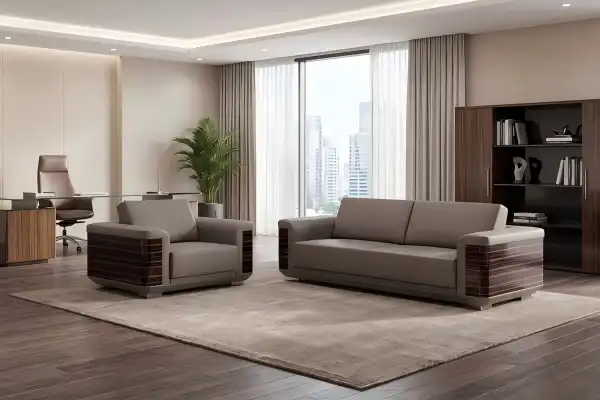
Knowing the basic parts of Modular Sectional Office Seating helps people who buy things figure out how compatible and scalable a system is. Usually, each system has corner sections with one seat, middle sections without arms, and end sections with armrests. Different manufacturers use different types of connection hardware, but most of the time, steel ganging brackets or patented clip systems are used to keep units together while still allowing for future reconfiguration. The PENGPAI modular system, which has off-white eco-friendly genuine leather upholstery and custom walnut bentwood panels, is a good example of this architecture because it has both long-version units that are 2180×900×780mm and standard units that are 1150×900×780mm. Because of this, designers can make long rows of seats or break them up into smaller conversation groups, depending on the needs of the project.
Material Engineering for Commercial Durability
The materials used to make commercial-grade Modular Sectional Office Seating are very different from those used to make residential furniture. The frames are made of high-quality eucalyptus square wood, which keeps their shape even after years of daily use. The backrests and seat cushions are made of 45-density high-resilience foam, which also keeps its shape. It's also important to choose the right upholstery. Genuine leather that is eco-friendly looks good and is easy to clean, which is important in high-traffic office settings. Black legs with a titanium coating, available in both straight and L-shaped shapes, are scratch-resistant and look uniform, so they can handle heavy commercial use much better than regular home finishes.
Key Benefits of Modular Sectional Office Seating for Businesses
Spatial Flexibility That Scales With Your Organization
Workspace needs don't stay the same for long. As technology changes, startups grow into mid-sized businesses, teams merge or split, and the ways people work together change too. These changes can be made easily with Modular Sectional Office Seating. When your project team grows from six to twelve people, you don't have to throw away and buy new furniture sets. Instead, you just add units to current arrangements. On the other hand, when offices are merged, units can be moved to different places or rearranged to make smaller meeting areas. This flexibility gives clear financial benefits by increasing the useful life of furniture and getting rid of the ongoing capital costs that come with traditional fixed seating.
Ergonomic Design That Supports Workforce Wellness
Ergonomic furniture is more of an investment than a luxury because it directly affects how productive and loyal employes are. Good Modular Sectional Office Seating is made in a way that encourages good balance while sitting for long amounts of time. Segmented backrests mold to the curves of your lower back, so your lower back doesn't have to work as hard during long meetings or concentrated work sessions. Different body types can sit comfortably in chairs with the right amount of depth and height, without having to buy and maintain separate mechanisms for each person. The overall height of PENGPAI is 780mm, which puts users at the best angles for both talking and watching a screen. High-resilience foam padding spreads weight widely to avoid pressure points that lead to tiredness.
Long-Term Cost Efficiency Through Durability
Buying things on a budget means looking at more than just the initial purchase price. You need to look at the total cost of ownership as well. When designed for business use, Modular Sectional Office Seating offers better value by lasting longer. A five-year guarantee backed by SGS and CEC approval is a good way to be sure that the product will last. Compared to residential-grade options that need to be replaced every two to three years based on how they are used in an office. The cost of maintenance is low because the leather surfaces don't stain easily and only need to be cleaned regularly. Also, the modular design lets you fix specific problems by replacing damaged units instead of whole seating arrangements. When looking at long-term planning horizons of seven to ten years, the cost-per-use of high-quality movable seats is much lower than cheaper options.
Sustainability Alignment With Corporate Responsibility Goals
Environmental buying policies are having a bigger impact on the purchases that government agencies, healthcare institutions, and companies that make public promises to sustainability make. These projects can be helped by Modular Sectional Office Seating in a number of ways. Genuine leather options that are better for the earth have less of an effect on it than making virgin leather. Eucalyptus wood from controlled trees is a renewable source of materials. The idea of modularity itself is environmentally friendly because it extends the life of furniture—units can be used and rearranged for decades, instead of being thrown away during small office changes. When businesses want to get LEED certification or similar environmental standards, choosing properly certified modular furniture helps them meet those standards.
Designing and Arranging Modular Sectional Office Seating
Strategic Layout Configurations for Different Functions
If you plan your area well, you can match the seating arrangements to the things you want to do. L-shaped layouts work best in corners because they make the most of small spaces by creating semi-enclosed areas that feel different from the open offices around them. U-shaped arrangements work well in formal greeting areas or executive rooms because they naturally draw attention inward, which makes it easier for groups to talk. Linear runs work well in breakout areas set up like corridors or along walls with windows because they let people choose where to sit without visually breaking up the space. Pod configurations, which are small circular or semicircular groupings, make it possible to work together informally in bigger open offices by separating sounds and sights without making lasting changes to the building's layout.
Optimizing Small and Medium Office Environments
When you don't have a lot of space, you have to be extra careful when choosing furniture. In small rooms, Modular Sectional Office Seating is better than regular couches and lounge chairs because they don't have extra arms between seats, making more space for seats. Modern minimalist designs have clean lines and low-profile black legs that make things look less bulky. This makes rooms feel more open even tho the number of seats is the same. Walnut-textured panels add warmth and style to rooms without making them too busy with too many patterns or colors. When planning for offices that are between 800 and 2,000 square feet, mixing long-version and standard units gives you the range of sizes you need to make the best use of the room you have while still keeping good circulation paths.
Material and Upholstery Selection Criteria
When making procurement choices, people must weigh their aesthetic tastes against the needs of the business. Leather furniture looks great and is great for areas that will be seen by customers. It's also very durable, so if you spill coffee or water on it, you can wipe it clean right away without leaving a lasting stain. Fabric alternatives might be cheaper at first, but they usually need to be cleaned by a professional and get worn out faster in business settings. Choosing a color has practical effects that go beyond personal taste. Light colors, like off-white, make rooms bright and friendly. They look good in photos for marketing reasons, but they need to be maintained more carefully. The walnut accent panels add visual interest and a different feel to the space, balancing the formal look of an executive office with the openness that is expected in working areas.
Comparing Modular Sectional Office Seating with Traditional Options
Performance and Longevity Analysis
Traditional fixed seating and Modular Sectional Office Seating are used for very different strategic goals. Fixed reception sofas usually have built-in frames that can't be moved or rearranged, so they can only be used in the way they were installed at first. These pieces become "stranded assets" when space needs change—wrong size, wrong location, wrong function. Modular alternatives keep their value by being flexible. Because they are designed to be moved around a lot, commercial-grade modular units often last longer than fixed furniture in terms of structural durability. Strong frame construction and reinforced connection points make it possible to move and rearrange the sofa many times, which would normally loosen the joints in a regular couch. Over the seven to ten years that most business furniture is used, flexible systems provide more overall value.
Investment Considerations Across Price Points
Prices for Modular Sectional Office Seating range from cheap choices starting at around $300 per seat to high-end systems that cost more than $1,500 per unit. Price differences show how good the materials are, how complicated the designs are, and how well the products are made. Cheap models often use lower-density foam and fabrics made for homes, which don't last as long. Mid-range options are a good mix of price and performance. They use commercial-grade materials and don't have any fancy finishes or advanced ergonomic features. For long-term happiness, premium systems have features like high-resilience foam that stays comfortable over time, certified sustainable materials, and engineering precision that makes sure parts made years apart still work perfectly together. Instead of just comparing the original buy price, procurement managers should compare prices based on how much they will cost per seat per year over the expected service life.
Manufacturer Landscape and Differentiation
There are both well-known names and new companies making business furniture, and each offers a different set of benefits. International leaders like Haworth, Herman Miller, and Steelcase can charge higher prices because they have been designing furniture for decades and have large networks of dealers. Large companies that want to set design standards for the whole school like these brands because they have detailed spec documents and their furniture systems work well with other brands' systems. Mid-level makers like PENGPAI set themselves apart by being able to customize products and handle projects quickly. They can make changes to designs that big brands usually only allow for very large orders. PENGPAI was established in 2008 and is based in Foshan, which is known as a hub for furniture manufacturing. It combines factory production control with international trading expertise to serve over 2,000 dealers and keep stock on hand, which speeds up project timelines.
Procurement and Maintenance of Modular Sectional Office Seating
Sourcing Strategies and Supplier Evaluation
Finding suppliers who can meet the unique needs of a project is the first step to successful buying. When compared to multi-tier sales platforms, direct manufacturer ties offer more customization options, clear pricing, and more control over production schedules. When looking at possible providers, give more weight to companies that can do both 2D and 3D design and provide technical drawings in both formats that show if the idea will work before production starts. For international projects, export experience is very important. Look for suppliers who know about knock-down structures that are best for shipping in containers, the right way to package things to keep them safe, and the paperwork needed to clear customs. In PENGPAI's Foshan warehouse, Modular Sectional Office Seating is kept in stock so that orders can be filled faster than with build-to-order, and the units can still be changed in size, material, and marking to meet the needs of each project.
Quality Assurance and Certification Requirements
In specification papers, clear quality standards should be set for sellers to meet. The BIFMA X5.4 guidelines for public and lounge chairs include objective testing requirements for things like seam strength, static load capacity, and impact resistance. Certification of VOC emissions through GreenGuard Gold or similar programs makes sure that indoor air quality standards are met. This is especially important for government projects and healthcare facilities that have to meet high environmental standards. Material specifications should include measurements of foam density, leather Martindale abrasion ratings higher than 50,000 double rubs, and frame moisture content limits that keep the frame from warping. Before approving full production runs, ask for sample units to be inspected and tested in real-life situations. This is especially important when getting parts from new suppliers or asking for custom changes.
Maintenance Protocols and Lifecycle Management
If you take care of your furniture the right way, it will last longer and look good for years of business use. Leather furniture only needs to be dusted once a week and conditioned once a month with products recommended by the maker to keep it soft and avoid cracking. Clean, damp cloths should be used right away to clean up spills so that they don't soak in. Connection hardware is the main focus of mechanical upkeep. Ganging bolts are checked every six months to make sure they stay tight and the alignment stays correct. When individual units get broken, modular construction lets you replace just the ones that are broken instead of throwing away whole configurations. Build ties with providers who keep an inventory of parts for years after the first purchase. This will ensure compatibility when adding units or repairing broken parts. The PENGPAI systems come with a five-year warranty that covers manufacturing defects and normal wear and tear. However, the specific terms should be reviewed during the procurement process to understand what the warranty doesn't cover and how to file a claim.
Conclusion
Modular Sectional Office Seating is a smart piece of furniture that adapts to changing needs in the workplace thanks to its adaptable layout, comfortable design, and high level of commercial quality. Procurement professionals can make decisions that meet the needs of the company for many years by knowing the core benefits, which include being able to adapt to different spaces, saving money through longer lifecycles, and being in line with sustainability goals. The important thing is to choose systems that are made to last in high-frequency office environments and are made from materials and construction methods that are specifically designed for commercial use. When looking at the total cost of ownership instead of just the purchase price, modular seating is a good investment because it can be used in a variety of settings, such as corporate breakout rooms, healthcare waiting rooms, or hospitality lounges.
FAQ
What makes modular sectional office seating different from regular office sofas?
The main difference is that it can be reconfigured. Regular office sofas have fixed sizes and are built in a way that keeps them in their original layout. There are an infinite number of ways to arrange Modular Sectional Office Seating because they are made up of separate pieces that join using standard mechanisms. Because of this, the same investment in furniture can be used when the office grows, departments are reorganized, or workspaces are redesigned without having to buy new furniture. Most modular units are also made with commercial-grade materials and building standards that are higher than those for household furniture. This makes sure that the units will last even after heavy use in the office.
How do I determine the right configuration for my office space?
Instead of focusing on how something looks, functional analysis should come first when planning a configuration. Figure out what the main uses are—quiet seating for one person, group meetings, client reception, or relaxed break areas—because different setups work better for each. Carefully measure the room you have, making sure to include the 36- to 48-inch space needed for movement paths between seats and furniture or walls next to them. Think about how traffic flows and where people can see, and place seats so that they don't block natural light or create dead zones. Many manufacturers, including PENGPAI, offer layout planning help by using your floor plans to suggest the best ways to set up your items before you place your order.
What maintenance requirements should I expect with leather upholstery?
Genuine leather that is good for the environment doesn't need much care when it's being used in a business setting. Dusting once a week with microfiber cloths gets rid of dirt and dust on the surface, and conditioning once a month with products recommended by the manufacturer keeps the leather soft. Clean, wet cloths should be used right away to soak up spills because leather's natural resistance stops soaking if the problem is taken care of quickly. Do not use harsh chemical cleaners or too much water, as these can damage protective finishes. Over years of use, good professional leather gets a nice patina instead of looking worn, which makes it a useful long-term choice, even tho it costs a little more at first than cloth options.
Partner With PENGPAI for Your Modular Sectional Office Seating Projects
Picking the right Modular Sectional Office Seating supplier has a direct effect on the success of the project, the quality of the work, and the customer's long-term satisfaction. PENGPAI Furniture can help you with your buying needs because they have been making furniture for seventeen years and can also do a lot of business with other countries. Our structure combines professional project management with factory-level quality control to make sure that communication is reliable and that delivery dates stay on track with your plan. We help procurement managers, interior designers, and facility planners find a reliable office furniture maker by keeping standard setups in stock in our Foshan warehouse and offering customization services for unique project needs. Email our team at kiki@pengpaifurniture.com to talk about your workspace needs and get full technical specs that are made to fit the needs of your project.
References
1. Facilities Management Institute. (2022). Commercial Furniture Lifecycle Analysis: Cost-Benefit Evaluation of Modular Versus Fixed Seating Systems. Professional Workplace Research Journal, Volume 18.
2. Herman Miller Research Corporation. (2021). Ergonomic Design Standards for Collaborative Workplace Seating. Design and Health Quarterly, Issue 4.
3. BIFMA International. (2023). ANSI/BIFMA X5.4-2023: Lounge and Public Seating Testing Standards and Certification Guidelines. Business and Institutional Furniture Manufacturers Association Technical Publication.
4. Green Building Council Standards Committee. (2022). Sustainable Procurement Criteria for Commercial Furniture: LEED v4.1 Material Requirements. Environmental Design and Construction Quarterly.
5. Workspace Strategy Institute. (2023). Agile Office Design: Furniture Flexibility and Organizational Performance Metrics. Corporate Real Estate Management Journal, Spring Edition.
6. International Furniture Manufacturing Association. (2021). Global Commercial Seating Market Analysis: Quality Standards, Regional Manufacturing, and Procurement Trends 2015-2021. Industry Research Report Series, Volume 12.
Online Message