
Aug 1, 2026
What Benefits Do Linear Office Staff Desks Bring to Teams?
Linear Office Staff Desks deliver transformative benefits to modern teams by creating open, collaborative workspaces that maximize floor space efficiency while supporting seamless communication. These streamlined workstations eliminate spatial barriers, reduce layout complexity, and promote productivity through ergonomic design. Teams adopting linear configurations experience improved workflow coordination, enhanced project visibility, and flexible spatial arrangements that adapt to evolving business needs, making them essential for contemporary commercial environments.
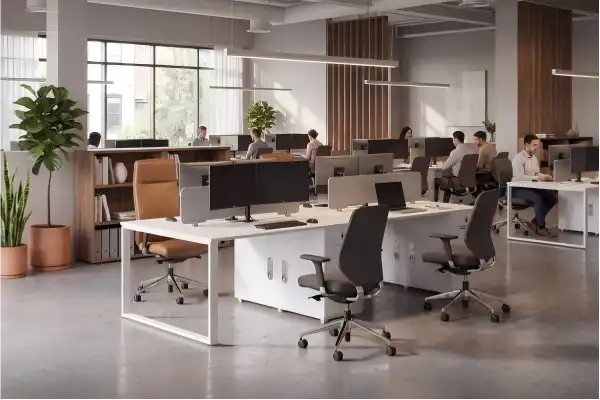

Understanding the Core Benefits of Linear Office Staff Desks
Modern workspace planning is focused on making spaces that allow individuals to focus while also allowing teams to work together. This problem can be solved by Linear Office Staff Desks, which have simple, effective plans that completely change how teams work together and do their daily tasks.
Enhanced Collaboration Through Open Layout Design
Traditional cubicle systems make it hard for team members to see and talk to each other. Linear Office Staff Desks get rid of these problems by putting workers in straight rows, which makes it easier for them to talk to each other and share their knowledge. When people on a team sit facing the same direction on shared surfaces, they can see what their coworkers are doing without getting in the way. This layout works especially well for project teams that need to talk to each other a lot, because quick questions get answers right away without having to set up formal meetings. Experts in office design have found that when workers sit at open benches, they are more likely to talk to each other instead of sending emails, which can cut the number of emails sent within the company by up to 30%.
Maximized Space Utilization in Commercial Environments
When it comes to operating costs, office real estate costs are very high, especially in urban business districts. By getting rid of the wasted corner space that comes with L- or U-shaped desk arrangements, linear configurations make the most of every square foot. The back-to-back installation method lets building managers fit more workers into the space they already have without affecting the size of each worker's desk. A well-designed linear system usually gives each employee 120 to 150 square feet, while traditional private office layouts need 150 to 200 square feet. This speed directly leads to lower rent prices and a better return on investment in real estate.
Flexible Scalability for Growing Organizations
Companies often have trouble buying furniture when their businesses grow because it's hard to fit new desks into current layouts. This problem can be solved by linear modular systems, which use standard parts that can join without any problems, no matter when they are installed. When adding team members, facility managers don't have to rearrange whole office sections; instead, they just add more rows of identical desk modules to existing rows. This ability to grow or shrink is also useful when an organization is being restructured, since linear parts can be moved and put back together with little trouble. Long-term furniture costs are cut by the modular method because there is no need for full replacements during growth phases.
Design Features and Materials That Enhance Team Efficiency
Material choice and structural engineering have a big impact on how well and how long office workstations last. There are some design features that make commercial-grade linear systems different from home furniture.
Commercial-Grade Material Specifications
The 25mm Moon Tree national standard E0 grade panels used in our Linear Office Staff Desk are certified to meet the strictest international indoor air quality standards for formaldehyde emissions, which are guaranteed to be less than 0.5 mg/L. This standard is very important in business settings where air systems are shared by dozens of pieces of furniture. The 2mm PUR edge bands completely seal all panel edges, stopping wetness from getting in and particle board from breaking down, which happens with cheaper options a lot of the time. This building method makes things last longer, up to five years or more with heavy daily use. This means that they don't have to be replaced as often, which means less downtime for business.
The 1.5 mm steel tube frame (30x60 mm shape) makes the structure stable while keeping the frame's appearance light. Powder-coated steel frames can hold up to 100 kg of weight without looking heavy or blocking your view across open office spaces. This is in contrast to solid wood legs that add visual bulk. Because it's white, the finish reflects light, making the workplace brighter, which is good for eyesight and makes workers more alert.
Integrated Cable Management Solutions
Workflows that depend on technology make it hard to manage cables, which ruins the look of the workspace and poses safety risks. The middle leg has an 86-type cable box hole that lets power cords, data cables, and other peripheral links run under work areas. This unified method gets rid of the jumbled groups of wires that tend to gather around desk legs, making cleaning easier and lowering the risk of tripping. The USB cable pass-through cover makes charging ports for devices easy to reach so workers don't have to crawl under desks or stretch power strips across walkways. These small features add up to big productivity gains by getting rid of small irritations that keep getting in the way of focused work.
Ergonomic Storage Integration
The three-drawer mobile pedestals with Liansheng 37mm wider quiet three-section slides let you customise your storage to fit the way you work. The extra-wide slides can hold heavier things like technical manuals, product samples, or equipment without getting stuck or binding. The original egg-shaped combination locks from the TT brand keep private papers safe in shared offices where privacy is an issue. The Hango brand silent hydraulic soft-close doors get rid of the annoying slamming sounds that can wake up coworkers nearby, keeping open plans quiet. The mobile design lets workers move storage from one workstation to another during hot-desking or collaborative project phases.
Choosing the Right Linear Office Staff Desk for Your Team: A B2B Buyer's Guide
When making procurement choices, you have to weigh short-term budget limits against long-term operational costs and metrics for measuring staff happiness. Buyers can find options that provide long-term value by using a number of evaluation factors.
Assessing Customization Capabilities
Standard catalogue items don't always fit perfectly with specific space limitations or branding needs. Effective suppliers can change the size, replace the material, or add functionality without having to do full custom manufacturing. The standard size for our Linear Office Staff Desk is 2400x1200x750mm, but our engineering team can provide 2D and 3D technical drawings for different sizes to fit architectural columns, window placements, or departmental space needs. This ability to customise is very useful when furnishing lease areas that aren't perfectly round or when matching existing furniture.
Customising the material and finish makes the brand's identity spread to the physical workspaces. Our basic white frame with frosted screen dividers works well in most modern offices. However, we offer other powder coat colours and panel finishes that can match company colour schemes. Procurement managers should check to see if providers have in-house engineering resources that can approve changes to designs before they go into production. This cuts down on the number of sample iterations and the risks to the project timeline by a large amount.
Evaluating Supplier Stability and Export Experience
Buying furniture internationally adds complications that aren't present when buying furniture in your own country. Suppliers who haven't done much exporting often don't know how much packaging is needed, which leads to damage in transit that delays the completion of the project. When compared to fully assembled alternatives, our knock-down structure cuts shipping volumes by about 60%. This directly lowers freight costs for ocean containers. Over many years of working in foreign logistics, we've come up with protective packing solutions that keep surfaces from getting scratched and joints from getting stressed out.
Supply chain dependability is important. Fixed-date projects can't wait for suppliers to catch up on delays caused by a lack of production capacity or poor quality control. Our manufacturing plant in Foshan keeps a ready supply of standard setups, which lets us quickly fill urgent orders. Our SGS CEC certification makes sure that the quality of our products is always the same and matches approved samples. Our 200,000-square-meter production space can handle large orders without adding to wait times.
Comparing Total Cost of Ownership
The purchase price is only one part of analysing an investment in furniture. Total ownership costs change a lot over five to ten years when planning ahead. These costs are affected by things like installation labour, upkeep needs, and how often things need to be replaced. Because modular parts can be connected without having to go through complicated alignment steps, linear designs speed up the installation process. Our design for assembly means that two-person teams can set up complete clusters of six workstations in less than three hours. This saves you money on the extra labour costs that come with installing them after hours.
Furniture that is easy to maintain lasts longer and looks better for longer. The sealed edges keep dust from getting into the panel joints, which would otherwise cause them to wear out faster than they should. The soundproof fabric baffle is easy to clean with a regular vacuum attachment, but fabric panels need to be cleaned by a professional steam cleaner. These care benefits lower the costs of running a building and keep desks looking nice for as long as they're in use.
Practical Tips for Procurement, Assembly, and Maintenance
To successfully integrate furniture, you need to pay attention to more than just choosing the right products. Strategic planning for procurement avoids common mistakes that throw off project schedules.
Strategic Procurement Planning for Large Projects
Buying furniture in bulk requires cooperation between many people, such as building managers, IT teams, receiving dock supervisors, and installation crews. Making detailed delivery schedules that work with the building's entry restrictions and employees' work schedules will keep things from getting out of hand when furniture arrives before places are ready or gets in the way of operations. We give big orders their own project managers, who make sure that information flows quickly between all of these points of contact. They make sure that shipping paperwork, clearing customs, and delivery logistics go smoothly.
Single big shipments aren't always the best option. This is especially true when furnishing installations with multiple floors or offices that are spread out physically. Because we can stage items in our Foshan warehouse, we can hold finished goods until certain shipping windows open. This cuts down on our clients' storage needs and keeps furniture from getting damaged too soon.
Assembly Best Practices
Knock-down construction cuts down on shipping costs, but it leaves the assembly up to the client or their contractor. Alignment mistakes and hardware confusion that take longer to fix can be avoided by having clear instructions with pictures for each step. Our assembly instructions tell you how much torque to use on connection tools to keep the structure stable without overtightening, which can damage threads or crack panels.
Levelling workstations on uneven floors and aligning modular screens between desks next to each other are common problems that come up during assembly. Adjustable levelling feet can make up for floor irregularities of up to 15 mm, so work areas stay stable and don't rock while they're being used. Pay close attention to screen alignment when placing it for the first time, because fixing connections that aren't lined up right after tightening the hardware could damage the mounting brackets.
Maintenance Protocols for Extended Service Life
Regular care keeps both usefulness and appearance in good shape for as long as the property is owned. Most common office spots won't stick to the E0 grade panel surfaces if you wipe them down right away with a damp microfibre cloth. Avoiding rough cleaners and too much water keeps the finish from wearing down and lets water in. Standard multi-surface cleaners can be used on the powder-coated steel frames, but they should be dried after cleaning to avoid water spots.
Hardware checks done on a regular basis find loose links before they cause problems with the structure. The drawer slides and hydraulic hinges work well for years without being oiled, but they should be checked once a year to make sure they are running smoothly. Mobile pedestal wheels sometimes get stuck because of debris that makes them unable to roll. Loosening up any carpet fibres or cable fragments that are stuck will make the wheels move again.
Real-World Case Studies: How Linear Office Staff Desks Transform Teamwork
Real-world examples of execution show how linear investments in workstations lead to measured business results in a range of organisational settings.
Enterprise Technology Company Workspace Optimization
A software development company with an office that was 15,000 square feet had trouble with inefficient cubicle layouts that put development teams in separate rooms and made it harder for them to use the agile method. By replacing 80 standard workstations with Linear Office Staff Desks, 95 workers could work in the same space while having their own areas set aside for teamwork. Project managers said that cross-functional meetings took 40% less time because team members solved problems in person instead of using scheduled video calls. The open sightlines let managers see more of what their teams were doing without having to watch them too closely. This made the teams more accountable through natural observation.
Healthcare Administration Facility Implementation
A regional hospital network centralised billing and scheduling tasks into one building, which needed 200 workstations and a short timeline. Using standard linear setups made buying easier by lowering the number of SKUs that needed to be managed, and installation could be spread out over three months so that it wouldn't affect departments that were already working. The mobile storage pedestals let employees make their workplace more personal, even though they had to use hot desks during training. Facility managers said that the quiet soft-close hardware cut down on complaints about background noise a lot compared to their old metal filing boxes, which made it easier to focus in an open space.
Educational Institution Budget-Conscious Procurement
The administration of a community college was short on money and needed to replace old furniture in the student services areas. Linear Office Staff Desks were a cost-effective way to keep things looking professional and make room for future enrolment growth. Because the furniture was adaptable and could be expanded in stages, initial purchases could be made in stages as budgets allowed, saving money by avoiding having to buy all new furniture every few years. The E0 environmental rating was in line with the school's commitments to sustainability. It supported their green campus efforts and improved the air quality in places with a lot of people.
Conclusion
Linear Office Staff Desk setups are long-term investments that go beyond just buying furniture. They fundamentally change the way teams work together by setting up spaces in ways that encourage teamwork, make the best use of space, and adapt to changes in the company. Whether these benefits last throughout the ownership time or turn into upkeep burdens depends on the quality of the materials and the engineering of the structure. When procurement professionals choose commercial-grade systems that have been shown to last, come with full customisation support, and have strong supplier partnerships, their companies are set up for long-term productivity gains. There is proof from a variety of implementation settings that carefully chosen linear office solutions do offer measurable returns through better space utilisation, higher employee happiness, and lower total ownership costs.
FAQ
What desk configuration works best for collaborative teams?
Linear bench systems are great for places where people work together because they arrange team members in straight rows that make it easy for them to talk to each other without any physical obstacles. The open layout lets you see what your coworkers are doing and gives you enough space for your own work. Teams that need to talk to each other a lot can save time by talking to each other right away instead of sending long messages.
How do linear desks compare to L-shaped workstations?
Linear layouts make the best use of floor space because they don't need the corner spaces that L-shaped desks do. This efficiency lets more people work in the same space, which lowers the cost of real estate. L-shaped desks give each person more surface area, but they make layouts less flexible and make it harder to rearrange when the organization changes. Expanding and reorganising are easier with linear modularity.
What maintenance does commercial office furniture require?
Regular cleaning with wet microfibre cloths protects panel finishes, and staying away from rough chemicals keeps surfaces from getting damaged. Hardware inspections done on a regular basis find loose connections before they cause problems with the structure. Quality parts like silent drawer slides and hydraulic hinges keep working for years without needing to be oiled, which lowers the amount of maintenance that needs to be done over time.
Are linear workstations suitable for technology-intensive roles?
Modern linear systems have built-in cable management tools, like pass-through boxes and wire bins that sit below the surface, that keep power and data lines in order. These features let you set up multiple monitors and other devices without making a mess of cables. The structure's design allows for the mounting of a monitor arm for comfortable screen positioning.
Partner with PENGPAI for Your Linear Office Staff Desk Requirements
PENGPAI offers workspace options that meet strict business standards by combining factory knowledge with full project support. Our integrated production facilities in Foshan keep a ready supply of our Linear Office Staff Desk and can also make changes to meet the needs of specific projects. The 25mm E0 grade panels, strengthened steel frames, and high-quality hardware parts make sure that the system will last even after years of heavy daily use.
To make the buying process easier for you, our project management team handles things like technical drawings, sample proof, production timing, and export handling. The SGS CEC approval proves that the quality of the product is always high, and our promise that the product will last for five years shows that we are sure of its structural durability. Our prompt communication and thorough after-sales support build partnerships that last beyond the initial delivery, whether we're furnishing corporate offices, government buildings, or healthcare settings.
Email our team at kiki@pengpaifurniture.com to talk about what you need for your workspace. As a well-known company that makes Linear Office Staff Desks, we offer detailed quotes, customisation help, and technical specs that make sure that investments in furniture are in line with long-term business goals.
References
1. Becker, F., & Steele, F. (1995). Workplace by Design: Mapping the High-Performance Workscape. San Francisco: Jossey-Bass Publishers.
2. Duffy, F. (1997). The New Office. London: Conran Octopus Limited.
3. Haynes, B. P. (2008). The impact of office layout on productivity. Journal of Facilities Management, 6(3), 189-201.
4. Kim, J., & de Dear, R. (2013). Workspace satisfaction: The privacy-communication trade-off in open-plan offices. Journal of Environmental Psychology, 36, 18-26.
5. Vischer, J. C. (2008). Towards an environmental psychology of workspace: How people are affected by environments for work. Architectural Science Review, 51(2), 97-108.
6. Wohlers, C., & Hertel, G. (2017). Choosing where to work at work: Towards a theoretical model of benefits and risks of activity-based flexible offices. Ergonomics, 60(4), 467-486.
Online Message