
Jul 1, 2026
Ultimate Guide to Executive Office Chairs: Selection & Care
It takes more than just picking out a nice chair to find the right seats for leading jobs. An Executive Style Office Chair is an investment in the health and effectiveness of your employees as well as the image of your business. This guide shows procurement managers, interior designers, and building leaders how to make the right choice by focusing on important features, upkeep rules, and ways to make decisions. If you know the technical and ergonomic details of executive seats, you can be sure that your investment will pay off over years of heavy use, whether you're furnishing a C-suite office or the whole company center.

Understanding Executive Style Office Chairs
The stiff, status-based designs of executive chairs from the 1980s and 1990s have been replaced by much more modern styles. Modern models combine high-end looks with biological tech to help people who work at their desks for eight to twelve hours a day.
What Defines Premium Executive Seating
There are a few main things that make modern Executive Style Office Chair models stand out. High backrests that go past the shoulder blades support the spine completely, and headrests that can be adjusted make it easier on the neck during phone calls or focused work. Premium furniture, like top-grain leather, flexible mesh, or commercial-grade cloth, looks good even after years of daily use. The five-star base is usually made of heavy-duty nylon or strengthened metal, and it spreads weight out evenly and can hold up to 400 pounds.
Ergonomic Technologies That Matter
There are advanced systems that set executive models apart from regular work chairs. Synchro-tilt systems let the backrest lower faster than the seat pan. This keeps your spine straight and keeps your legs' blood flow from being slowed down. Multi-position locking lets users lock in the angle of relaxation they want for different tasks, like working while standing up, making phone calls while slightly slouched, or reading while relaxed. Because no two leaders have the same body measurements, the lumbar support can be adjusted to fit different spine curves.
Material Selection and Durability Standards
The materials used to make executive chairs have a direct effect on how long they last and how often they need to be maintained. Top-grain cowhide leather is classic and elegant, and it ages well if you take good care of it, but it does need to be conditioned every so often. High-tensile mesh lets more air pass through in hot places and makes cleaning easier. Cushioning density is also very important. 45-density high-resilience foam keeps its supportive qualities after more than 100,000 compression cycles, which stops cheap options from sagging and losing their comfort.
How to Choose the Best Executive Style Office Chair for Your Business
Long-term choices about the procurement of Executive Style Office Chair affect employee satisfaction, overall spending, and how the brand is perceived. A methodical review process helps keep different objectives in balance.
Assessing Ergonomic Requirements Across Roles
For different management tasks, different types of seats are needed. CEOs who work at a desk and participate in videoconferences benefit from chairs that are easy to change and look good for presentations. To avoid repeated strain injuries, financial officers who work on files for long periods of time need very good back support and armrest heights that can be adjusted. If you know about these complex needs, you won't make the common mistake of choosing chairs based only on how they look or how much they cost.
Durability Metrics for Commercial Environments
The Executive Style Office Chair and chairs made for home use break down quickly when used in a business setting. BIFMA (Business and Institutional Furniture Manufacturers Association) certifications are looked at by professional buying teams. These certifications prove the structural stability of the furniture by putting it through strict testing methods, such as 120,000 backrest cycle tests and sudden vertical force assessments. Gas lift tanks should be safe enough to meet Class 4 standards. This means that they should have stronger steel walls that keep them from breaking in terrible ways. Caster wheels made for business use glide easily over both hard floors and rugs without wearing out too quickly.
Customization Capabilities and Project Coordination
Standard specs often need to be changed for large-scale furniture operations. Size changes are made to fit executives with a range of body types, and the choice of material fits in with current internal design schemes. Some functional setups might have built-in heating elements, massage functions, or tension settings that can be adjusted. Manufacturers who offer full engineering help, including 2D and 3D technical drawings, make the approval process faster and make sure the plan can be made before they start production. At PENGPAI, our design team works with customers from the first idea to the final delivery, making sure that both the end product looks good and the manufacturing process runs smoothly.
Evaluating Total Cost of Ownership
Most of the time, the lowest price is not the best deal. The projected lifespan, warranty coverage, upkeep needs, and availability of replacement parts are all things that must be taken into account when figuring out the total cost of ownership. A chair that costs 30% more but lasts twice as long is a better investment. A lot of the time, bulk procurement deals let you get big savings, lower shipping costs by combining orders, and priority production scheduling that helps you meet short project deadlines.
Top Executive Office Chairs and Brands for 2024
The market has a wide range of choices at different price points, including Executive Style Office Chair, each of which can be used in different situations and within different budgets.
Premium Tier Manufacturers
Leaders in the industry, like Herman Miller and Steelcase, in the Executive Style Office Chair category, charge high prices that are backed up by decades of physical research, extensive guarantee programs, and well-known brands around the world. Their chairs usually have patented ways to change them, materials that are found in a way that doesn't harm the environment, and full support networks after the sale. These models work well for businesses that want to spend more on a product because they have a good brand image and last a long time. This is especially true in senior suites that face clients.
Value-Oriented Procurement Solutions
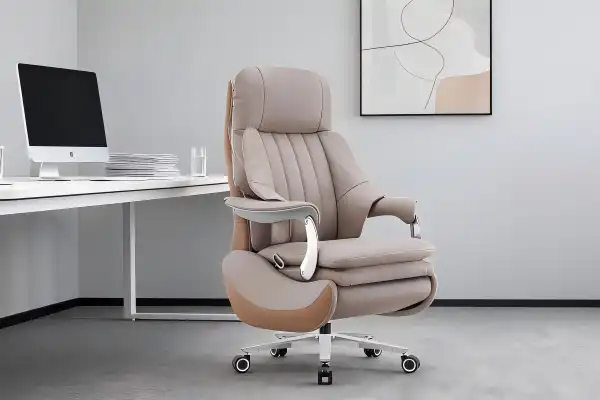
For large-scale deployments in many areas or places, mid-tier manufacturers are the best choice because they offer commercial-grade performance at more reasonable prices. Our two-tone beige and brown Executive Style Office Chair is a great example of this type of chair. It has 45-density high-resilience foam padding, adjustable headrests, and chrome-finished five-star legs. Our quality standards are backed up by SGS and CEC certifications, and our Foshan warehouse keeps stock on hand so that orders can be filled quickly. The built-in electric tools, which include massage, heating, and air flow functions, provide executive-level relaxation that is usually only found in more expensive items.
Understanding Pricing Structures and Order Volumes
Being clear about prices helps buying teams use their funds wisely. Executive chairs for small offices or additional desks in the entry-level price range are a good starting point. Options in the mid-range offer a good mix of functions and reliability for most business uses. Premium types are made for specific needs or places that value status. When you buy in small batches, you usually get a standard rate. As order quantities move into bulk levels and larger tiered volumes, you save even more. Because there are no markups for distributors when you deal directly with the maker, prices are often significantly lower than through retail outlets.
Maintaining Executive Style Office Chairs for Longevity and Performance
Following the right upkeep steps will protect your furniture purchase and make chairs last longer.
Leather Care and Conditioning Protocols
An Executive Style Office Chair with top-grain leather needs to be cared for every so often to keep it from drying out and breaking. Use soft cotton cloths and pH-balanced leather cleaners to clean surfaces every three months. Stay away from strong chemicals that remove natural oils. Leather conditioner should be used twice a year to keep it soft, especially in climate-controlled offices where low humidity speeds up wear and tear. If you want to keep spills from staining, blot them right away instead of rubbing. By doing these easy things, you can make leather furniture last longer, from five years to well over ten.
Mechanical Component Maintenance
Lubricating moving parts on an Executive Style Office Chair on a regular basis is necessary to keep them running smoothly. Apply silicone-based oil to the pivot points of the tilt mechanism once a year, and wipe off any extra to keep dust from building up. Rolling is made easier by cleaning the bearings of caster wheels every three months. To make sure the gas lift works, fully extend and squeeze the cylinder while listening for sounds that don't belong, which could mean the seal is wearing down. Tighten any weak bolts that you find during checks to keep small problems from getting worse and causing the structure to fail.
Troubleshooting Common Performance Issues
Users who say their lower back hurts often feel better after making changes to the lumbar support instead of getting a new chair. Show your workers how to sit properly. The lumbar pad should touch the spine at belt level, putting forward pressure that keeps the spine's natural curve. Most of the time, misaligned tension controls are to blame for malfunctioning tilt locks instead of hardware problems. Complaints about armrest height may be a sign of bad desk ergonomics; armrests should let you type with your elbows at 90-degree angles, and your shoulders relaxed. Taking these things into account before labeling chairs broken saves money on new costs that aren't necessary.
Developing Inspection Schedules for Fleet Management
Systematic repair plans are helpful in business settings. Visual checks of all luxury seats should be done every three months, and wear patterns and mechanical performance should be written down. As part of the annual deep-cleaning process, all detachable parts should be taken apart, the fabric should be cleaned thoroughly, and the whole machine should be tested mechanically. Instead of relying on personal opinions, set replacement standards based on objective measures, such as upholstery tears that are more than one inch long, foam compression below 70% of its original density, or gas lift fails. These habits make sure that comfort levels are always the same and that refill times are always the best.
Conclusion
When choosing and maintaining Executive Style Office Chair seating, you have to balance the need for comfort, the need for sturdiness, the desire for a nice look, and your budget. When purchasing chairs, smart teams look at the total cost of ownership instead of just the original price. They know that better materials and building pay off in the long run by making chairs last longer and requiring fewer replacements. Knowing the technical differences between task seats and real executive models—like higher backrests, better padding, and more advanced mechanisms—will help your investment support your health and productivity for years of heavy use. Using structured repair methods will keep these benefits for a long time, giving your company the most value.
FAQ
How do executive chairs reduce musculoskeletal discomfort?
Executive models take spinal health into account by having high backrests that spread pressure over larger areas, adjustable lumbar support that keeps the spine's natural curve, and synced tilt systems that encourage active sitting. These traits make the intervertebral discs less stressed, which lowers the chance of injury from long periods of sitting.
Should I choose leather or mesh upholstery for my office environment?
If you take care of your leather furniture, it will look great for a long time and never go out of style. This makes it perfect for traditional senior settings and offices where clients come in. Mesh is better for letting air flow in hot places or buildings with less air conditioning, and it's also easier to clean. When making a choice, you should think about how it will be used, the weather, and how easy it will be to maintain.
What certifications should I require when procuring executive chairs?
Standardized testing methods used for BIFMA X5.1 approval confirm the integrity of structures. GREENGUARD Gold approval proves low chemical emissions, which helps with worries about indoor air quality. Class 4 gas lift cylinders are safer than Class 3 cylinders. SGS and CEC approvals give you even more peace of mind about the quality, especially when buying from makers in other countries.
Partner With PENGPAI for Your Executive Seating Procurement
When it comes to executive chair procurement, PENGPAI has seventeen years of experience in making. They offer integrated production sites and full project management services. As a maker of Executive Style Office Chairs, we can help you make changes to the size, the material, and the way the chairs work. We also have in-house engineering teams that can help you with technical models and confirm that the changes will work. Our Foshan warehouse has a lot of stock, which lets us fill orders quickly. Our SGS and CEC certifications show that we are committed to quality standards. Dedicated project managers handle contact during production and delivery, which makes the buying process easier for clients from other countries. Email kiki@pengpaifurniture.com for full specs, bulk prices, or solutions that are made to fit your company's needs.
References
1. Johnson, M. & Williams, R. (2023). Ergonomic Design Principles for Corporate Seating: A Comprehensive Analysis. New York: Professional Workspace Publishers.
2. Chen, L. (2022). "Material Science Applications in Commercial Furniture Manufacturing." Journal of Industrial Design and Engineering, 45(3), 112-128.
3. American National Standards Institute. (2024). ANSI/BIFMA X5.1-2024: Office Chairs Performance Testing Standards. Grand Rapids: Business and Institutional Furniture Manufacturers Association.
4. Peterson, K. & Anderson, T. (2023). Total Cost of Ownership in Commercial Furniture Procurement. Chicago: Corporate Asset Management Press.
5. Zhang, W. (2024). "Biomechanical Evaluation of Executive Seating Systems in High-Performance Work Environments." International Journal of Occupational Health, 38(2), 87-104.
6. Martinez, S. (2023). Maintenance Protocols for Commercial Office Furniture: Best Practices and Longevity Strategies. Boston: Facilities Management Institute.
Online Message