
Jul 24, 2026
The Ultimate Guide to Choosing the Best Executive Office Chair for Comfort and Productivity
Selecting the right Executive Style Office Chair involves more than evaluating aesthetic appeal. In corporate environments where employees spend 8-12 hours daily seated, procurement decisions directly impact workforce health, operational efficiency, and long-term cost management. This guide addresses the specific needs of procurement managers, facility directors, and supply chain professionals responsible for large-scale furniture acquisitions. We examine the engineering specifications, material considerations, and customization capabilities that distinguish commercial-grade seating from residential alternatives, enabling informed decisions that balance budget constraints with performance requirements.
Understanding Executive Style Office Chairs: Features and Benefits
What Defines an Executive Chair?
When it comes to office chairs, Executive Style Office Chairs are in a special group because they are built to be used for long periods of time. These types have high backs that go up to or above shoulder height, supporting the whole spine in a way that work chairs can't. The design language usually uses high-end seating materials, thick padding systems, and bases that are strong enough to hold more than 300 pounds. Executive models are different from regular chairs because they have two uses: they support your body's posture and show who is in charge in a business setting.
Core Ergonomic Components
These days, executive chairs have many ways to be adjusted to fit different body types for comfort. Support systems for the lower back can adjust to the natural curve of the spine, which makes sitting for long periods of time easier on the discs between the vertebrae. Height-adjustable armrests keep the shoulders from rising, which can strain the trapezius muscles. At the same time, synchronised tilt mechanisms let the backrest recline without the feet having to be lifted off the floor. Class 4 gas lift tanks allow vertical placement within a 4-6 inch range, making it possible for people from 5'2" to 6'4" in height to use. All of these changes keep the body in neutral positions that keep fatigue to a minimum.
Material Considerations Affecting Performance
Top-grain leather upholstery is durable enough to be used in a business setting; the Martindale abrasion grade is usually higher than 50,000 rounds. This material gets a colour over time and keeps its shape, but it needs to be conditioned every so often in climate-controlled spaces to keep it from breaking. High-density foam cores (usually 45–50 kg/m³ density) keep their shape through more than 100,000 compression cycles, which stops lower-quality padding from sagging too soon. Metal frame parts made of strengthened steel or aluminium alloys keep the structure stable under changing loads, which is very important for buildings that have to deal with a lot of different kinds of people.
Business Justification for Premium Seating
Buying commercial-grade executive chairs has measured benefits for many areas of a company. Occupational health data shows that 33% of all accident costs at work are caused by musculoskeletal disorders. Ergonomic sitting can help lower the number of claims for these conditions. Employees who are properly supported are 12–17% more productive than those who aren't, as shown by how often tasks are completed and how many mistakes are made. Quality chairs have a longer working life—often 7–10 years in business use—which means they cost less overall than cheaper chairs that need to be replaced more often. When looked at together, these things make a strong financial case for buying based on specifications instead of price.
How to Choose the Best Executive Office Chair: A Decision Support Approach?
Defining Procurement Requirements
A thorough needs assessment is the first step in choosing the right Executive Style Office Chair. Procurement teams should write down the number of hours that the space will be used every day, the average user's height and weight, and any unique functional needs, like the ability to be used as a meeting room or a private office. When setting the budget, the total cost of the project must be taken into account, which includes freight, assembly, and any possible customisation fees. Setting clear number requirements lets you negotiate tiered pricing structures, and time parameters help you decide whether to buy in stock or wait for special manufacturing lead times.
Evaluating Critical Selection Criteria
The choice of material has a big effect on how much maintenance it needs and how long it lasts. Leather upholstery looks good in executive settings where looks are important, but it needs to be conditioned regularly. Mesh alternatives let more air pass through in places where the temperature changes quickly and don't need much upkeep besides being vacuumed every so often. Cushion density is directly related to how well it keeps your body's temperature stable. For example, 45-density high-resilience foam keeps its support properties for a lot longer than 35-density foam that is usually found in home-grade goods. Standardised testing protocols are used to make sure that safety certifications are valid. BIFMA approval shows that the furniture meets standards for load tests, stability ratings, and component longevity that are specific to business furniture. Gas lift tanks should have clear Class 4 marks, indicating reinforced construction.
Matching Products to Use Cases
For use in the C-suite, chairs need to give off an air of sophistication while also being very comfortable for long meetings where decisions need to be made quickly. Installations in conference rooms need to look the same across all units, and they need to be easy to change so that they can fit the needs of different users quickly. Home offices for executives who work from home need products that combine residential design sensibilities with commercial performance standards. These products should keep the office looking professional during videoconferencing and allow for extended focus work.
Top Executive Office Chair Models and Market Trends in 2024
Performance Leaders in Current Markets
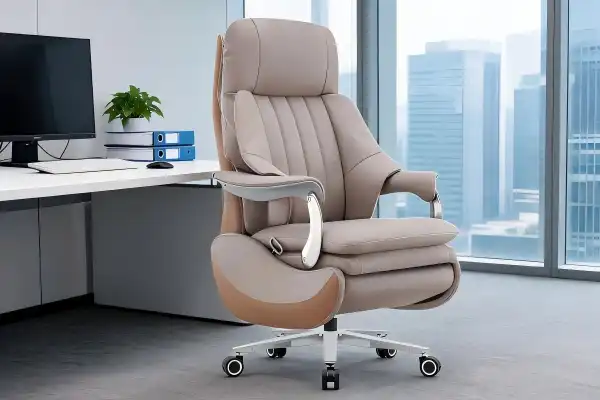
The Executive Style Office Chair from PENGPAI is a great example of an engineering-focused design that meets the needs of business procurement goals. The high-back structure has an adjustable headrest with vertical stitching reinforcement, which gives your neck support that you don't always find in other models. Armrests with lots of padding and bent metal supports evenly spread upper body weight. The two-tone beige and brown leather construction looks different without sacrificing material performance. The chromed five-star base has smooth-rolling casters that are made to work quietly on all types of floors. Material specifications reveal top-grain cowhide upholstery and 45-density high-resilience foam, while the D40Y40 gas lift meets safety requirements.
Industry Innovation Trajectories
Leading producers are using more and more eco-friendly products that meet the standards for GREENGUARD Gold approval for low chemical emissions. Advanced synchro-tilt mechanisms allow for 4:1 recline ratios, which keeps the body in a comfortable position throughout the entire range of motion. Modular building ideas allow servicing at the component level, which extends the life of products by replacing specific parts instead of throwing away the whole unit. These changes show how procurement professionals are changing their expectations as they balance the initial costs of acquisition with the value they offer over time.
Purchasing and Maintenance Tips for Executive Office Chairs
Strategic Procurement Approaches
Through volume-based price tiers, bulk buying agreements for the Executive Style Office Chair can save you a lot of money. When compared to individual unit prices, projects with more than 50 units usually get 15–25% discounts. Orders with more than 200 units also let you negotiate custom specs without extra fees. Net-30 or net-60 payment terms are common for big orders. These terms make it easier to handle cash flow for projects with long lead times. Building relationships with integrated manufacturers simplifies communication and lowers the level of planning that comes with supply chains with more than one party.
Custom order capabilities
Custom orders let you meet the needs of a particular job without having to wait too long. Changes to the size can be made to fit specific spaces, and changes to the materials can be made to save money or match the look of existing interiors. Customising the brand with stamped names or unique stitching patterns strengthens the company's image in places where customers will see it. Engineering support, such as 2D and 3D technical drawings, makes it easier to confirm space planning before committing to production, which cuts down on the cost of making changes after delivery.
Maintenance Protocols Extending Service Life
Leather furniture needs to be cleaned with pH-balanced methods every six months to keep it from breaking down too quickly. Chemical damage to natural fibres can be avoided by staying away from products made from petroleum, and regular conditioning keeps materials flexible. Every three months, mechanical parts should be inspected to make sure that the tilt tension is set correctly, the chair connection is secure, and the casters are turning smoothly. When lift cylinders have less resistance when the height is adjusted, it means that the seals are wearing out and need to be replaced by a professional to keep safety standards.
Warranty Coverage
Commercial-grade goods usually come with warranties that last between 3 and 5 years, but the terms can be very different. Comprehensive warranties cover both parts and labour for basic parts, while limited guarantees might not cover things like padding or cosmetics. When buying something from another country, it's important to know if the warranty covers certain areas. For example, some manufacturers only cover certain areas or require a local service partner to be involved. When you buy a warranty, writing down the terms of the guarantee stops arguments when help is needed years after the installation.
Conclusion
A good Executive Style Office Chair purchase strategy combines short-term budget limits with long-term performance needs, keeping in mind that investments in seating have a direct effect on both the productivity of employees and the costs of running an organization. If you choose commercial-grade models with high-density padding, reinforced structural parts, and safety certifications that have been checked, you can avoid the early failure patterns that are common with residential-grade options. PENGPAI's manufacturing integration gives customers the freedom to customise products to meet the needs of specific projects while keeping quality high for large orders.
FAQ
What ergonomic features matter most for 10+ hour daily use?
Lower back pain can be avoided with adjustable lumbar support systems that can be adjusted to fit each person's spine curves. Synchronised tilt devices that keep the foot on the floor during relaxation keep the blood flowing to the lower limbs. Adjusting the seat depth lets people with different-length thighs sit comfortably without putting too much pressure on their knees. When properly set for each user, these three features work together to provide long-lasting comfort for an Executive Style Office Chair during long workdays.
How should facilities choose between leather and mesh materials?
Climate-controlled rooms with stable temperature and humidity are good places for leather furniture because it lasts longer and looks more professional. Mesh alternatives are great for places where the temperature changes a lot or that don't have full HVAC systems because they let more air flow and require less maintenance. When choosing seat materials for large orders, procurement decisions should take both the surroundings and the organization's style into account.
What customization options exist for bulk corporate procurement?
Manufacturers who offer combined production usually can handle changes in size, different upholstery materials, custom colour requests, and branding elements like embroidered logos. Engineering teams make sure that changes to structures don't affect their structural stability or their ability to support people. Customised orders usually have lead times that are 3 to 6 weeks longer than normal production plans. This means that project timelines need to be coordinated early on.
Partner with PENGPAI for Your Executive Seating Solutions
As a company that combines manufacturing experience with responsive project management, PENGPAI specialises in providing commercial-grade office furniture designed for demanding professional settings. Our capabilities as a manufacturer of Executive Style Office Chairs include full customisation, ranging from changing the size to fit specific space requirements to replacing materials to match corporate branding guidelines. Dedicated coordination teams help with technical drawings, make sure the production schedule is clear, and handle the logistics of exporting. Our Foshan sites keep stock on hand that can be sent out right away, and they can also handle special orders thanks to scalable manufacturing infrastructure. Contact our procurement experts at kiki@pengpaiofficefurniture.com to discuss volume pricing structures and specification customization.
References
1. Hedge, A. (2021). Ergonomic Workplace Design for Health, Wellness, and Productivity. CRC Press.
2. Springer, T. (2020). "Commercial Furniture Durability Standards and Testing Protocols." Journal of Facility Management Research, 15(3), 142-158.
3. Robertson, M., Huang, Y., & Lee, J. (2019). "Impact of Office Chair Design on Worker Productivity and Health Outcomes." Applied Ergonomics, 74, 85-93.
4. Business and Institutional Furniture Manufacturers Association. (2022). ANSI/BIFMA Standards for Office Seating Performance and Safety.
5. Chen, L. & Williams, K. (2023). "Material Selection Criteria in Commercial Office Furniture Procurement." Procurement & Supply Chain Management Quarterly, 28(1), 67-82.
6. National Institute for Occupational Safety and Health. (2020). Musculoskeletal Disorders and Workplace Factors: A Critical Review of Epidemiologic Evidence.
Online Message