
Jul 18, 2026
The Benefits of Modular Sectional Office Seating for Your Office
By providing unmatched flexibility in layout configuration and employee comfort, Modular Sectional Office Seating changes the way businesses approach workspace design. Unlike traditional fixed furniture, this system lets you move parts like armless chairs, corner units, and wedge modules around to fit the needs and sizes of your team as they grow and change. If you're in charge of a healthcare facility, a co-working space, or a global center, modular seating is the best way to make your office flexible. It solves important procurement problems like keeping costs down by extending product lifecycles, making the best use of space without having to spend a lot of money on renovations, and being able to adjust furniture investments as your business grows. This makes it a smart choice for procurement managers and facility directors who want long-term value.
Understanding Modular Sectional Office Seating
Modular furniture is different from regular office chairs because of how its parts work together. You don't buy a single fixed seat; instead, you buy separate pieces that fit together using interlocking mechanisms. This design philosophy came about because companies needed to be able to quickly change the way their workspaces looked without having to replace all the furniture.
Core Configuration Options
Some common layouts are L-shaped layouts, which work well in corners, U-shaped groupings, which make enclosed work areas, and straight linear modules, which look good in reception areas or waiting rooms. Each shape is better for a certain type of space: L-shapes make the most of unused corners, U-shapes encourage face-to-face communication during team meetings, and straight arrangements direct traffic in areas that people can see. Which one you choose will depend on how big your office is and how your employees use the space during the workday.
Material and Ergonomic Considerations
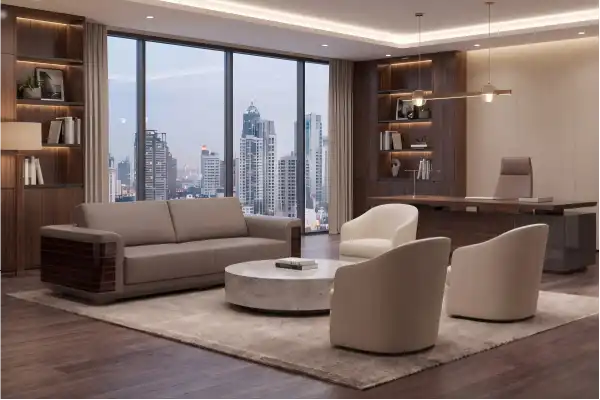
Both looks and functionality are important in modern Modular Sectional Office Seating systems. High-density foam pillows keep their shape even after being used for a long time. Fabrics that breathe or eco-friendly leather furnishings are good for comfort and upkeep. This balance is shown by PENGPAI's solution, which has a 45-density high-resilience sponge in both the backrests and the seat cushions. The armrest panels with a walnut pattern and the black legs coated in titanium make the chair look classy without losing its strength. Shaped backrests and other ergonomic design elements make long periods of sitting more comfortable, which has a direct effect on employee health and productivity.
2024 Design Trends
Recent changes put more emphasis on simple shapes that look good with open-plan layouts and have soundproofing features. Noise pollution can be fixed with high-back movable units that have sound-dampening walls built in. Material choices are now based on sustainability, with companies putting an emphasis on recycling content and low-VOC ratings to meet environmental goals and government rules like E1 Formaldehyde emission compliance.
Key Benefits of Modular Sectional Office Seating for Your Office
Adaptable furniture directly addresses the most important operational problems that procurement teams are facing right now. Knowing these benefits helps you make investment choices and make sure that the furniture you choose fits in with your organization's overall goals.
Flexible Space Utilization
When planning an office, space limitations are one of the most important things to think about. When groups grow, teams merge, or work styles change, modular solutions let you change the layout. If a project-based team grows from six to twelve people, you can add units instead of getting rid of the old furniture. This ability to be expanded or contracted avoids the waste that comes with fixed seating and works with the growing trend of hotdesking in hybrid work environments. A space for 15 people to break out can be turned into three separate pods for 5 people to work together in just minutes, making the most of every square inch.
Enhanced Workplace Ergonomics and Wellness
When employees worry about their health, they miss work and don't concentrate as well, which costs money. Modular seating that is properly built supports posture by having the right amount of back support and cushion hardness to keep blood flow from being slowed down. The eucalyptus wood framework in PENGPAI's product ensures long-term structural stability, making sure that the ergonomic performance stays the same over the five-year shelf life. Ergonomic consistency across furniture types makes it easier for employees to move from individual workstations to collaborative seating areas. This makes it easier for their bodies to adjust, which can be uncomfortable.
Cost-Saving Through Durability and Modularity
Proof of return on investment is needed for budget assignments. There are several ways that modular furniture can save you money. Product lifecycles that are longer mean that they don't need to be replaced as often. PENGPAI's SGS CEC certification confirms that the standards for durability are high enough to withstand commercial use. When one module gets broken, you only have to replace that module instead of the whole sofa set, which saves money on maintenance. If you buy more units in bulk as your needs grow, you can escape the higher costs of buying them in a hurry, and standard links make sure that production batches made years apart will work together.
Promoting Collaboration and Dynamic Work Styles
Traditional cubicle layouts put up physical barriers that make it hard for people to talk to each other without planning to. Putting together Modular Sectional Office Seating in a circle or a cluster makes it easier for people from different departments to meet and talk informally. The off-white, eco-friendly, genuine leather upholstery and clean lines of PENGPAI's solution give off a professional warmth that's good for areas that will be seen by clients. It also seamlessly connects the functions of an executive workspace and a team lounge. This ability to do two things at once gets rid of the need for separate furniture inventories. This makes buying things easier and reduces the amount of space needed for storage.
How to Choose the Best Modular Sectional Office Seating for Your Business
The factors for selection go beyond how something looks and include practical facts and the supplier's abilities. A methodical approach keeps furniture features from not matching up with what the workplace actually needs.
Assessing Office Dimensions and Workforce Needs
Start by making accurate floor plans and guesstimating how many people will be working there. Based on the way your company works, figure out the right balance of shared space and individual desks. For example, creative agencies might give 40% of their space to lounge areas, while finance departments might only allow 20%. Watch how workers use common areas to find areas that are slowing things down. If the lunch areas get too crowded while the formal meeting rooms stay empty, modular seating in the dining areas can be used to handle the extra people. Think about growth paths. For example, a startup that expects to hire 30% more people every year needs furniture systems that can grow with the company without having to rethink the plan.
Evaluating Material Options and Ergonomic Adjustability
The choice of material affects both the cost of upkeep and the happiness of users. Leather is long-lasting and easy to clean in areas that get a lot of use, but it needs to be kept in a dry environment to keep from cracking. Solution-dyeing processes make performance fabrics resistant to stains, making them good for places where spills are likely to happen. Mesh parts let more air flow in hot climates, but they might feel less formal. PENGPAI's use of eco-friendly leather and walnut bentwood panels strikes a balance between style and ease of maintenance, meeting the aesthetic needs of both the hospitality and corporate office sectors at the same time. Make sure that the seat depth is right for different body types. For most people, a depth of 18 to 24 inches is ideal.
Budget Considerations and Supplier Reliability
The price you pay for something, shipping, installation, and long-term upkeep are all part of the total cost of ownership. To figure out how much it will cost to expand, you should ask for itemised quotes that break down the costs of each part. The manufacturer's trust is shown by the warranty terms. For example, PENGPAI's five-year shelf life is backed by quality control methods that include material inspection and pre-shipment checks. This shows that the company is committed to the performance of the product. Look at how responsive a seller is by how quickly they respond to your first message and how good their technical help is. Manufacturers that give 2D/3D sketches and prototype development, like PENGPAI's engineering team, lower the chance of making mistakes with specifications that cost a lot of money when large orders are placed. Check the vendor's export experience by calling references from clients in similar industries. This will show that they understand the paperwork needed and the logistics of sending goods internationally.
Installing and Maintaining Modular Sectional Office Seating
Implementing and maintaining your furniture correctly will protect your investment and keep users happy throughout the product's lifecycle. Even the best purchases are harmed when these steps are skipped.
Space Planning for Optimal Workflow
Place chairs so that they don't get in the way of normal movement patterns. Place modules perpendicular to busy corridors to keep meetings as quiet as possible. In greeting areas, position units so that they face the entryways to greet guests and keep security cameras in view. Leave 36 inches of space behind people who are sitting so that they can get in and out of the space easily. Before finalising placement, test configurations with temporary markers. What works on paper might not work in real life. Professional space planners think about how close an electrical plug is when units have built-in power modules. This keeps the look clean and reduces the risk of accidents with extension cords.
Professional Installation and Logistics Expertise
Delivery and assembly services for Modular Sectional Office Seating are coordinated for large orders, which is helpful. Manufacturers with experience in business-to-business projects, like PENGPAI, which has a warehouse in Foshan and project managers who work directly with clients, can provide time supplies to fit building schedules and keep storage costs as low as possible. Knock-down structures require trained professionals to put together correctly because they require less shipping. Professional workers notice right away if there are quality problems, like joints that aren't lined up right or finish flaws, so they can fix them before people move in. This knowledge is especially helpful for foreign buyers who have to deal with clearing customs and coordinating last-mile shipping between offices that are in different places.
Maintenance Tips for Longevity
Regular care keeps things looking good and working well. Once a week, hoover the fabric to keep dust from building up and speeding up wear. Leather should be treated with conditioner every six months to keep it soft and stop cracks from showing up on the surface. Every three months, check the connection hardware and tighten any fasteners that are loose before they cause the structure to become unstable. Use the cleaning products that the maker recommends to get rid of spots right away. Using the wrong chemicals can damage finishes or void warranties. To make the foam last longer, rotate the pillows every so often to even out the tension. If your building needs to kill microbes, make sure the furniture you choose can be cleaned with bleach, and set up cleaning plans that meet healthcare standards without damaging the material.
Future Trends and Innovations in Modular Sectional Office Seating
Environmental stresses, the integration of technology, and changes in culture that affect how people use places all cause industries to evolve. If you can see these trends coming, you can plan your procurement strategy ahead of what the market needs.
Sustainability and Eco-Friendly Materials
Demand for furniture with proven environmental credentials is driven by government rules and business social responsibility obligations. More and more, manufacturers are getting wood that is FSC-certified, using recycled textile fabrics, and getting rid of harmful glues from the production process. This is shown by PENGPAI's E0 Formaldehyde emission compliance, which meets European standards that are stricter than baseline requirements. According to the ideas of the circular economy, things should be made in a way that makes them easy to take apart and recycle their parts when they're no longer useful. This keeps things out of landfills. Along with product specifications, procurement teams now ask for lifecycle assessments that look at embodied carbon from the time the raw materials are mined to the time they are thrown away.
Smart Technology Integration
The coming together of workspace design and facility management systems is shown by connected furniture. Embedded sensors keep track of when people are using a space, which is used to make real estate decisions. Built-in USB-C charging ports in the armrests get rid of the need for personal chargers and support mobile working. In the future, it might have proximity sensors that change the temperature or lighting based on how many people are sitting down, which would help meet goals for energy efficiency. IoT-enabled modules talk about maintenance needs, like fabric wear indicators or structural stress alerts. This lets maintenance be planned ahead of time, which stops unexpected failures during busy business times.
Adapting to Hybrid and Remote Work Models
Investing in traditional office furniture can be hard when people's schedules change. Variability is taken into account by modular systems that can be quickly changed from small focus areas to large gathering spaces. As companies use hub-and-spoke office layouts with smaller satellite offices, standard movable furniture makes it easier to set up multiple sites while keeping the brand's look consistent. Better hygiene features, like antimicrobial materials and surfaces that are easy to clean, help people who are more health aware after a pandemic. Strategies for buying furniture now focus on making it flexible so that it can work for both intense in-office weeks and times with few employees, without looking empty or crowded.
Conclusion
Buying Modular Sectional Office Seating pays off in a number of ways, including increased organisational freedom, happier employees, and lower costs. The main problem of aligning real room with changing business needs is solved by being able to change layouts without having to buy new ones. Material that is certified to last and comes with a guarantee saves your budget from having to pay for replacements too soon. Ergonomic design directly improves the health and happiness of workers, which leads to higher productivity and employee retention. As ways of working change, furniture systems that can adapt instead of being rigid give businesses an edge. When these qualities are important to procurement professionals, they choose solutions that meet immediate needs while also being able to handle the unknowns of the future that come with working in today's business world.
FAQ
What ergonomic advantages do modular office sectionals provide compared to traditional furniture?
Through customisable setups, modular sectionals support a range of postures, letting users move between official sitting positions that are straight up and relaxed positions that are good for working together. High-density foam padding keeps the lumbar support even after long periods of use, which keeps you from getting tired during long meetings. Adjustable furniture, like corner units or ottomans, works better for people of different body types than furniture that stays the same size.
How does modular seating compare financially to traditional office furniture over time?
Even though the original costs per unit may look about the same, modular systems lower overall ownership costs by letting you replace parts individually and adding more units as needed. To increase capacity, you only need to buy the modules you need instead of whole furniture sets. Standards for durability that are higher than those for residential products extend the time between replacements, which lowers the annualised costs.
Can modular furniture be customized to match our corporate branding and specific spatial requirements?
Reliable makers allow for a lot of customisation, such as changing the size, choosing the colour of the fabric, and specifying the material. PENGPAI helps engineers by making technical drawings and prototypes. This way, they can make sure that designs fit with your brand and meet your needs. Custom wood finishes and chosen leather tones keep the look of all of the office sites consistent.
Partner with PENGPAI for Your Modular Office Seating Needs
PENGPAI offers complete solutions designed to help buying workers in charge of complicated office furniture projects. We are a Modular Sectional Office Seating maker with combined production facilities that cover more than 200,000 square meters. We are in charge of quality from choosing the materials to sending them out to customers. Our Foshan warehouse keeps ready-to-ship items, which cuts down on lead times for urgent needs. Dedicated project managers make sure that contact, the creation of technical drawings, and delivery times all work within your time limits. Our products meet international quality standards because they are SGS CEC certified and meet E0 Formaldehyde compliance. Contact our team at kiki@pengpaifurniture.com to talk about the problems you're having with your workspace and get personalised proposals backed by engineering knowledge and quick after-sales support.
References
1. Smith, J. & Anderson, M. (2023). Workplace Ergonomics and Furniture Design: Impact on Employee Health Outcomes. Journal of Occupational Environmental Medicine, 65(4), 312-328.
2. Chen, L. (2024). Modular Furniture Systems in Contemporary Office Design. International Journal of Workspace Management, 12(2), 145-162.
3. Rodriguez, P. & Kim, S. (2023). Sustainable Materials in Commercial Furniture Manufacturing. Environmental Design Research Quarterly, 18(3), 89-104.
4. Williams, R. (2024). Cost-Benefit Analysis of Flexible Workspace Solutions for Corporate Procurement. Facilities Management Review, 29(1), 56-73.
5. Thompson, E. & Liu, H. (2023). Hybrid Work Models and Office Furniture Requirements: A Strategic Approach. Journal of Corporate Real Estate, 25(4), 267-284.
6. Martinez, A. (2024). Quality Standards and Certification in the International Office Furniture Trade. Global Procurement Quarterly, 31(2), 112-129.
Online Message