
Aug 29, 2026
Modern Office Space with Modular Furniture
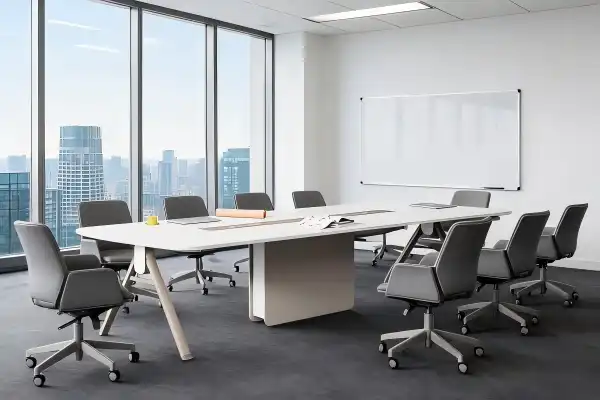
Modern office space with modular furniture has transformed how businesses approach workspace design and functionality. At the heart of this revolution sits the Contemporary Modular Meeting Desk—a reconfigurable furniture solution engineered to adapt to diverse collaboration scenarios while maximizing space efficiency. Unlike traditional fixed conference tables, these innovative systems offer procurement managers, interior designers, and facility planners the flexibility to reconfigure layouts within minutes, accommodate growing teams, and integrate advanced technology seamlessly. With features like integrated cable management, E0-grade eco-friendly materials, and tool-free assembly mechanisms, these desks address the core pain points of project-based furniture procurement: delivery reliability, customization capability, and long-term commercial durability.

Understanding Contemporary Modular Meeting Desks
What Defines Modular Conference Solutions
Modular meeting tables are different from regular office furniture because they value adaptability over stability. These systems use lightweight, high-tensile frames and interlocking parts that make it possible for a single set of furniture to be changed from a large conference configuration to individual workstations or training pods. Structures are usually made with 25 mm E0-grade high-density fiberboard or high-pressure laminate surfaces and powder-coated steel or extruded aluminum frames. This mix provides scratch protection with a hardness rating of 3H to 5H while keeping weight-bearing capacity of up to 100 kg per module.
Material Excellence and Environmental Standards
Performance and caring for the environment are both important to good modular desks. The Moon Tree 25mm national standard E0 grade odorless eco-friendly board used in our Contemporary Modular Meeting Desk is made of a material that meets or exceeds European formaldehyde emission standards and is very durable. The 2mm PUR edge banding not only makes the panels look better, but it also makes seals that keep dust and wetness out, which is important for keeping healthcare facilities and government buildings clean. The 40x20 channel 1.5mm steel crossbeam and 1.2mm unique frame legs make sure of stability during high-frequency daily use, which is something that residential-grade options often don't do.
Integrated Technology Infrastructure
Connectivity must be smooth for modern teams to work together. The racetrack-shaped tabletop has a gray cable management strip running through the middle of it. This hides the power outlets and USB ports, getting rid of the "cable chaos" that often happens in hybrid meeting spaces. This unified method meets UL-962 electrical safety standards and includes tech holes that will work with 100W USB-C PD systems in the future, so clients don't have to replace the whole desk structure. The swappable power units meet GREENGUARD Gold standards, which eases the minds of quality assurance teams that are worried about the environment and the stability of the materials.
How to Set Up and Optimize Modular Meeting Desks for Your Office
Pre-Installation Planning and Space Analysis
Accurately measuring the space and figuring out what functions are needed are the first steps to a successful deployment. Before choosing layouts, procurement managers should look at the size of the room, how people normally move through it, and where the furniture is already placed. Our Contemporary Modular Meeting Desk comes in five different sizes, from 2400x1200x750mm to 4200x1380x750mm, so it can fit any kind of meeting space, from small strategy sessions with four people to executive boardrooms with 20 people. Because of this, interior designers can keep the same look in different office places even though the square footage limits may be different.
Assembly and Configuration Best Practices
The quick-connect method doesn't require any tools, so building teams can change layouts in less than 15 minutes. This is a huge benefit when project deadlines require quick space changes. The rounded corners and quiet casters make the furniture safer and easier to move around. This means that agile teams can switch from U-shape plans for talks to hexagonal groups for break-out discussions. Heavy-duty steel interlocking ganging brackets stop "table creep," which is when the surface separates, and precision changeable leveling glides even out floors that aren't level, which is common in older business buildings.
Ergonomic Integration and User Comfort
Workspace optimization is more than just choosing the right desk. It also includes things like lighting, soundproofing, and seating that go well with it. The usual height of 750 mm works well with ergonomic office chairs that have back support and arms that can be adjusted. Putting modular desks near natural light sources makes it easier on the eyes during long meetings, and keeping them away from busy hallways keeps noise levels down. The clean white tabletop in the shape of a racetrack reflects light well, making the space bright and energetic, which is good for both work and employee health.
Choosing the Right Modular Meeting Desk: Comparison and Procurement Guide
Evaluating Flexibility Against Fixed Alternatives
Conventional conference tables force businesses to use fixed layouts that are no longer useful as teams change. Scalability in modular systems makes furniture last longer and protects capital investments. When comparing options, procurement directors should look at how quickly they can be reconfigured, how easily parts can be swapped out, and how much space they can add. Daisy-chain power connections work with our Contemporary Modular Meeting Desk, so as your staff grows, you can add more modules without any problems. This feature lowers your long-term buying costs and keeps your office as smooth as possible during growth phases.
Material Quality and Commercial-Grade Standards
Residential-grade products are different from business options made for high-frequency institutional use in how long they last. Checklists for purchases should make sure that the items meet ANSI/BIFMA X5.5 standards for structural integrity, NEMA LD 3 standards for surface resistance to stains and chemicals, and IEC electrical safety standards for systems that integrate power. The five-year shelf life, which is backed by SGS CEC certification, shows that the company that made the product is confident in how long the materials will last. This is important for government agencies and healthcare facilities that need longer warranty coverage and predictable replacement cycles.
Customization Capabilities and Project Requirements
Customization is needed because of things like corporate branding, limited room, and specific useful needs. Leading providers let you change the size, choose the finish on the material, and add new functions without having to wait too long for development. During the design process, our engineering team offers 2D and 3D technical sketches to make sure that the conceptual layouts and production possibilities are in line with each other. This way of working together lowers the chance that quality will vary between approved samples and bulk shipments, which is a common problem for international buyers who are in charge of large office fit-out projects in several places.
Budget Optimization and Total Cost of Ownership
The purchase price is only one part of the costs of getting furniture. Shipping costs, work for putting things together, upkeep needs, and how often things need to be replaced all have a big effect on the total cost of ownership. Our modular desks take up 40% less room in containers than fully assembled units because they are designed to be taken apart. This saves money on foreign shipping costs. The sealed board edges keep dust from building up and make cleaning easier, which saves time and effort for facility management. These practical improvements save money over time, which makes it worth investing in more expensive materials over cheaper ones that need to be replaced more often.
Leading Brands and Sustainable Suppliers of Modular Meeting Desks
Supplier Evaluation Criteria for B2B Procurement
To find the best manufacturing partner, you need to look at their production capacity, experience with exporting, and communication systems. PENGPAI was established in 2008 and is based in Foshan's Shunde district. It runs a 200,000-square-meter building with modern production lines and a 50,000-square-meter showroom. Our structure combines manufacturing and trading so that purchasing managers can get professional international service standards along with quality control at the factory level. The company keeps stock on hand at the Foshan warehouse, which means that pressing project needs can be met faster than with made-to-order options.
Sustainability and Environmental Responsibility
Goals for corporate social responsibility have a bigger impact on choosing suppliers. People who care about the environment prefer to buy from companies that use recovered materials, green energy, and low-emission production methods. Our E0-grade formaldehyde standards are higher than both British National and European regulatory limits. This addresses health concerns for offices that are closed off. The odorless, eco-friendly board formulation gets rid of off-gassing problems that hurt indoor air quality. This is especially important for schools, healthcare facilities, and LEED-certified buildings that want to find environmentally friendly furniture solutions.
Quality Assurance and Manufacturing Consistency
To keep things consistent, strict quality control methods are needed for bulk orders that are split up into multiple packages. PENGPAI uses inspection procedures that include checking the materials, keeping an eye on the production, and doing checks before the goods are shipped. Our imported Italian and German production lines make sure that the tolerances between joined modules are within +/- 1 mm. This makes it possible to make work areas that are smooth, which is important for professional looks. The alignment verification process stops the surface separation and wobbling problems that happen with lower-quality modular systems. This protects buyers' reputations when they hand over fully functional office installations to end clients.
Future Trends and Innovations in Modular Office Furniture
Smart Technology Integration
The next version of flexible desks has Internet of Things (IoT) sensors that track how often people use them, which lets data-driven optimization of space use happen. Modern cable management systems can now handle the growing power needs of laptops, monitors, and charging accessories. Future-proof tech cutouts in our Contemporary Modular Meeting Desk let facility managers increase power delivery capacity as technology changes, keeping the desk from becoming outdated too soon. This forward compatibility saves investments while staying in line with new technology standards for the workplace.
Adaptability for Hybrid Work Models
Tools for working together remotely and open schedules have changed how offices work. Flexible office plans that give square footage based on daily usage instead of set tasks can work with modular furniture systems. With the rapid reconfiguration feature, companies can turn conference rooms into hot-desking areas when they're not in use, making the best use of space. Silent casters and light construction let employees change layouts to suit their needs without the facility team having to get involved. This encourages independence and teamwork.
Scalability and Long-Term Investment Value
When the economy is unclear, buying strategies tend to focus on assets that can be easily changed to fit changing growth paths. With modular systems, you don't have to worry about the "sunk-cost trap" of having big standard boardrooms that are empty when business is slow. Being able to buy extra units as needed spreads out capital costs over several fiscal years while keeping the design consistent. This financial flexibility is appealing to new businesses, co-working spaces, and growing companies that want furniture solutions that can grow with the company instead of having to buy all new furniture at once during growth periods.
Conclusion
When using modular furniture to make a modern office, you have to balance the furniture's immediate functional needs with its ability to be changed in the future and its low cost. The Contemporary Modular Meeting Desk is a great example of how well-thought-out engineering can solve problems with procurement by using commercial-grade durability, reconfigurable designs, and built-in technology infrastructure. By putting quality materials, the ability to customize, and caring for the environment at the top of their lists, companies can create collaborative spaces that support changing work models and keep furniture investments safe. A good procurement process includes more than just choosing the right products. It also includes making sure that the supplier is reliable, that the quality is consistent, and that the project manager is quick. These are all things that affect whether furniture projects increase or decrease company efficiency.
FAQ
How do modular meeting desks compare to traditional conference tables?
When compared to set tables, modular systems make better use of room and offer more layout options. One modular set can be changed in less than 15 minutes from a 20-person boardroom to five 4-person groups. With regular tables, you have to get new ones every time you need to work together. Knock-down structures in modular designs make operations easier and cut shipping costs by 40%, which is a big plus for projects that need to be done in more than one place.
Can these desks withstand heavy commercial use?
Of course. The Contemporary Modular Meeting Desk is built to meet ANSI/BIFMA X5.5 standards for structural stability and can hold up to 100 kg per module. According to ISO 2812-3 standards, the HPL surfaces don't react with hospital-grade disinfectants. This means that alcohol- or bleach-based cleaners won't damage them. The unique frame legs and 1.5 mm steel crossbeam make the table stable for high-frequency daily use, which is much more than what is required for household furniture.
What customization options support branding requirements?
To make it fit with their company's brand, clients can change the sizes, pick different material finishes, and add their own power configurations. Our engineering team makes technical drawings and builds prototypes to make sure the design is workable before it goes into mass production. This joint process makes sure that the quality of all bulk orders is the same, while also taking into account each order's special room needs and functionality requirements.
Partner with PENGPAI for Your Modular Furniture Needs
PenGPAI is an expert at providing project-ready Contemporary Modular Meeting Desk solutions that are backed by professional export services and combined manufacturing capabilities. For faster shipping times, our Foshan plant keeps stock on hand, and from the quote stage through installation, our specialized project managers handle communication, quality control, and logistics. We know how hard it is for procurement managers to meet quality standards, stick to budgets, and meet delivery schedules in foreign supply chains. With E0-grade environmental certifications, five-year durability guarantees, and quick after-sales support, we're the reliable partner that turns buying furniture from a problem to a strategic advantage. Email our team at kiki@pengpaifurniture.com to talk about your particular needs, look into bulk pricing options, and get technical specs. Please allow us to assist you in finding Contemporary Modular Meeting Desk options that improve teamwork and make project completion simpler.
References
1. American National Standards Institute. (2019). BIFMA X5.5 Desk Products Testing Standard. Business and Institutional Furniture Manufacturers Association.
2. European Committee for Standardization. (2021). EN 13501-1: Fire Classification of Construction Products and Building Elements. CEN Publications.
3. Hassanain, M. A. (2020). Flexible Workspace Design: Supporting Organizational Agility Through Modular Furniture Systems. Journal of Corporate Real Estate, 22(4), 287-301.
4. International Organization for Standardization. (2018). ISO 2812-3: Paints and Varnishes - Determination of Resistance to Liquids. ISO Standards Catalogue.
5. Kim, J. & de Dear, R. (2022). Workspace Design and Employee Well-Being: The Role of Ergonomics and Environmental Quality. Building and Environment, 205, 108-121.
6. National Fire Protection Association. (2020). ASTM E84 Standard Test Method for Surface Burning Characteristics of Building Materials. NFPA Technical Committee.
Online Message