
Jul 17, 2026
Is the Luxury Wood Executive Desk Value For Money?
Whether or not a Luxury Wood Executive Desk is really worth the money depends on your buying priorities and how quickly you need to get the desk up and running. Companies that want long-lasting furniture, better brand recognition, and commercial-grade performance can see a clear return on their investment in premium wood executive furniture. This is because the furniture lasts longer, needs to be replaced less often, and raises the status of the workplace. Modern Luxury Wood Executive Desks made with E1-grade bases and vacuum-formed finishes are both aesthetically pleasing and technically durable. This makes them more cost-effective over the course of 5 to 10 years than cheaper options that need to be replaced or fixed all the time.
Understanding What Makes a Luxury Wood Executive Desk
Material Quality and Construction Standards
The foundation of any premium executive desk lies in its substrate composition and surface treatment. The core of high-quality models is made of E1-grade high-density fibreboard or natural solid wood particleboard, which makes them stable in size and able to hold more than 250 pounds. Advanced vacuum forming technology makes surface finishes that won't scratch, stain, or fade. These are important qualities for commercial spaces that get used every day. Using 2mm PVC edge banding and imported hot melt glue stops moisture from getting in and delaminating, which are typical problems with cheaper furniture. These technical requirements directly lead to furniture that stays structurally sound and looks good even after years of heavy use.
Design Philosophy and Aesthetic Appeal
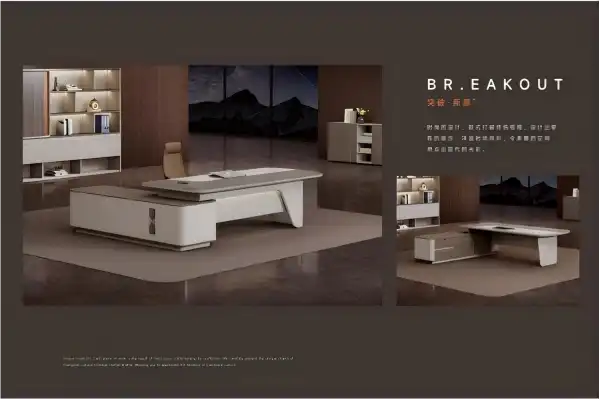
Modern Luxury Wood Executive Desks show changing office styles that balance formality with friendliness. Modern light-luxury design uses soft, rounded lines instead of harsh angles, making a space that is welcoming and good for collaborative leadership styles. Off-white and light wood grain tones give a room a warm look while still maintaining a professional air. This is a great combination for videoconferencing, where the background's appearance can affect how people see things. These pieces can be used in a wide range of office settings, from standard corporate rooms to flexible co-working spaces, thanks to their metallic accents and vertical striped textures that add depth without being too busy.
Functional Integration and Technology Management
Modern executive workstations need to be able to handle complex technology while still keeping the lines of sight clear. Luxury Wood Executive Desks of high quality come with multi-use cable boxes and built-in LED lighting strips that make it easier to use multiple computers, charging devices, and other accessories. Built-in cable management solutions get rid of the visual clutter that makes it hard to give a professional impression in client meetings and video calls. Soft ambient lighting from center vertical grilles makes it easier to read documents and lessens eye strain during long work sessions. This is an example of how luxury furniture takes both aesthetic and functional concerns into account.
Comparison to Other Executive Desk Materials: Is Wood Worth the Investment?
Wood Versus Metal and Glass Alternatives
Material selection significantly impacts the total cost of ownership across a desk's operational lifespan. When it comes to soundproofing, Luxury Wood Executive Desks are better than metal ones. They naturally block out keyboard noise and other noises that can be annoying in open-plan spaces. Good wood finishes stay looking good with little upkeep, unlike glass surfaces that need to be cleaned all the time to get rid of fingerprints and smudges. Metal desks are very durable, but they don't always have the emotional warmth that makes it easier to build relationships when negotiating in person. Wood's natural grain variation makes it visually interesting, and it stays interesting after years of daily use. On the other hand, metal or glass surfaces that are all the same colour may feel cold in business settings where personal connection is important.
Engineered Wood Performance and Cost Efficiency
Today's engineered wood goods question old ideas that real wood is better. High-quality engineered substrates offer dimensional stability that solid wood can't match. This means that joints don't have to deal with the seasonal expansion and contraction that happens in traditional construction. When vacuum forming technology is used on engineered cores, it creates exactly matching grain patterns that are hard to get with natural wood slabs. This makes sure that the look of all large orders is the same, which is very important for companies that are furnishing multiple executive offices at the same time. The difference in price between engineered wood and solid wood is often 30–40% less expensive while providing the same or better structural performance. This makes engineered options especially appealing for project-based procurement with strict budget constraints.
Total Cost of Ownership Analysis
Costs of acquisition in the short term only tell part of the story of the purchase. A high-end desk that costs $1,200 to $1,800 has a documented 5-year guarantee and a proven 8–10 year working lifespan. It is a much better deal than a $600 desk that needs to be replaced after 3 years because the structure fails or the finish wears off. When you add up the costs of disposal, labour for reinstallation, and lost work time due to replacing furniture, the annualised cost of high-end furniture often comes in lower than cheaper options. Long-term supply relationships help businesses because they make sure they always have the products they need for future growth. This avoids the visual break that happens when original furniture lines are taken off the market.
How to Choose the Right Luxury Wood Executive Desk for Your Business Needs
Matching Desk Specifications to User Requirements
For procurement to work well, you need to know how executives actually use their desks during the day. C-suite executives who hold a lot of video calls need desks with enough width to place their monitors at the best distances for their bodies, which is usually 2000 mm or more. Legal and financial professionals who handle a lot of paper documents need storage space that is built in, not just a minimalist design. There are a variety of sizes available, from small 1800x1600mm models to large 2400x2000mm choices. This lets procurement teams make the best use of the room while still meeting functional needs. Large file storage is possible with modular structures that include asymmetrical side cabinets that are built in. This is because you don't need separate furniture pieces that break up the visual flow.
Evaluating Supplier Capabilities and Manufacturing Standards
When it comes to procurement success, choosing the right supplier is just as important as choosing the right product. Trading companies that buy from many plants with different standards don't have as much control over quality as manufacturers who run combined production facilities. Certifications from SGS and CEC make sure that goods meet international standards for safety and environmental protection. This keeps companies from being sued and helps them stick to their sustainability goals. Lead times are cut down by suppliers keeping ready stock in strategic places like Foshan. This is especially important for office moves or expansions that need to happen quickly. Having dedicated project managers who coordinate communication, production monitoring, and delivery schedules makes it easier for internal procurement teams to handle multiple projects at the same time.
Customization, Flexibility, and Project Timeline Considerations
Off-the-shelf options don't usually meet the unique branding, space, and functionality needs of business installations. When manufacturers offer full customisation, such as changing sizes, choosing finishes, and arranging furniture functions, procurement teams can get the most out of their furniture investments for specific operational needs. By letting stakeholders see proposed solutions clearly before committing to production, engineering support that provides 2D and 3D technical drawings speeds up the approval process. The ability to make prototypes lets you test custom designs physically, which lowers the chance of finding expensive specification errors after mass production is done. Understanding minimum order amounts and the savings of scale that come with them helps procurement teams plan purchases in a way that meets project needs and stays within budget.
Maintenance Tips to Ensure Longevity and Preserve Value
Routine Care for Commercial Environments
Luxury Wood Executive Desks need little but regular care to keep their good looks and structural integrity. As part of daily upkeep, dusting can be done dry or with slightly wet microfibre cloths to get rid of surface dirt without adding too much water, which can damage edge banding seals. Harsh chemical cleaners can damage finishes, but pH-neutral cleaners keep finishes from wearing down. This is especially important for vacuum-formed surfaces, where chemicals that don't work well together can cloud or discolour them. If you clean up liquid spills right away, moisture won't be able to get into the substrate materials, which is what causes localised swelling and finish delamination. These simple steps, which are easy to add to regular office cleaning routines, make furniture last a lot longer without the need for expensive upkeep products or special skills.
Environmental Control and Placement Considerations
No matter how well it was built, wood-based furniture reacts to its surroundings. Keeping the humidity in the office between 40 and 60% stops it from drying out too much, which can cause joint stress and finish cracking. Keeping desks out of direct sunlight stops the UV damage that causes uneven fading, especially noticeable on light wood grain finishes. Putting things away from HVAC vents that cause localised changes in temperature and humidity lowers the thermal stress on glue bonds and edge bands. These environmental factors don't cost anything to implement but have a big effect on how long furniture lasts. Facility managers who are in charge of protecting corporate real estate assets need to know about them.
Warranty Utilization and Repair Economics
When problems happen, knowing what the guarantee covers and how to get help from suppliers will protect buying investments. Manufacturers who offer 5-year guarantees show that they believe their products will last and give customers a way to get their money back if a flaw shows up during normal use. Setting up clear lines of communication with suppliers before problems happen speeds up the resolution process and cuts down on the time that executives have to spend without their furniture. When comparing the costs of repair vs. replacement, you need to look at both the immediate costs and the consistency of the look. For example, replacing a single damaged desk in a set of matching furniture may cause more trouble than professional refinishing. Suppliers keep a collection of spare parts and offer expert help for small repairs, which lets in-house facility teams fix problems fast without having to pay for expensive service calls or buy new furniture.
Procurement Channels and Brand Selection for B2B Clients
Identifying Reliable Manufacturing Partners
For B2B furniture buying to go well, it's important to choose manufacturing partners that have shown they can handle the whole project process. Integrated makers that have both production facilities and skilled export operations are better at working together than selling companies that don't have direct control over the factories. Checking the production capacity, which includes the size of the building, the sophistication of the equipment, and the number of workers, helps determine if possible sources can meet the needs of large orders without lowering the quality. By looking at current client relationships and project portfolios, suppliers can see how they've worked on projects of a similar size and level of difficulty, which lowers the risk of choosing partners who don't have the right skills. Manufacturers who work with government agencies, hotel chains, and multinational companies have shown they can meet the high-quality standards and tight delivery times that come with big commercial projects.
Evaluation Criteria Beyond Unit Price
When purchasing choices are based only on the lowest unit cost, the total cost of the job often ends up being higher than what was planned. A full evaluation looks at production stability indicators like consistent lead times and quality that stays the same from one order to the next. Responding to initial questions shows how well communication is working, which has a direct effect on how well the design, production, and delivery phases of a project are coordinated. Support systems after the sale, such as installation help, spare parts availability, and how quickly warranty claims are processed, have a big impact on how easy it is to use and how happy the owner is with their purchase over time. When suppliers offer engineering help with technical drawings and feasibility testing, it cuts down on the number of design iterations, which speeds up project timelines. Even though these qualitative factors are harder to measure than unit prices, they are what determine whether relationships with suppliers add value or cause problems in the workplace.
Strategic Sourcing for International Procurement
If a business wants to buy furniture from another country, it has to deal with a lot of extra problems. Manufacturers with a lot of experience exporting know how to optimise packing so that it lowers shipping costs and keeps the product safe during transcontinental travel. Furniture designs that are knocked down take up less space in containers, which has a direct effect on freight costs that can make up 15 to 25 percent of all landed costs. If suppliers know what certifications are needed in the destination country, they can avoid costly customs delays or failures to comply. Manufacturers that want to sell their goods abroad usually have project managers who speak English as their first language and contact systems that work with different time zones. This gets rid of the language hurdles that can slow down international business. When you build relationships with suppliers who can do these things, international sourcing goes from being a risk management challenge to a competitive advantage because you can get access to specialised manufacturing expertise and better cost structures.
Conclusion
Luxury Wood Executive Desks offer a lot more value than just the cost of buying them. This value includes longevity, brand placement, and the total cost of ownership over a number of years. Furniture assets that keep looking good and working well after a lot of business use are made with high-quality materials, advanced manufacturing methods, and careful design integration. To be successful at procurement, you need to find a balance between your personal preferences for how things look and technical requirements, the supplier's skills, and long-term upkeep needs. Companies that put quality relationships with manufacturing partners that can support customisation, consistent delivery, and responsive after-sales service get the most out of their furniture investments with the least amount of downtime.
FAQ
How does wood furniture perform in high-humidity office environments?
Quality Luxury Wood Executive Desks with moisture-controlled substrates (8–12% moisture content) and sealed edge bands keep structural stability in normal climate-controlled office circumstances. E1-grade high-density fibreboard bases don't change sizes like solid wood does, which can cause them to bend. Vacuum-formed surface finishes make barriers that stop moisture from getting in. Keeping office settings between 40 and 60% relative humidity, which is normal for humans, controls the environment well enough that furniture will last for a long time without the need for special climate systems.
What differentiates commercial-grade from residential furniture specifications?
Commercial furniture is put through a lot more rigorous testing, such as BIFMA standards, that make sure the structure stays stable under uneven loads and long use cycles. Commercial desk hardware, like drawer slides, hinges, and locking mechanisms, is rated for 50,000+ operating cycles, while domestic hardware is only rated for 10,000–25,000 cycles. Commercial finishes have to be able to stand up to cleaning chemicals, heat marks, and abrasion levels that are much higher than what people in homes are exposed to. These better specifications mean that furniture will keep looking good and working well even after heavy daily use for many years, which is normal in business settings.
Can existing furniture lines be matched for future expansion?
Established makers that keep their product lines consistent make it possible for future purchases to match original installs. This is important for senior settings because it keeps the look consistent. Suppliers who use stable sources of materials and standardised production methods make sure that the colour and finish of orders placed years apart are the same. When making the first buy, procurement teams should write down specific model numbers, finish codes, and contact information for suppliers. This will make it easier to match products correctly during growth projects. Keeping in touch with original sources makes reordering easier and may give you access to old production specs for lines that have been taken off the market.
Ready to Source Premium Executive Furniture Solutions?
PENGPAI has been making things for more than 15 years and has a wide range of project management skills that are specifically designed for international business-to-business buying. Our factories in Foshan keep a wide range of ready-to-ship Luxury Wood Executive Desk configurations in stock. This lets us get them to projects quickly when time is of the essence, and we can also fully customise them to meet specific needs. As an integrated manufacturer and supplier, we are in charge of quality control, production scheduling, and coordinating deliveries. This means that there are no communication gaps in our supply chains, which is a problem with supply chains with more than one party. Our engineering team helps you with technical drawings and makes sure your ideas will work, so your unique designs go from idea to finished product without any problems. Get in touch with our project specialists at kiki@pengpaifurniture.com to talk about how our SGS and CEC-certified furniture can improve your next business, hotel, or school project while still staying within your tight budget and time frame.
References
1. Brown, M. (2023). Commercial Furniture Procurement Strategies for Corporate Environments. New York: Business Interiors Publishing.
2. Chen, L. & Roberts, K. (2024). Sustainable Material Selection in Modern Office Design. Journal of Workplace Architecture, 18(2), 45-62.
3. Global Furniture Standards Institute. (2023). BIFMA Testing Protocols and Commercial Furniture Compliance. Grand Rapids: GFSI Press.
4. Harrison, P. (2024). Total Cost of Ownership Analysis for Capital Furniture Investments. Corporate Procurement Quarterly, 31(4), 112-128.
5. Martinez, S. (2023). Engineered Wood Products: Performance Characteristics in Commercial Applications. International Journal of Furniture Technology, 12(3), 89-104.
6. Williams, J. & Thompson, R. (2024). Executive Workspace Design Trends in North American Markets. Office Design Review, 26(1), 34-51.
Online Message