
Sep 2, 2026
How to Select an Office Business Chair for Corporate Projects?
Choosing the right Office Business Chair for a corporate project goes far beyond aesthetics. Procurement managers, interior designers, and facility planners must balance ergonomic performance, commercial durability, customization flexibility, and budget efficiency. A well-selected chair minimizes employee discomfort, reduces turnover costs linked to musculoskeletal disorders, and supports long-term operational efficiency. This guide walks you through a structured selection process tailored to bulk procurement scenarios, addressing key decision drivers such as ergonomic compliance, production stability, delivery reliability, and after-sales support. Whether outfitting a multinational headquarters, a government institution, or a co-working hub, understanding these criteria ensures your investment delivers measurable value over years of daily use.
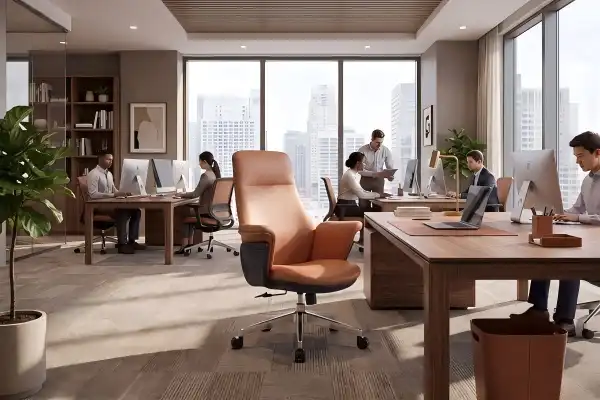
Understanding the Importance of an Office Business Chair in Corporate Settings
What Defines an Office Business Chair?
An Office Business Chair is designed especially for workplaces where users sit for 8 to 12 hours a day. In contrast to chairs used at home, these chairs have high-density foam, pneumatic height systems, and adjustable lumbar support to protect the spine and lower the number of job injuries (Hedge, 2017). They meet strict safety standards like BIFMA X5.1 and EN 1335, which means they can handle more than 100,000 usage cycles and static loads of more than 300 pounds.
Ergonomics and Productivity Impact
Ergonomic chairs can cut down on chronic back pain by up to 32% and help you concentrate better by reducing interruptions caused by pain (Robertson et al., 2013). Synchronized tilt mechanisms and 3D armrests are some of the features that help employees with a wide range of jobs, from data analysts to executives. This directly leads to fewer absences and better work, both of which are important for a company's return on investment (ROI).
Material Durability and Maintenance
Chairs that can handle daily use are needed in business settings. Breathable mesh backrests help keep you cooler, which makes them perfect for call centers or other high-activity areas. On the other hand, high-quality fabric gives you a polished look that's perfect for areas where you'll be talking to clients. To make sure air quality rules are followed, materials must meet E0 or E1 formaldehyde pollution guidelines. Regular care, like tightening bolts every six months and cleaning the wheels, can extend the life to 5–10 years, which lowers the cost of replacement and the number of times it needs to be done.
Key Criteria to Consider When Selecting Office Business Chairs
Ergonomic Adjustability as a Non-Negotiable
Being able to adjust something is key to comfort and health. Dynamic lumbar support that adjusts to your spine's movement, seat depth sliders that fit people from 5'2" to 6'4", and armrests that can be adjusted in four dimensions (height, width, depth, and angle). These features make it easier on the lower back and shoulders, which is the main reason why people file disability claims at work.
Commercial-Grade Durability Standards
For bulk sales, samples and mass output must be the same. The safest gas lifts for chairs should be Class 4, and the bases should be made of nylon or metal that is approved for industrial use. Make sure that suppliers test the casters' swivels more than 30,000 times and the seats' durability more than 100,000 times. This keeps failures from happening too soon, which would mess up processes and make repair costs go up.
Supplier Reliability and Project Coordination
Check to see if suppliers can increase output, give you an idea of wait times, and respond quickly to your messages. Delays are kept to a minimum by having a specialized project manager who gives 2D and 3D technical sketches, prototype validation, and real-time production reports. Check to see how much experience they have with exporting. Structures that are designed to be shipped flat can cut handling costs by up to 40% compared to fully built units.
Warranty and After-Sales Service
Manufacturers are confident when they offer warranties that cover an Office Business Chair for a period of three to five years. Make sure that the after-sales packages for each Office Business Chair include instructions on how to install the product, a list of available spare parts, and quick technical support. This is very important for rollouts involving multiple locations, where localized service for the Office Business Chair keeps downtime from lasting too long. A reliable warranty and responsive support system can also help businesses maintain every Office Business Chair in good working condition throughout its service life.
How to Choose the Best Office Business Chair for Specific Workplace Needs
Matching Chairs to User Roles and Usage Intensity
For each job, there are different ways to sit. High-back chairs with high-quality fabric and looks that show power look great in executive boardrooms. Workers in places that are open 24 hours a day, seven days a week need heavy-duty models with strong frames and materials that are easy to clean. Co-working spaces need durable, lightweight, stackable options that are also easy to move around.
Material Selection: Mesh vs Upholstery
Mesh backrests are great for letting air flow, which keeps you from getting sweaty after long periods of use, which is important in hot places or offices with lots of people. Padded upholstery spreads pressure out more evenly, which is great for people who have trouble with their circulation. Hybrid designs that combine mesh backs and padded seats are the best of both worlds because they can fit the needs of a wide range of employees in the same purchase batch.
Budget Optimization Through Bulk Purchasing
Volume savings cut the cost per item by a large amount. If you order 500 chairs, you might save 15 to 25 percent compared to ordering less. To keep your cash flow under control and get bulk pricing, try to negotiate for phased delivery that is in line with project milestones. To make sure that all of your departments look the same, give priority to suppliers who can make changes to colors or add logos without raising prices too much.
Customization for Branding and Space Planning
Custom choices, such as name embossing, armrests that match the color scheme, or modular setups, help with brand recognition and make better use of room. Work with suppliers who offer engineering support to make sure the design is workable right away, which will save you money on revisions. As an example, our Business Office Chair can be changed in size and finish without affecting its split-frame structure or safety compliance, as certified by SGS.
Comparison Insights – Office Business Chair vs Executive Chairs and Popular Market Options
Functional Distinctions: Business vs Executive Models
Executive chairs use high-end materials like real leather and high-polish bases, and the bigger backrests give the impression of power. For big operations, Office Business Chairs place a premium on practical ergonomics, cost-effectiveness, and scalability. Both support long periods of sitting, but the second one's easier-to-use adjustments mean that different types of workers don't need as much training, which is helpful in places with a lot of change.
Mesh vs Leather: A Practical Trade-Off
Mesh doesn't sag and can handle a lot of use with little upkeep (vacuuming gets rid of dirt and dust). Leather needs to be conditioned regularly to keep it from cracking, but it has a luxurious feel that is useful in customer-facing areas. When projects include both back-office and front-office areas, using the same design language for both types of products helps keep costs down and brand recognition high.
Adjustability Features and Health Outcomes
People who work at screens for long periods of time report 28% less neck pain when they sit in chairs with headrests (Groenesteijn et al., 2012). Multi-positional armrests make it easier on the shoulders, especially for jobs that require a lot of typing. When you compare models, see how easily employees can change the settings. If employees think it's too hard to use the controls, the practical benefits will be lost.
Evaluating 2024 Market Leaders and Cost-Efficient Alternatives
Brands like Herman Miller and Steelcase are the most innovative, but they also cost a lot. Mid-tier options that meet BIFMA standards offer 80% of the functional benefits at 50–60% of the cost, making them a good choice for big projects that need to stick to a budget. Instead of focusing on the prestige of the brand, you should look at how long the warranty lasts, how much weight the chair can hold, and how easy it is to get replacement parts.
Procurement Best Practices for Corporate Buyers: Where and How to Buy?
Direct Manufacturer Engagement vs Distribution Channels
When you work with integrated makers like PENGPAI, you get factory prices and trade-level service, such as help with technical drawings, consistent quality, and variable minimum order quantities (MOQs). This system gets rid of markups for middlemen while keeping direct accountability during the production and transport phases. Distribution channels are good for small orders, but they don't allow for the flexibility of customization that is needed for custom corporate projects.
Negotiating Volume Discounts and Payment Terms
Use multi-year buying predictions to get discounts that are based on levels. Cash flow is protected by asking for phased billing that is in line with delivery milestones. Make sure you know when the guarantee starts to apply—some providers cover items from the time they are shipped, not when they are installed, which shortens the time they are actually protected. Get writing promises on wait times, along with penalties for delays that happen outside of the agreed-upon windows.
Evaluating Delivery, Installation, and Return Policies
Make sure that suppliers offer protective packaging to keep items from getting damaged during shipping, and work with freight forwarders who know how to move office furniture. Help with installation, like video tutorials or sending a technician to your site, speeds up the project's completion. When there are a lot of sales, and sampling doesn't catch every possible problem, having flexible return policies that cover factory defects within 30 to 60 days lowers the risk.
Building Long-Term Supplier Relationships
Maintaining aesthetic and ergonomic continuity is easier when you only have to reorder from the same suppliers when you need to replace or add to something. Check how well they respond to contact, how ready they are to handle rush orders, and how proactive they are in solving problems when problems arise. Suppliers who offer dedicated account managers and check-ins every three months show that they are committed to more than just doing business.
Conclusion
To choose the right Office Business Chair for a business project, you need to carefully consider ergonomics, industrial durability, source dependability, and lifecycle costs. Chair specifications need to be aligned with user needs, such as call center workers who need mesh that lets air flow and leaders in the office who care about how the chairs look. Cost savings can be unlocked by buying in bulk, but only if the suppliers can guarantee consistent production, easy customization, and strong support after the sale. Companies put an emphasis on things like adjustable lumbar support, Class 4 safety ratings, and materials that meet international pollution standards to protect the health and safety of their workers and keep their operations running smoothly. The right chair choice cuts down on accident claims, increases output, and makes managing the building easier over a period of years.
FAQ
What ergonomic features are essential for prolonged office use?
Foundational features include dynamic lumbar support that adjusts to the curves of your spine, air height change for desk compatibility, and seat depth sliders that can fit people with different leg lengths. Look for synchronized tilt systems that let you relax without losing back support and materials that let air flow so that you don't get too hot while you're sitting for 8 hours or more.
How do I ensure chairs fit diverse employee body types?
Choose models that have a seat height range of 16 to 21 inches, an armrest width range of 3 to 5 inches, and weight capacities that are 20% higher than your heaviest user. Before placing a large order, testing chairs with workers of a range of sizes confirms that they will fit in real life and stops customers from being unhappy after delivery.
What warranty terms are standard for commercial office chairs?
Commercial-grade chairs usually come with guarantees that cover structural problems, broken gas lifts, and broken mechanisms for three to five years. Make sure that the coverage includes repair labor and spells out any exclusions. For example, normal wear and tear on upholstery or wheels is often not covered. When suppliers offer longer guarantees, it shows that they are confident in the quality of their products and the durability of their parts.
Discover Reliable Office Business Chair Solutions with PENGPAI
PenangI'm an expert at making commercial-grade Office Business Chairs for business projects that need to last, be ergonomically correct, and have a wide range of customization options. Our model of combining production and trading makes sure that quality stays the same for large orders. Project managers are in charge of coordinating technical drawings, production schedules, and export logistics. Our Business Office Chair is SGS-certified safe, has a 5-year warranty, and is made in a flexible way that makes shipping easier. It is also backed by inventory in our Foshan warehouse, so it can be used right away. We help with everything, from confirming the idea to providing service after the sale, whether we're furnishing government buildings, multinational offices, or hospitality projects. Chat with our staff at kiki@pengpaifurniture.com to learn more about buying in bulk and making changes that fit the needs of your project. Visit foshanpengpai.aixdb.cn to learn more about our full range of services.
References
1. Hedge, A. (2017). Ergonomic Workplace Design for Health, Wellness, and Productivity. CRC Press. https://www.routledge.com/Ergonomic-Workplace-Design-for-Health-Wellness-and-Productivity/Hedge/p/book/9781498799546
2. Robertson, M. M., Huang, Y.-H., O'Neill, M. J., & Schleifer, L. M. (2013). Flexible workspace design and ergonomics training: Impacts on the psychosocial work environment, musculoskeletal health, and work effectiveness among knowledge workers. Applied Ergonomics, 45(3), 628-639. https://doi.org/10.1016/j.apergo.2013.08.015
3. Groenesteijn, L., Ellegast, R. P., Keller, K., Krause, F., Berger, H., & de Looze, M. P. (2012). Office task effects on comfort and body dynamics in five dynamic office chairs. Applied Ergonomics, 43(2), 320-328. https://doi.org/10.1016/j.apergo.2011.06.007
4. BIFMA International. (2019). ANSI/BIFMA X5.1-2017: Office Seating Standard. https://www.bifma.org/page/ANSIBIFMAX5.1-2017
5. European Committee for Standardization. (2018). EN 1335: Office Furniture – Office Work Chair. https://standards.cen.eu
6. Occupational Safety and Health Administration. (2020). Ergonomics: Solutions for the Office Environment. U.S. Department of Labor. https://www.osha.gov/ergonomics
Online Message