
Aug 1, 2026
How to Select a Linear Office Staff Desk for Modern Offices?
Selecting the right workstation furniture for your commercial space begins with understanding what makes an effective workspace solution. A Linear Office Staff Desk is a streamlined, bench-style workstation designed for multiple users in open-plan environments, optimizing floor space while supporting collaboration and productivity. The selection process involves evaluating material quality, structural integrity, customization capabilities, and how well the desk aligns with your project's functional requirements. Modern procurement managers must balance aesthetic appeal with durability standards, ergonomic features with budget constraints, and installation efficiency with long-term maintenance needs to achieve workspace solutions that truly serve their teams.

Understanding Linear Office Staff Desks and Their Importance
What Defines a Linear Workstation Configuration
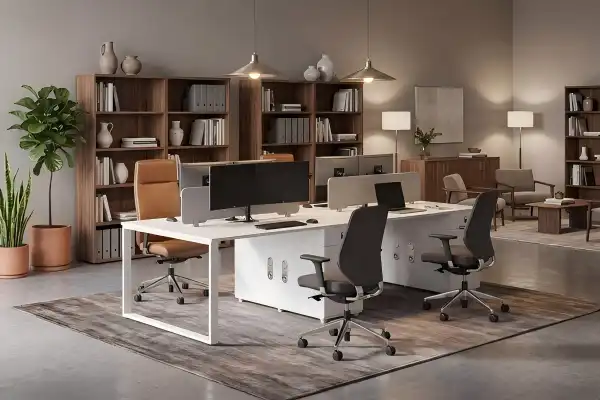
Linear Office Staff Desks are a big change in how business places use their floor space. Traditional individual desks take up too much space. These bench-style setups, on the other hand, place workers along a straight axis and share structural parts like legs and support beams. This design philosophy came about because of the need to keep things open to the eye while accommodating growing teams in a small space. The straight-line layout gets rid of empty corner spaces and makes uniform paths for movement, which is helpful for building managers when they do space checks. When specification documents talk about Linear Office Staff Desks, they're talking about systems that are designed to be scalable, not single units.
Material Quality and Environmental Standards
Commercial-grade desks need materials that can stand up to heavy daily use and still meet environmental standards. High-density panels made from E0-grade particleboard give off very little formaldehyde. This helps with indoor air quality issues that are important for LEED-certified projects. The 25 mm thickness gives the surface the rigidity it needs to hold monitors, keyboards, and reference materials without bowing. Using cold-rolled steel and powder coating for the framework of a metal structure protects it from corrosion and extends its life, which is especially important in humid or high-traffic areas. Using PUR (polyurethane reactive) technology to apply edge bands creates moisture shields that stop panel swelling, which is a common way for lower-quality furniture to break. These material specifications have a direct effect on the total cost of ownership because durable construction means that the desk won't need to be replaced as often and won't need as much maintenance over its lifetime.
Ergonomic Features That Support Employee Health
Workspace ergonomics includes more than just choosing the right chair. It also involves designing your Linear Office Staff Desk in a way that improves comfort, efficiency, and overall employee wellbeing. Integrated cable management systems in a Linear Office Staff Desk setup can organise power and data lines under the worksurfaces, removing trip hazards and reducing visual clutter that may increase workplace stress. Frosted privacy screens installed on top of a Linear Office Staff Desk can help reduce noise distractions and visual interruptions without completely separating employees, creating a balanced environment between collaboration and focused work. The standard height of 750 mm is suitable for most seated working positions, but many purchasing teams are increasingly requesting adjustable mechanisms for Linear Office Staff Desk solutions to support a wider range of users. Recessed support beams provide additional legroom, allowing employees to sit comfortably without their knees touching the desk as they might with traditional workstation designs. This ergonomic advantage makes the Linear Office Staff Desk particularly suitable for long working sessions where comfort, productivity, and workplace flexibility are important.
How to Choose the Right Linear Office Staff Desk for Your Business Needs
Assessing Space Constraints and Layout Requirements
Choosing the right furniture for a room starts with an exact study of the space, not with personal taste. Find out how much floor space you have available and remember that traffic lines need 900–1200 mm of space for people to move around comfortably and for emergency exits to be legal. In rectangular rooms, linear layouts work especially well because the desk length can run straight to the longest wall, making the most of the space for workspaces. When placing your desk, think about how high the ceiling is and where the natural light is coming from. Computer screens that are too bright can really slow you down. Project managers should make scaled floor plans that put desks in places where they can reach power outlets the easiest. This will lower the cost of installing electrical changes. The 2400mm length specification can easily fit two workers when separated by a central screen. Custom measures can be used for areas that aren't standard.
Comparing Configuration Options for Different Work Styles
It is important to compare configurations during the selection phase because not all linear systems work with all operational models. Back-to-back setups put two desk runs next to each other with a privacy screen in the same space. This doubles the number of seats that can be used. This is great for call centers or administrative offices that need a lot of seats. Placements next to each other along outer walls are good for joint teams that often use each other's work, but they give up some privacy. Creative companies that value visual openness like benching systems without screens, while industries that need to keep information private prefer versions with screens. Instead of generic suggestions, the specifications for your purchases should be based on the actual work patterns you've seen in your facility. This is because mismatched configurations cause equipment to be underused and employees to be unhappy.
Evaluating Storage Integration and Functionality
Quality assurance methods help distinguish reliable vendors from those that are not. When evaluating a Linear Office Staff Desk, buyers should request proof of material approvals confirming that the product meets E0 formaldehyde safety standards. This is especially important for healthcare and government projects that must comply with strict environmental requirements. Certifications from SGS and CEC provide third-party verification of manufacturing quality and product safety, giving procurement teams strong evidence that their supplier selection process is well researched and defensible. Before a Linear Office Staff Desk order leaves the factory, it should undergo a series of pre-shipment inspections to check structural stability, ensure drawers operate smoothly, and review the overall finish quality. Maintaining ISO 9001 certification demonstrates that the manufacturer is committed to consistent quality management systems, reducing production variations between different batches and making large-scale installations of Linear Office Staff Desk solutions more reliable. Manufacturers that provide extended warranty coverage also show confidence in the durability of their products. For example, five-year structural warranties can provide valuable protection for commercial investments and ensure that the selected Linear Office Staff Desk system continues to deliver long-term performance.
Material Selection for Commercial Durability
The materials you choose will determine whether your investment lasts through heavy commercial use or needs to be replaced too soon. Look for worktops made of melamine-faced chipboard that meet E0 emission standards. These have less than 0.5 mg/L formaldehyde, while E1 requires 1.5 mg/L. This difference is important for projects that want to get green building certifications or help people who are health-conscious. To keep the structure from bowing when it's loaded, especially when people lean on the edges of their desks, steel frames should have walls that are at least 1.5 mm thick in tube legs. It is possible to measure how much noise is reduced in busy offices by using soundproof cloth screens instead of hard plastic screens. Using PUR adhesives on high-quality edge banding keeps the look intact during the warranty time and is better at resisting delamination from water and contact than standard hot-melt methods.
Designing and Arranging Linear Office Staff Desks for Maximum Productivity
Optimizing Desk Spacing and Circulation Paths
With the right room planning, furniture can be turned into useful workstations. Industry rules say that there should be 1200 to 1500 mm of space between parallel work runs so that chairs can be moved and people can stand up without blocking other people's space. When desks are placed back-to-back, this dimension is very important to keep people from running into each other while adjusting chairs at the same time. The minimum width of the aisles connecting desk groups to traffic paths should be 900 mm, but they should be at least 1200 mm to allow for easy passing and to meet accessibility standards. It's best to plan where your desk will go by drawing a map of the electrical floor boxes and data outlets first, since changing where the desks are later on can be expensive and inconvenient. The center leg design with built-in cable management holes at 86-type standard measurements makes routing cords easier without making the surface look cluttered.
Incorporating Natural Light and Reducing Glare
Putting your desk near windows has a big effect on how comfortable it is to look at and how much energy it uses. If you can, place linear runs perpendicular to the walls of windows. This way, natural light can shine on worksurfaces from the side instead of backlighting, which can cause screen glare. Translucent frosted screens block direct sunlight while keeping the brightness, so you don't have to use as much artificial lighting during the day. If straight-line placement isn't possible, ask for window coverings with a level of opacity that can be changed throughout the day as the sun moves across the sky. Studies show that being close to natural light is linked to less eye strain and better regulation of the circadian rhythm, which leads to measurable gains in productivity. The highlighted desk design's white worksurface and frame finish reflect light instead of absorbing it, making rooms brighter without the need for extra lighting.
Adding Ergonomic Accessories for Enhanced Comfort
Base furniture gives desks their structure, but extras make them fit the needs of each person. Adjustable height and angle monitor arms keep screens at the best eye level to avoid neck strain. This is especially helpful when employees of different heights share workstations during shifts. When you type for long periods of time, your shoulders can get tense. Keyboard trays that tilt and retract can help, but you need to make sure your knees can fit under your desk. Cable pass-through covers that come with good desk systems keep things looking clean and protect the cords from getting worn down by the desk edges. When USB ports are built into desk structures, there is no need for a tabletop power strip, which can be a visual mess and a trip danger. When budgets allow, anti-fatigue mats in standing areas go well with desks that can be adjusted in height. However, footrests can be added to fixed-height units as a cheap way to improve ergonomics.
Procuring Linear Office Staff Desks: What You Need to Know Before Buying
Understanding Pricing Structures and Cost Drivers
The price of commercial furniture is based on more than just the cost of making it. The main difference in price is the grade of the material. For example, E0-grade panels cost more than E1 panels because they have tighter pollution controls and better wood particles. Hardware quality has a big effect on price; for example, hydraulic hinges with a lifetime warranty and silent soft-close slides cost a lot more than basic mechanisms that break easily. Customisation requests that involve non-standard sizes or different materials usually come with extra costs that can range from small surcharges to big premiums, depending on how complicated they are. When you buy more than the bare minimum, you can get volume discounts. These discounts are usually set up in a way that lowers the unit cost at certain number levels. When buying things internationally, you have to think about the landed costs, which can include shipping, duties, and port fees.
Evaluating Customization Capabilities and Lead Times
Even though standard goods ship quickly, they don't always meet the exact needs of a project. This is why the ability to customise is such an important factor in the review process. Manufacturers who let you change the size without charging extra for tools give you options for places that aren't perfectly round. However, changes to the dimensions may affect the structural load ratings, which need to be confirmed by an expert. Material changes, like different panel colours or better drawer slides, should be possible without having to rethink the whole product. Support for technical drawings shows how knowledgeable the provider is, as thorough CAD files make working together with architects and general contractors easier when planning the space. Customised orders usually add three to four weeks to normal lead times, so procurement managers have to make sure that orders are placed in the right order to fit into project plans. Different manufacturers have different minimum order quantities for custom specifications. Some need full container loads, while others can handle smaller amounts.
Verifying Quality Control and Certification Standards
Quality assurance methods help distinguish reliable vendors from those that are not. When evaluating a Linear Office Staff Desk, buyers should request proof of material approvals confirming that the product meets E0 formaldehyde safety standards. This is especially important for healthcare and government projects that must comply with strict environmental requirements. Certifications from SGS and CEC provide third-party verification of manufacturing quality and product safety, giving procurement teams strong evidence that their supplier selection process is well researched and defensible. Before a Linear Office Staff Desk order leaves the factory, it should undergo a series of pre-shipment inspections to check structural stability, ensure drawers operate smoothly, and review the overall finish quality. Maintaining ISO 9001 certification demonstrates that the manufacturer is committed to consistent quality management systems, reducing production variations between different batches and making large-scale installations of Linear Office Staff Desk solutions more reliable. Manufacturers that provide extended warranty coverage also show confidence in the durability of their products. For example, five-year structural warranties can provide valuable protection for commercial investments and ensure that the selected Linear Office Staff Desk system continues to deliver long-term performance.
Logistics Planning and Installation Support
A successful procurement process includes more than just placing purchase orders. It also includes coordinating deliveries and putting things in place. Knock-down packaging designs cut down on shipping volumes and costs while making it easier for lifts to move things between floors of buildings, but they need to be put together at the destination. Check to see if the box comes with clear, international instructions on how to put it together. Unclear instructions can slow down the installation process and even cause damage if they are not followed correctly. Dedicated project managers who work with your building plan to make sure shipments happen at the right time save you money on storage fees and site congestion. For international shipments coming from manufacturing hubs like Foshan, China, make sure that suppliers keep stock in their warehouses so that they can meet urgent needs more quickly. When makers offer installation help through video lessons or on-site support, mistakes that cancel warranties are less likely to happen. This is especially important for complex electrical integration within cable management systems.
Leading Brands and Suppliers of Linear Office Staff Desks for Commercial Use
Established International Manufacturers
Global furniture names have built their reputations over many years of working on business projects and coming up with new products. Herman Miller was one of the first companies to study ergonomics in the workplace and use the results to make desks that put user comfort first by using modularity and changeable parts. Steelcase has a lot of options for customisation that can be used to meet the needs of corporate branding and specific space limitations. However, their high prices reflect how they position themselves in the market. HON aims for the middle market by offering reliable quality at reasonable prices, which appeals to procurement teams that are handling large-scale projects on a budget. These well-known brands offer full warranty coverage and service networks across the country, which is helpful for businesses with multiple locations that need to keep working with the same vendors.
Specialized Commercial Furniture Suppliers
In addition to well-known brands, specialised suppliers offer product lines that are specifically designed for certain groups of people. Companies that only make commercial office furniture are often better at responding to customer needs and offering reasonable prices than makers that make a variety of products. Regional suppliers that are close to big business districts can offer construction teams that know the local building rules and permit requirements. This makes the job go more smoothly. Manufacturers who have both production facilities and trading capabilities can handle the challenges of international procurement well by combining professional export services with factory-level quality control. When looking at specialised providers, make sure they can meet the needs of your project and are financially stable enough to keep their long-term guarantee promises.
Direct Manufacturer Partnerships for Large Projects
When you buy a lot of things, it makes sense to look into direct manufacturer relationships that skip distributor markups. When you talk directly with production facilities, you can have more in-depth conversations about customisation and more flexible lead time negotiations than when you order from a catalogue through a dealer. Manufacturers like Foshan Pengpai Furniture, which has production facilities that are more than 200,000 square meters, show that they have the size to consistently supply large amounts of goods. Their 50,000-square-meter stores let you try out products before you buy them, and their in-house engineering teams help with technical drawings, which is important for planning complicated spaces. When companies work directly with manufacturers, they can keep production standards stable without having to deal with middlemen like distributors. This is especially helpful for companies that need to roll out products in stages over long periods of time.
When choosing suppliers, you should think about both cost and service skills and quality guarantee. Ask for references from clients who have worked on similar-sized projects in your industry, and make sure they can meet your needs after the sale through responsive communication channels. International buyers should give more weight to suppliers who have exported goods before and whose project managers speak English well and know how to handle cross-border logistics and paperwork.
Conclusion
To choose the right Linear Office Staff Desk bench-style workstation, you need to carefully consider the available office space, the materials used, the level of customisation required, and the supplier's abilities. Investing in a high-quality Linear Office Staff Desk solution pays off in the long run because it is built to last, meets E0 environmental standards, includes practical features that help employees maintain healthy working habits, and is designed to support future workplace changes. A well-planned buying strategy for a Linear Office Staff Desk system should balance the initial purchase costs with the total cost of ownership, including maintenance, repairs, replacements, and potential productivity losses. The choice goes beyond simply selecting furniture; it also involves evaluating the reliability of the provider, the support offered by the project manager, and the level of after-sales service available to reduce risks during large-scale installations. By applying the selection criteria described in this analysis, procurement professionals can confidently recommend Linear Office Staff Desk workspace solutions that meet company requirements, improve workplace efficiency, and remain within budget.
FAQ
What dimensions work best for two-person workstations?
With a privacy screen in the middle, the standard 2400mm length can easily fit two employees, giving each person about 1200mm of space to work. This size allows for two monitors, keyboards, and reference materials to be used comfortably, while still leaving enough room for each person. For ergonomic placement of monitors at the right viewing lengths, the depth should be between 600 and 800 mm. The usual height is 750 mm, unless the ability to be adjusted is requested for a wide range of users.
Can desk configurations be modified after initial installation?
When using shared leg systems and standard connection hardware, modular designs let you change how they are set up. When adding extension units to existing runs, product lines usually need to be matched to make sure they work with the structure and look the same. Mobile storage components let you change the plan without having to buy all new furniture. However, the cost of reconfiguring includes the labour needed to take apart and put back together the storage units.
How do environmental certifications impact indoor air quality?
E0-grade panels give off a lot less formaldehyde than lower-grade options. This helps keep indoor environments healthier, which is especially important in places with little airflow. This certification is important for LEED-certified buildings and groups that work with people who are sensitive to chemicals. Compliance paperwork backs up applications for green building credits and shows that a company cares about the environment.
Transform Your Workspace with PENGPAI's Linear Office Staff Desk Solutions
Our production knowledge helps B2B clients with the unique problems they face when they need to buy a lot of office furniture. PENGPAI has both combined production facilities and professional trade services. This ensures that quality control is maintained from choosing the materials to delivering the finished product. The featured Linear Office Staff Desk is made with high-quality 25mm E0-grade panels, silent soft-close hardware, and thoughtful cable management, and it was designed to work in tough commercial settings. Our warehouse in Foshan keeps a stock of items so that projects can be completed faster. Dedicated project managers will also be in charge of coordinating technical plans, requests for customisation, and logistics throughout the whole purchase process. We've been a trusted provider of office furniture to government agencies, multinational companies, and commercial contractors since 2008, so we know how important it is for international projects to have reliable delivery schedules and good communication. Get in touch with our team at kiki@pengpaifurniture.com to talk about your workspace needs and get full specs that are made to fit your project.
References
1. Hedge, A. (2021). Ergonomic Workplace Design for Health, Wellness, and Productivity. CRC Press.
2. International Facility Management Association. (2020). Space Planning Guidelines for Commercial Office Environments. IFMA Foundation Research Report.
3. Vischer, J. C. (2019). "The Effects of Physical Work Environment on Productivity: A Review of Research." Journal of Corporate Real Estate, 21(4), 318-334.
4. BIFMA International. (2022). ANSI/BIFMA X5.5 Desk and Table Testing Standards. Business and Institutional Furniture Manufacturers Association.
5. Kim, J., & de Dear, R. (2020). "Workspace Satisfaction and Productivity in Open-Plan Offices." Building and Environment, 185, 107233.
6. Green Building Council. (2023). LEED v4.1 Indoor Environmental Quality Credit Guidelines for Low-Emitting Materials. U.S. Green Building Council Technical Manual.
Online Message