
Jul 4, 2026
How To Choose The Best Standard Office Chair | Three Questions To Ask
More than just looking at prices and choosing the seat that feels the most comfortable during a short test are involved in choosing the Best Standard Office Chair. To do thoughtful procurement, you need to know what your workforce needs, check the quality and durability of the materials, and pick providers who can provide reliable shipping and after-sales support. When you ask the right questions at the start, you can make sure that sitting options are in line with your company's health goals, keep long-term costs low, and boost employee productivity. When looking for ergonomic office chairs for businesses, this guide walks you through three important questions that will help B2B buyers, project managers, and building heads make smart choices.
Understanding What Makes a Standard Office Chair the "Best"
Defining the Role of Standard Office Chairs in Commercial Environments
Health Benefits and Ergonomic Support
Key Ergonomic Features to Look For
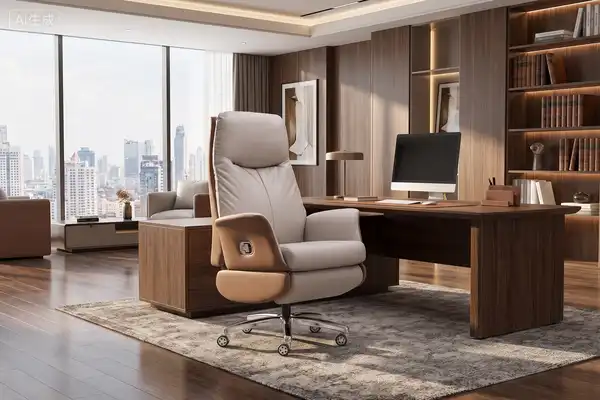
A good practical design has a lot of parts that can be adjusted. Lumbar support keeps the lower back's natural curve inward, which stops you from slouching. The seat height can be changed so that your feet rest flat on the floor, which is good for your posture. Users can lean back a little with tilt devices, which relieves pressure on spine discs during breaks. When placed at work height, armrests ease stress in the shoulders. Our Standard Office Chair has a high-density foam seat and an extra-large headrest. It also has a gas lift that can do two things at once and a side-mounted knob that makes it easy to change the backrest. The 45-density high-resilience sponge cushion and microfiber leather upholstery provide long-lasting comfort, and the chrome five-star base with quiet wheels makes it easy to move around on industrial floors.
Question 1 – What Are the Specific Needs of Your Workforce and Workspace?
Segmenting User Needs by Role and Work Hours
Adapting Chair Dimensions to Office Layouts
Chairs with smaller footprints and the ability to turn are better for open-plan offices with small desks. Larger types with longer backrests may be able to fit in traditional cubicle settings. For hot-desking setups to work, the settings need to be easy for multiple people to change quickly. The Standard Office Chair's high back and tall, padded backrest with brown side details look good in senior offices, and its modular structure lets it fit into a variety of plans. Our warehouse in Foshan has a lot of stock, so we can quickly deploy for jobs with tight deadlines.
Material Preferences and Environmental Durability
The choice of material in the Best Standard Office Chair affects both how something looks and how long it lasts. Microfiber leather looks high-end and doesn't get dirty easily, so it's perfect for places where customers will see it. Mesh backrests let air flow in hot places or places with a lot of people. Think about how often the material needs to be cleaned. Materials that can handle this help lower long-term care costs. Our E1-grade curved hardwood base and back panel meet European E0 and British E1 formaldehyde emission standards, which means they are safe for indoor air quality. The two-tone pattern of moon white and light coffee goes well with modern office decor.
Compliance with Ergonomic and Safety Standards
International standards like ANSI/BIFMA X5.1 make sure that office chairs meet very high standards for safety and efficiency. Compliance shows that a provider is trustworthy and keeps companies from being sued. Look for standards like SGS CEC that make sure the structure is sound and the materials are good. Our Standard Office Chair has a D40Y40 black four-stage gas lift, a B028 pneumatic base, and 350 silver electroplated German flat feet. It is certified by SGS CEC. Strict quality control checks are done on these parts, which include studies of the backrest's strength, the stability of the base, and the casters' ability to last through more than 100,000 rounds.
Question 2 – How to Evaluate the Quality and Durability of Office Chairs?
Assessing Core Materials and Construction
For the Best Standard Office Chair, quality starts with the building of the frame and the choice of materials. Bases made of die-cast metal or high-strength glass-fiber reinforced nylon can hold up to 300 pounds, so they are stable for a wide range of users. The resilience of upholstery rests on the density of the foam. High-density automotive-grade cold-cured foam or 45-density high-resilience sponge doesn't sag and keeps its shape over years of use. Check the quality of the stitching and the finishing on the edges; these details show how well the product was made. The backrest of our Standard Office Chair is filled with doll cotton, and the seat cushion is made of high-resilience sponge. This gives you the right amount of support and comfort.
Evaluating Mechanical Components and Weight Capacity
Important mechanical parts include pneumatic gas lifts, tilt systems, and armrests that can be adjusted. Class 4 gas lifts are better than cheaper Class 2 models because they have thicker steel walls that make height changes smooth and prevent leaks. The backrest and seat can relax at a 2:1 ratio thanks to synchronized tilt mechanisms. This keeps the natural angles while you move. Applying vertical and horizontal pressure to the backrest will show you if its joints are weak, which is a sign of bad engineering. Our 200/60-265 dual-function gas lift and metal electroplated handle will work reliably for the chair's five-year shelf life.
Understanding Total Cost of Ownership and Warranty
Comparing Reputable Brands and Supplier Transparency
Herman Miller and Steelcase, two stars in their fields, set the standard for comfortable innovation and build quality. Their goods are very expensive and go through a lot of testing. Mid-range sources like PENGPAI find a good mix between low cost and commercial-grade durability. They also let you make changes that global names usually don't let you make. Look at how quick they are, how well they can help with detailed drawings, and how much experience they have exporting. Our engineering team makes 2D and 3D models, builds prototypes, and does technical tests to make sure the design works and the production process works well. We can consistently make things for big projects because our factory and showroom space is over 200,000 square meters.
Question 3 – What Procurement Options Best Suit Your Business Needs?
Comparing Direct Purchases, Factory Sales, and Online Ordering
Balancing Cost Against Value and Quality
Low-cost choices often skimp on material quality and mechanical dependability, which means users have to change them more often and are unhappy with the results. Give more weight to sellers who can back up their prices with clear material specs and certification paperwork. Use bulk savings and good shipping terms to your advantage; combining orders lowers the cost of logistics per unit. Before ordering a lot, ask for samples to be tested to make sure that the quality is the same between trials and mass production. Our knock-down structures and optimized packing solutions keep shipping costs low, and our dedicated project managers make sure that everyone is communicating, that production is moving along smoothly, and that deadlines are met.
Importance of After-Sales Support and Maintenance Services
After-sales support makes products last longer and cuts down on downtime. Respondent providers help with installation, make sure extra parts are available, and handle warranty issues. Check out service agreements before you buy, because delayed help can cause problems and make users angry. Make sure to ask possible providers about reaction times, lead times for replacement parts, and tools for fixing problems. We offer full after-sales support, which includes help with installation, guarantee issues, and coordinating extra parts for the Best Standard Office Chair. Our nearly 300 employees in key departments work together to provide a one-stop furniture service that meets clients' wants quickly.
Evaluating Supplier Responsiveness and Service Agreements
The level of communication often shows how well a team will do in the long run. During the inquiry phase, test the suppliers. Quick, thorough answers show that the project is being managed by professionals. Ask for names from past clients who worked with you in the same industry or on similar-sized projects. Check that the company can ship, especially if the buyer is from another country and needs help with customs paperwork and transportation. Our strong online presence and long-term partnerships with more than 2,000 sellers show that the market trusts us. We help global customers with analyzing their needs, designing products, confirming samples, mass production, quality checks, and shipping all over the world. We have a lot of experience exporting, and our communication systems are quick.
Conclusion
To choose the best standard office chairs that are good for your body, last a long time, and don't cost a lot of money, you need to answer three basic questions. Knowing the needs of the workers and the limitations of the workspace ensures that the requirements match the facts of operations. Long-term ownership costs and replacement rates go down when you look at material quality, mechanical parts, and how open a provider is. Supply chains that are strong are made by choosing methods of buying and service deals that put responsiveness and after-sales support first. Using this organized method, procurement teams can find seating options that make workers more comfortable, support fitness programs at work, and boost productivity in the healthcare, leisure, manufacturing, and government sectors.
FAQ
How Do I Verify If an Office Chair Meets Ergonomic Standards?
Check for ANSI/BIFMA X5.1 approval, which proves that the structure is safe and works well. Look for back support that can be adjusted separately, a waterfall seat edge, and Class 4 gas lift devices. To make sure that suppliers are following foreign standards, ask them for material specs and quality test results.
What Is the Expected Lifespan of a Commercial-Grade Office Chair?
High-density foam and premium rubber mesh are tested for more than 100,000 wear cycles and should keep their shape for seven to ten years. The actual length varies on how often it is used, how well it is maintained, and how good the parts are. Chairs with five-year guarantees usually mean that the company that made them is sure that they will last.
Can Standard Office Chairs Be Used on Both Carpet and Hardwood Floors?
Chairs of good quality have polyurethane-covered casters with two wheels that grip fabric and don't scratch hard surfaces. The Standard Office Chair has 60/25 shockproof Kingpin electroplated wheels that make it easy to move around on a variety of business floors without damaging the floors' finishes.
Partner with PENGPAI for Reliable Standard Office Chair Solutions
Getting ergonomic seats from a reputable maker makes buying in bulk easier and makes sure that the standard of all projects is the same. Pengpai's main business is providing project-based office furniture that can be customized to fit business settings. Our Standard Office Chair has approved structural parts, high-density foam padding, and microfiber leather covering to meet the strict needs of the workplace. With products that are in stock at our Foshan warehouse, SGS CEC certification, and a shelf life of five years, we can meet tight deadlines for sourcing while still keeping high-quality standards. Whether you are in charge of business fit-outs, upgrades to government buildings, or leisure projects, our dedicated project managers will oversee every step, from confirming the design to delivering the finished product around the world. Contact us at kiki@pengpaifurniture.com to talk about your needs with a standard office chair seller that is dedicated to quick responses, expert engineering support, and the success of long-term partnerships.
References
1. Anderson, M. (2021). Ergonomic Office Design: Principles and Practices for Commercial Workspaces. New York: Business Health Press.
2. Chen, L., & Rodriguez, T. (2020). Material Science in Office Furniture: Durability and Sustainability Standards. London: Workspace Innovation Publishing.
3. International Facility Management Association. (2022). Procurement Strategies for Commercial Office Furniture Projects. Houston: IFMA Research Publications.
4. National Institute for Occupational Safety and Health. (2019). Musculoskeletal Disorders and Workplace Ergonomics: Prevention Guidelines. Washington, DC: Centers for Disease Control and Prevention.
5. Peterson, R. (2023). Quality Control in Furniture Manufacturing: B2B Compliance and Certification Standards. Chicago: Industrial Standards Institute.
6. Williams, K., & Zhang, H. (2020). Global Supply Chain Management for Office Furniture: Best Practices for Procurement Teams. Singapore: Asia-Pacific Business Review.
Online Message