
Aug 6, 2026
How to Choose the Best Modern Executive Leather Sofa?
Selecting the ideal executive leather seating involves more than browsing catalogs and comparing prices. A well-chosen modern executive leather sofa serves as a strategic asset that reinforces brand image, supports productivity, and withstands the rigorous demands of commercial environments. B2B buyers—whether procurement managers, interior designers, or facility directors—need solutions that align with project timelines, budget constraints, and long-term durability expectations. This guide walks through the essential considerations for choosing executive seating that delivers both immediate impact and sustained value across corporate offices, hospitality venues, government institutions, and healthcare facilities.
Understanding Modern Executive Leather Sofas
What Defines Modern Executive Seating?
Modern Executive Leather Sofas are a change from traditional big pieces of furniture to sleek designs that strike a balance between being official and friendly. These pieces are made with materials that are made for high-traffic business use and have clean lines. Unlike chairs for the living room, these meet the needs of the workplace: they keep their professional look after years of daily use, they support long meetings without affecting posture, and they fit easily into a variety of office plans.
Top-grain leather is still the best choice because it naturally breathes and stays strong. Instead of peeling or cracking like bonded leather composites, this single-layer hide gets a nice patina over time. High-density foam cores (usually 45 kg/m³ or more) make sure that seats keep their shape through many meetings, and reinforced wooden frames give them stability that light home building can't match.
Key Benefits for Commercial Environments
The main benefit is that it lasts a long time. In business settings, executive seating is used for 8 to 12 hours a day by many people and is constantly exposed to climate-controlled conditions that can dry out less durable materials. If you use the right conditioning treatments, good leather furniture won't get stained by spills that happen in meetings and is easy to clean.
How well maintenance is done is just as important. Material that doesn't need much work but still looks professional is liked by facility managers. Top-grain leather that has been treated only needs to be conditioned every six months in offices with low humidity. This is in contrast to cloth options that collect dust and need to be deep cleaned often.
You can't ignore the visual effect. A well-designed leather seat instantly shows that the owner is an executive and that the company values those things. With the right piece, waiting areas can become memorable places for first impressions and executive offices can become places where clients feel valuable and can talk about important decisions without feeling awkward.
Current Design and Material Trends
Modern office furniture tends to have a minimalist look. The low-profile legs, vertical quilting patterns, and segmented cushions add visual interest without taking away from the clean lines of the architecture. Traditional brown leather finishes have mostly been replaced by dark gray and ash leather finishes, which can be used with a variety of marking schemes.
Ergonomic integration is more than just supporting your lower back. Modern designs include recline functions that can be adjusted, secret storage spaces in wide arms, and flexible layouts that can be used in a variety of meeting types. Some models now have discrete power integration that lets you charge your devices without changing the way the furniture looks.
Sustainability factors are becoming more and more important in purchasing decisions. Corporate buyers look for makers that show they use responsible sourcing, have low VOC emissions that meet Greenguard approval standards, and use production methods that don't hurt the environment too much without affecting the performance of the products.
Criteria for Choosing the Best Modern Executive Leather Sofa
Assessing Space and Usage Requirements
Demands for office and commercial seating solutions vary significantly between different environments. C-suite executives require furniture that provides exceptional comfort and an authoritative appearance, making the Modern Executive Leather Sofa suitable for formal presentations, executive meetings, and private discussions. In VIP lounges at hotels or airports, the Modern Executive Leather Sofa offers a combination of durability and premium design, allowing furniture to maintain a new appearance even under frequent use. For healthcare administrative spaces, the Modern Executive Leather Sofa must also provide surfaces that can withstand regular cleaning with commercial-grade disinfectants while maintaining material quality. Choosing a high-quality Modern Executive Leather Sofa helps organizations create professional environments that balance aesthetics, functionality, and long-term reliability.
There is more to measuring accessible room than just square footage. Think about how traffic flows, how wide the doors need to be for deliveries, and how the new furniture will look next to the old furniture. A 2280mm long sofa works great in a large executive office, but it's too big for smaller meeting rooms, where a 1180mm unit is better suited.
Usage intensity directly impacts material selection. Places where more than fifty people visit every week need commercial-grade features, like stitching that is rated for steady tension, foam cores that can recover from compression after thousands of cycles, and leather that has been treated to be more resistant to wear than 30,000 Martindale rubs.
Comparing Leather Types and Quality Indicators
Top-grain leather is the standard for professional furniture because it is the best combination of longevity, style, and value for money. This material stays strong even when the temperature changes, which happens a lot in office buildings, and it gets better with age. Full-grain leather is more expensive, but it lasts a little longer and looks better, which is important in some high-end settings.
Faux leather alternatives have come a long way, but they are still not good enough for high-end executive uses. These polyurethane surfaces don't last as long or breathe as well as real leather. They usually start to break down after 3 to 5 years of business use. The initial savings rarely make up for the high costs of replacement and the loss of professionalism that comes with it.
To judge the quality, you have to look at the leather's width (1.2 to 1.5 mm for business use), the accuracy of the stitches, and the way the frame is put together. Kiln-dried lumber with less than 12% moisture content keeps it from twisting and breaking. Cold-cured high-resilience foam stays comfortable for a lot longer than regular polyurethane padding found in home furnishings.
Style Compatibility and Aesthetic Alignment
Corporate branding includes more than just logos; it includes everything that can be seen in a professional setting. Whether it's industrial minimalism with exposed structural elements or softer, more modern styles that emphasize kindness and friendliness, a Modern Executive Leather Sofa must go well with current design languages.
Choosing the right colors has a big effect on how a room looks. Medium-thick ash gray leather is sophisticated and neutral, and it goes with a wide range of color schemes. The subtle differences in tone keep the leather interesting to look at. Darker finishes give off an air of authority that works well in formal executive settings, while lighter shades make smaller rooms feel bigger and make people feel more welcome.
Architectural details matter in higher-end applications. Vertical quilted stitching adds texture without being too busy, wide arms with secret compartments combine functionality with clean lines, and low-profile legs keep sightlines clear while evoking a sense of refined restraint. When you put these things together, you get furniture that looks like it was purposefully made instead of just bought.
Evaluating Warranty and Maintenance Considerations
Commercial furniture warranties are very different from residential ones. Look for companies that offer five-year structural promises that cover the frame's stability and the compression of the foam. There should also be separate leather coverage that covers production flaws like cracking or delamination that happens too soon. It's also important to know what the guarantee doesn't cover, like regular wear and tear, bad cleaning, and damage caused by the environment.
The amount of maintenance needed has a direct effect on the total cost of ownership. Regular conditioning, every six months for best preservation, is needed to keep leather from drying out in climate-controlled spaces. But this low level of maintenance is nothing compared to cloth options that need to be professionally steam cleaned to keep up their look and cleanliness.
Replacement part availability ensures long-term serviceability. Good manufacturers keep important parts like cushions, armrest covers, and leg assemblies on hand so that they can be fixed when they break, extending the life of the furniture instead of having to be replaced too soon. This is especially important for companies with multiple locations that use the same types of furniture in all of them.
Comparing Modern Executive Leather Sofas: Making Informed Decisions
Leather Versus Fabric Alternatives
The choice of material has a big impact on both first impressions and long-term satisfaction. Modern Executive Leather Sofas show executive status in a way that fabric can't, which can have an effect on people's minds during meetings with clients and negotiations. This management of image goes beyond just how things look; it also affects how seriously people take your company and its leaders.
When comparing durability, leather clearly wins in business settings. Fabric furniture gets stained, smells bad, and shows signs of wear after just a few months of heavy use. Even performance materials made for business use need to be replaced more often than leather, which, if kept in good shape, can last for 10 to 15 years.
Comfort characteristics differ in subtle but meaningful ways. Leather naturally lets air flow through it, so it doesn't get hot like fabric does after long periods of sitting. The material's ability to keep people at a comfortable temperature is especially useful in meetings where people stay sat for hours on end without getting up.
Product Spotlight: Dark Grey Top-Grain Solution
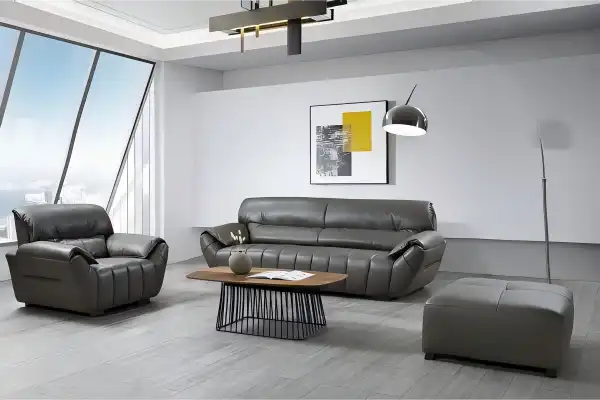
Think of a specific example that shows how these ideas work in real life. Our dark gray top-grain leather sofa has thick segmented cushions with vertical quilted stitching that makes it look classy while also giving you structured support. The wide armrests hide useful side pockets for keeping papers or electronics during meetings, and the smooth, rounded edges soften the overall shape without taking away from the modern look.
The tech behind a beautiful design can be seen in the construction details. Genuine cowhide ash leather on the first layer has a quality that bonded leathers can't match. Backrest pillows are filled with feathers that adjust to each person's position, and seat cushions are made of 45-density high-resilience foam that keeps its shape over time. The frame is made of eucalyptus wood, which is strong and doesn't cost too much. The 15cm black titanium rubber legs give the design a modern industrial look.
Available sizing accommodates different applications: the 2280mm long version is best for senior offices and big meeting rooms, while the 1180mm unit fits into smaller rooms without sacrificing comfort or visual impact. The 980mm depth and 910mm height of both versions keep the right mix of comfort and professional posture support.
Budget Guidance and Value Optimization
Investing in executive seating comes in a wide range of prices that show real changes in quality rather than just adding a markup for no reason. Entry-level options that cost between $800 and $1,200 usually have bonded leather and lighter frames that are good for occasional guest seating but not for daily executive needs.
Mid-range commercial-grade pieces, which cost between $1,800 and $3,500, have real top-grain leather, high-density foam cores, and reinforced wooden frames that meet the standards for business settings. This tier offers the best value for most business-to-business purchases, and if it's properly kept, it will last for decades.
Full-grain leather, exotic wood frames, and better ergonomic features like built-in power chairs are some of the things that make high-end executive couches that cost more than $4,000. These investments make sense for the C-suite, where the furniture is a visible sign of the company's success and the management of first impressions with clients justifies the higher price.
Customization and Sustainability Options
Modern manufacturing techniques allow for a lot of customization without the delays that used to come with making custom furniture. Size changes can be made to fit different spaces, different materials can be used to match colors exactly to established brand palettes, and practical improvements like built-in power outlets can meet the needs of specific users.
Environmental concerns are becoming more and more important in how companies buy things. Responsible producers are open about where their leather comes from and keep records of how they follow environmental dyeing standards and fair labor practices. VOC pollution approvals prove that furniture won't hurt the quality of the air inside, which is very important for LEED-certified buildings and health-conscious businesses.
Modular designs make products last longer by letting users change the configuration as their needs change. A couch that was first used as executive sitting on its own could later be combined with other units to make larger lounge areas. This would save money because the sofa would not need to be thrown away and replaced, but instead could be used in new ways.
Procurement & Supplier Selection Tips
Sourcing Channels and Supplier Verification
Picking the right supplier is just as important as picking the right product. With factory-direct interactions, there are no markups for middlemen, and you can talk to tech teams directly about customizations. This method works especially well for big projects that need to change specifications or have longer production schedules to fit in with construction schedules.
Wholesale distributors are helpful for buying in smaller amounts and keeping stock so that orders can be delivered faster than factories can usually do. But make sure that the sellers are official outlets and not "gray-market" sources that could void the warranty or make the product less real.
The qualifications of the supplier should be carefully looked over. The fact that a company has been around for a long time and has an SGS approval shows that it meets world safety and performance standards. PENGPAI was founded in 2008 and has a manufacturing footprint of 200,000 square meters. This shows that it has the production capacity and quality systems needed to provide reliable commercial furniture.
Financial Considerations and Bulk Purchasing
Structured financial methods are needed for big purchases. Volume pricing usually starts with a minimum order of 20 units, and discounts keep going as you make bigger commitments. Check the full project costs, not just the unit prices. These include shipping costs that are cut down by using knock-down building, installation costs that are cut down by using simple assembly design, and lifecycle costs that show how much upkeep will be needed.
Terms of payment depend on the seller and the size of the order. Established companies with strong balance sheets may offer buyers longer payment terms or staged billing that is in line with project goals. This can help buyers better control their cash flow. On the other hand, newer suppliers often need big deposits, which raises the risk of buying from them if there are problems with production.
Warranty coverage assumes heightened importance in bulk purchases where single manufacturing flaws could affect many units. Look for providers that have thorough inspection processes and recorded quality control at multiple stages of production. This will make it less likely that you will receive damaged shipments that cause installation plans to be thrown off.
Evaluating Reputation and Production Capabilities
Evaluation of suppliers goes beyond marketing claims and includes success measures that can be checked. Ask for client examples from projects that are similar in size, type, and level of customization. Talking to procurement managers who have finished projects can give you information about how to communicate, solve problems, and provide support after the delivery that isn't covered in marketing materials.
Virtual or real-life views of manufacturing facilities are a great way to get more information. Look at how the production area is set up, where the quality check units are located, how the materials are stored, and where the workers are located. All of these things show that the business is operationally sophisticated, which means that the quality of the products is always the same and the deliveries are always on time.
Production capacity verification prevents overcommitment scenarios where suppliers take on more orders than they can handle, which leads to rushed production and lower quality. Established sites, such as PENGPAI's 200,000-square-meter business, allow for big purchases by institutions without sacrificing the quality of the making.
Making the Final Choice: Matching Solutions to Your Business Needs
Buyer Profile Segmentation
Corporate buying needs are very different depending on the type of company and the application. Multinational companies that want to make sure their brands are the same everywhere in the world need producers who can make the same specs for multiple production runs that happen months or years apart. Compliance paperwork is very important to government agencies, which is why they need thorough material safety data sheets and reports on domestic content.
Hospitality groups face unique challenges balancing aesthetic refinement with extreme durability demands. The executive areas in hotels have to look spotless even though the furniture is used a lot more than in a normal office because of the high turnover of guests. In healthcare administrative areas, furniture needs to be able to handle being disinfected often without breaking down, which means that only specially treated leathers can be used.
Design firms procuring on behalf of clients need suppliers who can offer technical help as the specifications are being made. Designers can be sure that their plans will lead to successful projects that meet clients' needs when they have access to detailed CAD models, samples of materials, and engineering advice.
Customization and Functional Enhancements
Standard goods don't always meet all of a project's needs perfectly. Dimensional customization works with building limitations, letting furniture fit into rooms with tricky measurements or woodwork that is already there. Material substitutions make it possible to match colors exactly to established design schemes, which keeps the look of the whole environment consistent.
Functional enhancements transform good furniture into exceptional solutions. With electric sliding systems, executive chairs can be used for two different purposes: formally standing up for meetings with clients and more casually lying down for focused work or a short break. Integrated USB charging ports and AC power outlets meet today's connectivity needs without adding to the clutter on your desk or making cable runs visible.
Ergonomic optimization considers specific user populations. Executive seating for taller people needs deeper seats and higher backrests than standard proportions allow. On the other hand, designs for small areas need to maximize sitting comfort while keeping footprints as small as possible. Manufacturers who can make these changes without having to do a lot of retooling offer better value by being quick.
Essential Pre-Purchase Checklist
Systematic review stops mistakes that cost a lot of money. When you confirm the budget, you should include all of the project's costs, such as shipping, installation, and any site-specific needs, like freight elevator access or delivery after hours to keep business running smoothly. Material verification makes sure that the specifications match the products that are actually being bought. This is especially important when buying from other countries, where communication problems can lead to mistakes.
Ergonomic evaluation involves more than comfort during brief showroom trials. Think about how the sitting works during two-hour meetings, whether the lumbar support works for all body types, and whether the height of the armrests makes it easier to sit back without slouching. These things have a big effect on how happy users are and how much furniture is used.
Warranty terms require careful review beyond simple duration numbers. Learn exactly what your coverage covers, how to file a claim, how long it takes to get a replacement, and where you can get service. International purchases can make guarantee service more difficult, which makes the image and quality stability of the seller even more important.
Delivery logistics need to be carefully thought out. Make sure that lead times work with project schedules and that there is enough time built in for possible delays. Also, make sure that the packaging protects the furniture well during international shipping, and make sure that the assembly requirements match the time and resources that are available for installation.
Conclusion
When choosing executive leather seating, buyers need to consider the immediate visual impact, long-term performance, and total cost of ownership of a Modern Executive Leather Sofa. The difference between a valuable business asset and a product that requires early replacement depends on the quality of materials, craftsmanship, and supplier reliability behind the Modern Executive Leather Sofa. For B2B purchasing decisions, experienced buyers should accurately evaluate usage requirements, select commercial-grade specifications instead of residential alternatives, and work with manufacturers that can demonstrate sufficient production capacity and customization capabilities for the Modern Executive Leather Sofa. Investing time in evaluating a Modern Executive Leather Sofa supplier delivers long-term returns through dependable service, positive user experiences, and professional work environments that consistently reflect the organization's values. A well-designed Modern Executive Leather Sofa not only enhances office appearance but also provides lasting comfort, durability, and business value.
FAQ
How Do I Maintain Leather Executive Sofas?
Regular leather care keeps it looking good and makes it last a lot longer. In climate-controlled buildings with HVAC systems that lower the humidity in the air, use a pH-balanced leather conditioner every six months. Clean up spills right away with slightly damp cloths that don't contain strong chemicals that remove protected coatings. Do not put leather furniture in full sunlight or near heating vents, as these places will speed up the breakdown of the material. Professional cleaning of leather every two to three years gets rid of deeper dirt and restores protective finishes that can't be done with daily care.
What Ergonomic Features Matter Most?
The focus of executive seating ergonomics is on long-term relaxation while sitting instead of busy job positions. Proper lumbar support keeps the spine's natural curve while you're in long meetings, which keeps you from getting tired and uncomfortable. The depth of the seat should be suitable for the length of the thighs without obstructing air flow or forcing people to sit in an awkward way. The right armrest height lets you rest your shoulders back while keeping your wrists supported. The right cushion firmness balances instant comfort with long-term postural support so users don't sink into positions that hurt their backs.
Are Eco-Friendly Leather Options Cost-Effective?
Environmentally friendly leather processing comes with small extra costs—usually a 10-15% premium—but it's worth it because it improves indoor air quality and helps companies report on their sustainability efforts. Low-VOC leather treatments meet the Greenguard certification standards that many LEED-certified buildings need. This keeps specification conflicts from ruling out furniture that would otherwise be suitable. Also, responsible sourcing is having a bigger impact on how companies buy things, so approved sustainable materials are no longer nice-to-haves; they're basic standards for many institutional buyers.
Partner With PENGPAI for Your Executive Furniture Needs
Every Modern Executive Leather Sofa project that PENGPAI works on is backed by sixteen years of experience making things. Our system for integrated production and trading makes sure that you work directly with the producer. This cuts down on the problems of communication and price that come up with having more than one level of marketing. The dark gray top-grain leather sofa described in this guide is an example of our dedication to commercial-grade quality. It is made with real first-layer cowhide, 45-density high-resilience foam, eucalyptus hardwood frames, and meets SGS certification standards for building.
Our Foshan facility maintains ready inventory for faster project fulfillment, while our engineering team provides comprehensive customization support including dimensional adjustments, material substitutions, and technical drawings facilitating seamless integration into your spaces. As a Modern Executive Leather Sofa provider that the government, international companies, and hotel groups trust, we know how important it is to meet the needs of our customers when it comes to delivery, quality, and communication.
Email our team at kiki@pengpaifurniture.com to talk about your needs for executive seating. We'll give you clear price that fits your budget and meets the quality standards of your surroundings, along with detailed specs and project-specific suggestions. Let's make executive spaces that will impress clients, help people get work done, and work well for your business for years to come.
References
1.Chen, L. & Morrison, R. (2023). Commercial Furniture Specifications: A Procurement Guide for Corporate Environments. Workplace Design Publishers.
2.Harrison, J. (2024). "Material Science in Executive Seating: Leather Performance Under Commercial Use Conditions." Journal of Interior Architecture, 18(2), 145-162.
3.International Facility Management Association. (2023). Furniture Lifecycle Cost Analysis: Executive Summary for Corporate Procurement. IFMA Research Report.
4.Miller, S. & Patel, K. (2024). Sustainable Procurement in the Furniture Industry: Environmental Standards and Certification Programs. Green Business Press.
5.Reynolds, M. (2023). "Ergonomic Considerations in Executive Office Design." Corporate Real Estate Journal, 12(4), 78-91.
6.Thornton, E. & Yang, W. (2024). Global Furniture Manufacturing: Quality Control Systems and International Standards Compliance. Industrial Press Limited.
Online Message