
Aug 22, 2026
How Should Businesses Choose a Mid-Century Modern Office Couch for Reception Areas?
Selecting the right seating for your reception area requires balancing aesthetic appeal with commercial-grade durability. A Mid-Century Modern Office Couch offers timeless design characterized by clean lines, tapered legs, and quality materials that project professionalism while ensuring comfort for visitors. Businesses should prioritize furniture engineered for high-traffic environments, focusing on frame construction, upholstery resilience, customization flexibility, and alignment with brand identity. The ideal reception couch withstands daily wear while maintaining visual appeal, making it a strategic investment rather than merely decorative furniture.
Understanding Mid-Century Modern Office Couches
Mid-Century Modern Office Couch style has always been popular in business settings because it can convey both class and friendliness. From 1945 to 1965, when these pieces were made, designers focused on making things that worked well without sacrificing style.
Design Characteristics That Define Quality
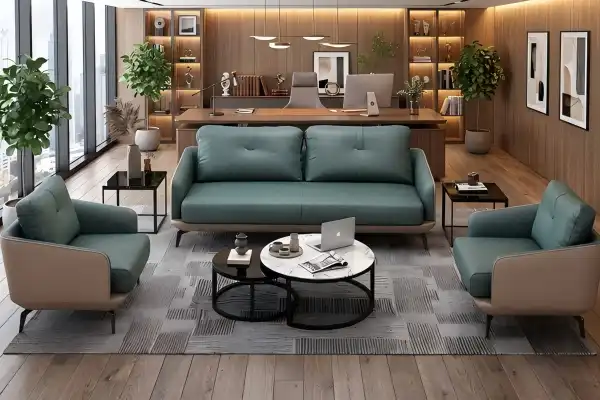
Real Mid-Century Modern Office Couches have unique features that set them apart from home furnishings that aren't made for business use. Tapered metal or wooden legs make a structure look lighter while still providing the stability needed in business settings. When you combine natural curves with precise geometry, you get seating that feels both friendly and professional. Wooden frames, high-quality upholstery, and metal details are common pairings of materials that go with a variety of office styles. We've seen that teal leather with light wood trim makes a striking visual difference while still being proper for the office. The padded back pillows on two-seater models support your lower back while you wait for a long time, which is good for your health and comfort.
Construction Standards for Commercial Use
Furniture in the reception area has to deal with tough conditions that furniture in the home can't handle. High-resilience polyurethane foam with a density of between 2.5 and 3.0 lbs/ft³ keeps things from sagging too soon after being used over and over. Kiln-dried wooden frames don't warp in climate-controlled working spaces, and methods for reinforced joinery make sure they last a long time. Manufacturers of good products use steel mounting systems inside that are stronger than what BIFMA tests say is acceptable for lateral strength. After six months of daily use, the difference is clear: lower chairs will have stress lines and cushions will have deformed. These commercial requirements are built into our manufacturing process as basic needs, not as extra features.
Material Durability in High-Traffic Settings
Options for upholstery have a direct effect on how much it costs to maintain and how often it needs to be replaced. There are different kinds of leather, from full-grain aniline finishes that get more interesting over time to protected semi-aniline finishes that don't stain easily. For fabric alternatives to be commercially viable, they need to have Martindale abrasion ratings higher than 50,000 rubs. The Morandi green velvet we make has beige-brown edging that makes it look soft. It works well in creative offices because of its technical performance. This color scheme keeps business limits while lowering visual stress when talking to clients. Slim metal legs make it easier to clean, which is a practical factor that is often ignored but has an impact on hygiene standards and upkeep efficiency.
Core Criteria for Choosing the Right Mid-Century Modern Office Couch
Strategically choosing furniture means looking at more than just how it looks on the surface. Structured evaluation procedures that are in line with operational needs should be used to make choices about purchases.
Spatial Planning and Configuration Options
The layout of reception areas varies a lot, from small vestibules for entry to large lobby areas. Accurate measurements show if flexible setups like 1+1+3 seating arrangements allow for the best flow. Three-seater couches paired with single armchairs make conversational groups that are still easy for people to get to. The form of high-quality Mid-Century Modern Office Couch furniture that combines the armrest and backrest into one piece removes gaps where dirt and dust can gather, making upkeep easier. We suggest leaving at least 36 inches of space between furniture pieces so that wheelchairs can get around and 18 inches of space between pieces of furniture so that people can move around easily. By thinking about space in this way, you can avoid making the common mistake of choosing visually appealing furniture that causes traffic jams during busy times.
Brand Alignment Through Design Language
Before anyone talks to you, your welcome furniture sends a message about your brand. Businesses that are just starting out often like pieces that emphasize new ideas by using bright colors and odd shapes. Companies that have been around for a while tend to like simple colors and high-quality materials that show stability and tradition. For government buildings, furniture has to meet certain fire safety standards, like CAL 117-2013, and have the right amount of formality. Mid-Century Modern Office Couch style is very flexible, so it can be changed to fit a wide range of needs by choosing different finishes, fabrics, and building structures. Leather in teal tones shows creativity and confidence, while neutral tones show a more traditional sense of business. Because they are so flexible, Mid-Century Modern Office Couch styles are still popular in a wide range of fields, from healthcare to hospitality.
Ergonomic Comfort for Extended Waiting
The experience of visitors is directly related to how comfortable the seats are during appointment delays or time spent getting ready for a meeting. A cushion depth of 20 to 24 inches works for all body types without making you feel like you're sinking in. Seats with heights ranging from 17 to 19 inches make it easy for older visitors or people who have trouble moving around to get in and out. The slightly curved surface we engineer into the seat and back cushions spreads weight out evenly, which keeps pressure points from forming during waits longer than 15 minutes. The 24-26-inch armrest height gives you support when you're standing without getting in the way of your comfort when you're sitting down. With these functional requirements, greeting areas go from being just places to wait to showing that the company cares about the health and happiness of its visitors.
Evaluating Quality and Certification Standards
When buying commercial furniture, you have to check the manufacturing standards, which is something that home buyers usually don't do. Safety rules are followed, and your property is protected by documented compliance.
Understanding Commercial Furniture Testing
Standardized stress testing methods are used for BIFMA X5.4 approval to specifically test lounge and public seats. Through-cycle stress that mimics years of use, these tests find structural weaknesses before they are put into use. Our goods are certified by SGS CEC, which is a third-party check of the materials and building methods. This outside confirmation is especially helpful when having to defend procurement decisions to people who are worried about liability. When insurance claims or workplace accident investigations are being looked into, the difference between tested and untested furniture becomes clear. This is because paperwork shows that the seller did their research before choosing the furniture.
Environmental and Health Compliance
Concerns about the quality of the air inside homes have made formaldehyde emission standards very important for choosing products. Volatile organic compound release from glue, finishes, and composite materials is limited by the E0 and E1 guidelines. With GREENGUARD Gold certification, you can be sure that office furniture doesn't expose people to too many chemicals. These certificates are especially important in places like healthcare greeting areas, schools, and government buildings where people's health is closely watched. The five-year shelf life we give our Mid-Century Modern Office Couches is based on real-world business use standards, not marketing claims that make you want to buy them. Manufacturers who offer clear warranty terms that cover frame integrity, cushion resilience, and finish durability show that they trust their products to last.
Procurement Strategies for B2B Buyers
Finding business furniture is different from finding furniture in a store; you have to think about more than just price when evaluating vendors.
Supplier Verification and Partnership Development
Long-term partnerships with dependable makers lower the stress of the procurement cycle and make sure that quality is uniform across multiple phases of a project. We've set up our business so that specialized account coordination and quick contact that answers technical questions and worries about deadlines help project managers. Interior planners can see how things will look before they agree to them if they can get technical drawings for space planning. During the quotation stage, our engineering team checks to see if customization is possible. This keeps us from having to do expensive redesigns after production starts. This unified method is different from brokers who don't know much about manufacturing and can't promise stable production during large orders. When buyers can, they should go to production sites and watch the quality control and material handling procedures that set professional businesses apart from shady sellers.
Customization and Lead Time Management
When buying furniture for a project, changes are often needed that can't be made in a normal catalog. Our team gets requests every day for changes to the size to fit certain building needs, unique branding through embroidery or metal plaques, and changes to the way things work. The key is to work with manufacturers whose engineering skills can turn design ideas into specifications that can be used in production. Knock-down design makes shipping more efficient, cuts down on import costs, and makes installation easier. Our modular approach lets you mix and match two-seater teal leather couches with three-seater Morandi green velvet arrangements that still look good. Project delays that hurt contractors' names and clients' relationships can be avoided by being clear about lead times. We make actual production plans that take into account things like getting materials, how long it takes to make something, inspecting it for quality, and shipping it internationally.
Styling and Maintaining Your Investment
The quality of the furniture at the start and the care that is given to it over time are both important for how long it lasts.
Integrating Mid-Century Design Elements
For a reception area to look good, the furniture, lights, decorations, and building features all need to go together. The light wood trim on our teal leather chairs goes well with natural oak floors or walnut reception desks that are popular in business settings. The thin black metal legs look like the industrial design elements you can see in open pipes or metal-framed glass walls. Task lighting that looks like brass or matte black adds to the Mid-Century Modern Office Couch look while also giving useful light. Adding abstract art or plant elements keeps things interesting without taking away from the clean lines that are typical of this design language. The goal is to make spaces that feel curated instead of catalog-ordered, showing guests the kind of attention to detail that they connect with good organizing skills.
Maintenance Protocols for Extended Lifespan
To keep leather from drying out and cracking, it needs to be conditioned every six months with pH-neutral products that don't remove protective finishes. Once a week, use an upholstery attachment to vacuum velvet to get rid of dust and dirt before they get stuck in the fibers. Spill response protocols should be written down and shared with facilities teams, since cleaning up mistakes often causes more damage than the spill itself. The protective processes we use during production help keep stains at bay for now, but you still need to be careful. Abrasive cleaners can damage powder-coat or paint finishes on metal legs, so they should only be cleaned with a damp cloth. When done regularly, these simple steps make furniture last much longer than the average in the industry and keep it looking professional, which is why the original investment was made.
Conclusion
When picking out seating for the reception area, you have to think about both how it will look right now and how well it will work in the long term. Mid-Century Modern Office Couch designs have been used successfully in a wide range of fields and are strong enough for commercial settings. For buying to go well, quality standards that can be checked, suppliers that can be trusted, and the ability to make changes that meet specific image and space needs are all important. The investment includes more than just buying furniture. It also includes upkeep plans and ties with vendors that help the business meet changing needs. When businesses make this choice, they think about their reception areas as extensions of their brand identity rather than just functional needs.
FAQ
How do mid-century modern couches withstand commercial use compared to residential furniture?
Commercial-grade models have high-resilience foam with a density of more than 2.5 lbs/ft³, strengthened frame joinery with Mid-Century Modern Office Couch steel supports inside, and fabric that can withstand more than 50,000 rubs according to Martindale. Most furniture for homes is made with lower-density foam and simple construction that isn't good for places with a lot of foot traffic.
Are these chairs safe enough to meet fire safety standards for public buildings?
Options from good producers meet the flammability standards of CAL 117-2013 and the requirements of TB 133 for public areas. During the quote step, make sure you get the necessary paperwork to make sure you're following the rules in your area.
What customization timeline should we expect for bulk orders?
Changes made for a specific project usually add two to three weeks to the normal production schedule. Complete timelines from design approval to delivery range from 8 to 12 weeks, depending on how customized the product is and where it is being shipped. Transparent makers give thorough plans for reaching milestones while negotiating a contract.
Partner with PENGPAI for Your Office Furniture Needs
For busy reception areas, PENGPAI offers commercial-grade Mid-Century Modern Office Couches. Our combined manufacturing method gives you the freedom to customize while also keeping production stable. This makes sure that your project stays on schedule and meets your quality standards. Our teal leather two-seater and Morandi green three-seater sofas are certified by SGS CEC, come with five-year shelf life guarantees, and are built to standards higher than those required by BIFMA. We support procurement managers, interior designers, and facility directors as a reputable Mid-Century Modern Office Couch maker by providing them with committed project management and quick technical assistance. Our Shunde plant has all the production tools needed, so there are no contact problems like there are in broker relationships. Email us at kiki@pengpaifurniture.com to talk about how our engineering team can change the mid-century style to fit your needs while still giving your project the commercial durability it needs.
References
1. Miller, R. (2022). Commercial Furniture Specification: A Guide for Architects and Designers. New York: Design Press International.
2. Thompson, L., & Chen, M. (2023). "Durability Standards in Office Furniture: Comparative Analysis of BIFMA and European Certifications." Journal of Interior Design Research, 48(3), 112-128.
3. National Office Furniture Association. (2024). 2024 Workplace Furniture Trends Report. Grand Rapids: NOFA Publications.
4. Harrison, K. (2021). Mid-Century Modern: From Design Classic to Commercial Application. London: Architecture and Design Publishing.
5. Workspace Design Council. (2023). "Reception Area Planning: Spatial Requirements and Ergonomic Standards." Facilities Management Quarterly, 17(2), 45-59.
6. Stevens, P., & Rodriguez, A. (2024). "Material Performance in High-Traffic Commercial Interiors: A Five-Year Study." Building Materials Research Journal, 31(1), 78-94.
Online Message