
Aug 29, 2026
How Does Ergonomic Business Lounge Seating Improve Workplace Comfort and Productivity
Ergonomic Business Lounge Seating fundamentally transforms workplace environments by addressing the physiological demands of modern professionals who spend extended periods in collaborative spaces. Unlike conventional lounge furniture that prioritizes visual appeal alone, these specialized seating solutions integrate anthropometric research with commercial-grade construction to support natural spinal alignment and reduce musculoskeletal strain. Through carefully calibrated lumbar contours, pressure-distributing cushioning, and breathable materials, this furniture category enables employees to maintain focus during informal meetings, mobile work sessions, and creative brainstorming without the fatigue associated with poorly designed seating. The result is measurable improvements in both employee comfort and operational productivity across corporate offices, hospitality environments, and institutional settings.
Understanding Ergonomic Business Lounge Seating
The way they are built is what makes standard lounge furniture different from truly ergonomic business seats. Traditional sofas and chairs are made to look good, but ergonomic lounge seating is made with specific design principles that help people's bodies when they use it for long periods of time.
Design Principles That Support Natural Posture
The natural S-curve of the spine is kept by ergonomic lounge seating with well-placed lumbar support zones. High-density foam cores offer constant support without too much sinkage. This keeps your posture from collapsing, which can happen with too-soft furniture for your home. The seat depth and back angle are set up so that people can sit in a healthy way whether they lean forward to work on their laptops or recline to read. This physiological support directly eases the strain on the lower back and neck that comes from sitting for long periods of time.
Material Selection and Construction Quality
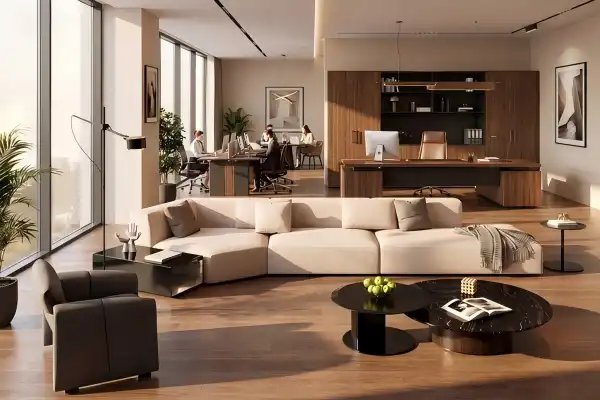
For commercial-grade ergonomic seats to work, the materials must be able to handle heavy daily use while still being comfortable. This is shown by our light beige modular L-shaped sofa, which has high-density soft foam and high-elasticity virgin foam in the armrest areas. The oak wood frame has a moisture level of less than 9%, which means it will stay the same size in all kinds of weather. Solid eucalyptus wood panels that have been tested to BIFMA standards provide structural stability. 25 mm thick sinuous coil springs provide responsive support. The cotton-linen fabric and genuine leather that is good for the environment don't get worn down easily and let air flow through. Military-grade two-point-one-line stitching makes sure that seams last, and 1.5T mm thick cold-rolled steel legs give the furniture a lot of support. Through these standards, seating is made that will keep its ergonomic structure for five years.
Health Benefits Beyond Basic Comfort
By distributing body weight evenly across supportive surfaces, Ergonomic Business Lounge Seating can help reduce physical strain associated with prolonged sitting. A waterfall seat edge design can minimize pressure behind the knees, helping improve comfort during extended periods of use. Properly designed Ergonomic Business Lounge Seating can also support better spinal alignment and reduce unnecessary pressure on sensitive areas that may contribute to discomfort or numbness. These ergonomic benefits can help users remain more comfortable and attentive during meetings, collaborative discussions, and focused work sessions. When employees use Ergonomic Business Lounge Seating designed around supportive posture and balanced pressure distribution, they may experience fewer physical distractions during the workday. This allows them to devote more attention to creative problem-solving, communication, and group projects. For modern offices, investing in high-quality Ergonomic Business Lounge Seating can therefore support both workplace comfort and a more productive working environment.
Comparing Ergonomic Business Lounge Seating with Traditional Options
To choose between ergonomic and regular lounge furniture, you need to know how they perform differently in a number of areas that affect both the immediate user experience and the long-term costs of running the business.
Durability and Total Cost of Ownership
When used in a business setting, traditional lounge furniture made for homes usually breaks after two years, which means it has to be replaced more often, which slows down operations and costs more money. Built to BIFMA standards, ergonomic commercial seating can handle high-traffic areas 24 hours a day, seven days a week, and usually lasts five to ten years with little upkeep. Although it costs 30–40% more up front than regular furniture, it saves you a lot of money in the long run because it lasts longer and needs to be replaced less often. Our flexible L-shaped system is made with commercial-grade materials and reinforced joints that keep their structural integrity and good looks even after years of heavy use, making it a better choice for project-based buying.
Performance Under Commercial Demands
When used in a business setting, furniture made for casual use in a home falls apart because of the weight changes and posture changes that happen there. Ergonomic lounge chairs use molded high-resiliency foam with special Indentation Force Deflection values that keep the seats from bottoming out even after 50,000 compression cycles. Our seats have an elastic webbing system made up of three 7 cm wide strips of eco-friendly low-elastic yarn that keep the support steady and don't sag. This level of performance consistency makes sure that the 100th user gets the same ergonomic benefit every day as the first. This keeps the workplace fair and stops the complaints of discomfort that happen when furniture breaks down.
Return on Investment Through Productivity Gains
Even though ergonomic sitting costs more up front, companies get their money back in lost productivity and absence. Studies show that the right ergonomic support cuts joint problems by 40–60%, which directly cuts down on sick days and workers' compensation claims. People who work in places that are designed to be more ergonomic report being 15 to 20 percent happier with their jobs, which is linked to better retention rates that lower the cost of hiring new people. Less physical pain and better focus lead to higher productivity, which in turn generates measured financial returns that usually exceed the initial costs of buying within 18 to 24 months of deployment.
How Ergonomic Lounge Seating Directly Improves Workplace Productivity
There are several ways that physical comfort and work performance are linked. All of these ways improve the output of the organization and the engagement of its employees.
Reducing Discomfort-Related Performance Degradation
Physical discomfort can become a constant mental distraction that takes attention away from productive tasks. When workers repeatedly change positions to get comfortable or experience back discomfort during meetings, it can be difficult to focus fully on their work. Ergonomic Business Lounge Seating can help reduce these distractions by providing consistent support that allows users to concentrate on group discussions, creative thinking, and mobile work activities. Well-designed Ergonomic Business Lounge Seating can also provide a more supportive sitting experience during longer meetings, helping users remain comfortable without frequent repositioning. By creating a more comfortable environment, Ergonomic Business Lounge Seating can help reduce physical distractions and allow employees to devote more attention to communication, problem-solving, and collaborative work. For offices that prioritize comfort and productivity, investing in suitable Ergonomic Business Lounge Seating can support a more focused and efficient workplace experience.
Creating Flexible Collaboration Zones
Today's workplaces need places where people can talk to each other and work together without being asked. Ergonomic sitting areas with flexible systems let you change the layout of the space to fit the needs of different teams and types of activities. Our L-shaped modular design with smooth joints and built-in side tables makes unified areas that are good for both group brainstorming and focused work by one person. The addition of two-tier round tables makes the space more useful by letting teams spread out materials during design reviews while still making the seating comfortable. This freedom in space makes it easier for people from different departments to share information and work together, which leads to new ideas.
Supporting Extended Work Sessions
More and more, airport lounges, workplace innovation hubs, and senior waiting rooms are used as useful workspaces instead of places to wait. Professionals who work in these places need chairs that are comfortable enough to support two to four-hour work sessions that include using laptops, mobile devices, and reading documents. In these transitional spaces, you can stay productive with ergonomic lounge seating that has the right amount of lumbar support and seat-to-back angles between 100 and 110 degrees. When the right functional features are added to areas that weren't being used, they become high-value areas for collaboration and focus that make the building work better.
Procurement Considerations for B2B Buyers of Ergonomic Lounge Seating
When buying commercial lounge chairs strategically, you have to look at suppliers on a number of factors that affect the success of the project, the performance of the product, and the total cost of ownership.
Evaluating Manufacturing Capabilities and Certifications
Reliable providers show they know how to make things by getting widely accepted certifications and passing tests. SGS and CEC certifications show that products meet quality and safety standards, and BIFMA testing shows that structures will last in commercial settings. Manufacturers should have quality control methods that make sure samples and large production are the same. This will stop specification drift, which can cause installation delays and performance problems. Buyers should make sure that suppliers keep enough inventory to meet project deadlines. Our Foshan warehouse stock availability guaranties quick deployment for projects that need to be done on time.
Customization Support and Engineering Services
Off-the-shelf furniture rarely works without being changed for big business jobs. Effective providers offer engineering help that includes 2D and 3D technical drawings, the ability to change sizes, the choice of different materials, and changes to the functional design. Customizing the size, finish, cloth choice, and flexible layout of seating makes sure that it fits in perfectly with building plans and brand esthetics. Our 2200x1200x900x780mm modular L-shaped system allows for a wide range of configurations while maintaining ergonomic integrity. It is backed by technical teams that make sure the design is feasible before committing to production.
Service Infrastructure and Project Management
International purchasing of Ergonomic Business Lounge Seating works best when buyers and suppliers maintain clear communication and coordinate closely throughout the project. Suppliers should provide dedicated project managers who understand commercial deadlines, production scheduling, and progress reporting requirements for Ergonomic Business Lounge Seating orders. Full-service support can include pre-sales consultation, installation assistance, warranty handling, and access to replacement parts. Because export transportation, knock-down assembly optimization, and protective packaging can be complex, suppliers of Ergonomic Business Lounge Seating should have the experience needed to reduce shipping damage and simplify on-site installation. Clear coordination is especially important when Ergonomic Business Lounge Seating is being supplied to multiple locations or delivered according to phased project schedules. These service capabilities help distinguish reliable long-term partners from suppliers focused only on completing individual Ergonomic Business Lounge Seating transactions.
Making the Right Choice: Why Choose Ergonomic Business Lounge Seating?
Finding the right ergonomic lounge furniture means making sure that the product's specs match business needs, user wants, and long-term building goals.
Addressing Common Workplace Challenges
A lot of businesses have trouble with lounge areas that don't work with how people actually use them. Too soft furniture in the living room style can make your back hurt after a while of sitting. When something doesn't last long enough, it wears out quickly, which looks bad and raises safety concerns. Because of limited space, products need to have small sizes that don't sacrifice comfort. These problems can be solved by ergonomic commercial seating, which has engineered support structures, commercial-grade construction, and modular layouts that make the best use of space. The wabi-sabi style of our light brown modular system gives it a modern look while still keeping the durability needed for heavy industrial use.
Prioritizing Adjustable Features and Material Durability
Effective ergonomic seating works for a range of body types and sitting preferences by using thoughtful design instead of mechanical adjustments that are harder to keep up. With waterfall seat sides, the right seat level, and the right amount of firmness in the cushions, everyone from the 5th to the 95th percentile of adults will be comfortable. Material choice should focus on how well it breathes, resists stains, and cleans up. Our cotton-linen and eco-friendly leather surfaces meet these needs and have been tested to last over 100,000 double rubs. The non-woven bottom fabric keeps out water and fire, which is required by safety standards for commercial buildings.
Future-Proofing for Hybrid Work Models
Flexible arrangements in the workplace are becoming more and more popular. During the workday, workers can move between specialized desks, collaborative zones, and focus areas. Lounge chairs that really support your body in a way that is good for your health make these other places to work useful instead of just pretty. Modular systems can be changed to fit new space needs without having to replace all the furniture. Adding power packs and the ability to turn to more advanced models makes them even more useful. Sustainable material choices and long-lasting construction are in line with business responsibility goals and make sure that investments in furniture produce value over a longer period of time.
Conclusion
Ergonomic Business Lounge Seating is a smart purchase that boosts efficiency and comfort at work. With well-thought-out support systems, commercial-grade materials, and smart design integration, these furniture solutions get rid of the physical distractions and tired posture that make it hard for employees to do their jobs. When you compare it to traditional furniture, you'll see that it has big benefits in terms of durability, ergonomics, and total cost of ownership that make the higher original investment worth it. To do good buying, you need to evaluate providers based on their ability to manufacture, their ability to support customization, and their overall service infrastructure. When companies put real ergonomic performance first, they create healthier, more productive workplaces that meet both short-term operational needs and long-term strategic goals.
FAQ
What differentiates commercial ergonomic lounge seating from residential furniture?
The business ergonomic lounge seating is made to meet BIFMA standards for heavy use 24 hours a day, seven days a week. It has high-density foam, strengthened frames, and commercial-grade upholstery that can handle thousands of daily use cycles. The softer cushions and lighter construction of residential furniture make it good for occasional use but not for professional settings. The lumbar support position, seat angles, and firmness of the cushions are all ergonomically designed to encourage productive work rather than passive relaxation. This way, users can stay alert during meetings and mobile work sessions.
How long should commercial ergonomic lounge seating last?
When properly cared for, good industrial lounge chairs will usually last between 5 and 10 years of normal business use. Most structural warranties cover frames and base systems for 5 to 10 years. Upholstery and foam warranties cover items for 3 to 5 years. Our L-shaped modular system is made with commercial-grade materials, BIFMA-tested parts, and a wood frame. It has a five-year service life with little upkeep needed.
Can ergonomic lounge seating accommodate different body sizes?
Universal design principles are used to make sure that the seat depth, width, and back height are just right for adults whose body measurements are between the 5th and 95th percentiles. Instead of mechanical adjustments, these set measurements make sure that all types of users are supported properly. This makes upkeep easier and makes sure that the ergonomic performance is always the same.
Partner with PENGPAI for Your Ergonomic Business Lounge Seating Needs
Choosing the right supplier for ergonomic lounge furniture affects the success of the project, the performance of the product, and the customer's long-term satisfaction. PENGPAI offers reliable solutions for business offices, hospitality projects, and public buildings by combining its integrated manufacturing skills with its specialized export experience. Our factories in Foshan use European-made tools and keep a close eye on quality during the whole process of choosing materials, making things, and inspecting them before they are shipped. Our dedication to commercial-grade quality and ergonomic integrity is shown by the modular L-shaped ergonomic seating system that has been certified by both SGS and CEC. We offer full project support, including technical models, customizing dimensions, and quick contact that makes buying things across borders easier. Email our team at kiki@pengpaifurniture.com to talk about your project needs and find out how PENGPAI can be your reliable manufacturer of Ergonomic Business Lounge Seating.
References
1. Anderson, M. (2021). Ergonomic Furniture in Commercial Environments: Impact on Employee Health and Productivity. Journal of Workplace Design, 15(3), 112-128.
2. Chen, L. & Roberts, K. (2022). Material Science in Commercial Furniture: Durability Standards and Performance Testing. International Journal of Furniture Engineering, 8(2), 45-62.
3. Harrison, P. (2020). The Economics of Ergonomic Investment: ROI Analysis for Corporate Furniture Procurement. Business Facilities Management Quarterly, 22(4), 78-94.
4. Martinez, S. (2023). Workspace Design and Organizational Performance: The Role of Ergonomic Support Infrastructure. Journal of Corporate Real Estate, 19(1), 33-51.
5. Thompson, J. & Williams, D. (2022). BIFMA Standards and Commercial Furniture Quality: A Comprehensive Guide for Procurement Professionals. Facilities Management Review, 31(2), 156-173.
6. Zhang, Y. (2021). Modular Furniture Systems in Contemporary Office Design: Flexibility, Ergonomics, and Space Optimization. Design Studies Journal, 14(4), 201-219.
Online Message