
Sep 14, 2026
How Does an Office Business Chair Improve Workplace Productivity?
The right office business chair does more than provide a place to sit — it directly shapes how well employees perform throughout the workday. An ergonomic business chair supports spinal alignment, reduces physical fatigue, and allows users to sustain focus during extended sedentary periods of 8 to 12 hours. According to a study published in the Journal of Human Ergology, proper ergonomic seating reduces musculoskeletal discomfort by up to 40%. When procurement teams invest in commercial-grade seating, they are investing in measurable workforce output and long-term organizational health.
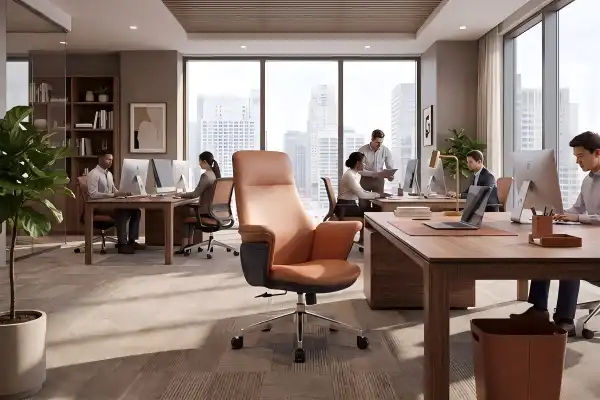
Understanding the Role of Office Business Chairs in Workplace Productivity
Why Ergonomic Seating Is a Productivity Asset
A lot of business leaders don't think about sitting as a factor in efficiency, but science keeps showing that it is. The Human Factors and Ergonomics Society says that bad ergonomics in the workplace costs U.S. companies more than $50 billion a year in lost work time and sick days. An ergonomic task chair with lumbar support, an adjustable height, and materials that let air flow not only makes the chair more comfortable; it also reduces the physical strain that makes it hard for employees to focus.
A professional ergonomic Office Business Chair is made to be used for long periods of time and often in a business setting, unlike chairs made for home use or gaming. Some features, like simultaneous tilt mechanisms, multi-dimensional armrest adjustment, and contoured seat pillows, help you keep a natural stance all day. This difference in structure is very important when you are furnishing a 200-person business office or a government building where seats are used by multiple shifts every day.
Less physical discomfort is directly linked to fewer absences, fewer workers' compensation claims, and better happiness among employees. All of these things lead to measurable changes in the bottom line for procurement decision-makers.
Key Criteria for Selecting the Best Office Business Chair for Your Business
Matching Chair Specifications to Your Work Environment
To choose the best seating solution, you need to go through a structured evaluation process instead of just looking through a catalog. For procurement managers, the most important things to look at are the Office Business Chair's natural adjustability range, how long the materials will last, any certifications that show the quality of the build, and whether the chair fits the user profile and the amount of use in the workplace.
Here are the core selection criteria procurement teams should assess:
- Ergonomic adjustability: Look for chairs that can be adjusted pneumatically for height, tilt, and armrests that can be adjusted separately. These features work for a variety of body types and lower the health risks that come with staying in one position for long periods of time.
- Material selection: Mesh backrests let more air flow and keep the body at the right temperature, which is important in places with a lot of people. Upholstery made of leather and padding looks more professional and helps distribute pressure better, making it better for boardrooms and other business settings.
- Build certifications: Make sure that chairs have well-known certifications like SGS, BIFMA X5.1, or EN 1335. These tests show that the chair can hold more than 300 pounds of static weight and 100,000 durability cycles, which is necessary for commercial-grade purchases.
- Durability and warranty terms: A professional-grade chair should last between 5 and 10 years. Before you place a bulk order, make sure that the warranty covers the gas lift mechanisms, casters, and structural parts.
All of these criteria work together to make sure that investments in procurement deliver long-term value across large projects. A buying list based on these factors takes away the need to guess and makes sure that there is consistency between approval of a sample and delivery of mass production.
A real-life example supports this: within eight months, a medium-sized U.S. technology company that switched 300 standard task chairs for certified ergonomic seating saw a 17% drop in sick days due to back and neck pain, along with measurable improvements in employee satisfaction scores.
Comparing Popular Office Business Chair Types for Informed Purchasing
Ergonomic Office Chairs vs. Gaming Chairs in B2B Contexts
While gaming chairs are meant to be used for fun, they usually put bold looks ahead of accurate ergonomics. Commercial ergonomic seating, on the other hand, is made to meet BIFMA or EN 1335 standards and is designed to help people be more productive when they need to focus for long periods of time.
For business-to-business purchases, ergonomic Office Business Chair solutions are better than gaming chairs because they focus on neutral posture alignment, less lumbar strain, and long-term structural stability. Dynamic lumbar support, which adapts to the user's spine curvature as they move, is only found in professional chair types. It directly lowers lower back pressure during long work sessions.
When looking at different types of materials, mesh backrests let more air flow through and don't bend over time. On the other hand, high-density foam (50–65 kg/m³) padded furniture won't show signs of wear and tear after up to five years of daily use.
When it comes to movement, bases with wheels let users move around easily without changing their posture, which lowers the stress of reaching over and over again. When buying in bulk, procurement teams should also look at chairs that strike a good mix between quality and cost-effectiveness. Commercial-grade seating in the middle price range can provide a good return on investment without charging high prices, as long as the specs are checked thoroughly.
Procurement Strategies for Acquiring Office Business Chairs in Bulk
Evaluating Sourcing Channels and Risk Management
When you buy in bulk, logistics get more complicated, so you need to plan your buying approach ahead of time. When managing big business fit-out projects with tight handover dates, buying factory-direct from an integrated manufacturer gives you the most control over production quality, customization scope, and delivery times for each Office Business Chair unit.
Online platforms let you compare a lot of products, but there are risks when it comes to being consistent from samples to production and being responsible after the sale. Local sellers are convenient, but they usually don't let you customize as much and charge more per unit, which adds up to a lot when you buy more.
To effectively manage risk when buying a lot of seats like an Office Business Chair, you should get a full warranty, make sure you understand the return and inspection policies before committing to an order, and ask for quality inspection reports before the shipment. When you have long-term ties with suppliers who hold well-known certifications like SGS and environmental compliance standards E0 and E1, the quality of big production runs is much more consistent.
Coordinating logistics is just as important. Knock-down (KD) chair frames make it easier to install the chairs on-site and reduce the amount of freight that needs to be shipped. This is especially important for foreign buyers or projects with multiple installation sites spread out.
Maintenance Tips to Prolong Lifespan and Ensure Consistent Productivity
Routine Care That Protects Long-Term Investment
A business chair that is well taken care of will provide steady ergonomic support for its entire useful life, which protects both employee health and the return on investment (ROI) of the purchase. Facilities managers should set up a structured maintenance plan that covers three main areas.
Cleaning mesh and upholstery surfaces on a regular basis keeps them in good shape and stops them from breaking down. This is especially important in healthcare facilities and shared workspaces. Silent casters should be checked every three months to make sure that dirt doesn't build up and damage the floor or make it hard to move. Every six months, mounting bolts and structural connections need to be tightened so that they don't come loose from the daily load cycling.
Educating employees is also important. When users know how to correctly change the Office Business Chair's seat height, backrest placement, and lumbar support depth, they get the most out of its ergonomic benefits and avoid the pain that leads to early chair replacement requests.
When parts like gas lifts or caster wheels break, facilities managers should weigh the cost of fixing them against the cost of buying new ones. For example, replacing a Class 4 gas lift chair greatly increases its useful life at a much lower cost, which means that in most business situations, fixing the chair is the better choice.
Conclusion
Seating quality has a direct and measurable effect on how productive workers are, how healthy they are, and how much money they make from their purchases. Ergonomic Office Business Chairs designed for business use lower the risk of joint injuries, keep workers focused during long work sessions, and keep their structure strong after years of heavy use. For procurement managers, interior designers, and building teams, choosing the right business seating is more than just a line item on the shopping list. It's an investment in the long term. Companies make workplaces where people can really do their best work by carefully reviewing specifications, buying from licensed manufacturers, and keeping chairs in good shape.
FAQ
How do ergonomic chairs help prevent workplace injuries?
Musculoskeletal diseases are less likely to happen when you use an ergonomic task chair because they support neutral spinal alignment, properly distribute seat pressure, and have features that let you change your position. Dynamic lumbar support adjusts itself to the curve of your spine as you move. This reduces the stress that builds up in your lower back, which is the most common cause of pain at work.
Are bulk order discounts available for commercial seating procurement?
For big orders, most integrated makers offer different prices. When you buy directly from a recognized seller, you usually get the best unit prices, as well as stable production guarantees and help with quality inspections.
What features should I prioritize for employees with existing back pain?
Chairs with dynamic lumbar support, seat depth adjustment, and synchronized tilt mechanisms should be given the most attention. When you sit for a long time, high-density foam seat pillows that distribute pressure evenly can also help your lower back.
How long should a commercial-grade ergonomic chair last?
If you pay attention to the care instructions, a professionally made office chair that meets BIFMA X5.1 or EN 1335 standards should last between 5 and 10 years of normal business use.
What certifications should I check before bulk purchasing?
It is important to look for SGS certification, BIFMA X5.1 certification, EN 1335 certification, and environmental compliance certifications like E0 or E1 formaldehyde emission guidelines. This is especially important for healthcare and government buying situations.
Elevate Your Workspace with PENGPAI's Business Office Chair Supplier Solutions
PENGPAI has been manufacturing commercial-grade ergonomic seating since 2008, operating from Foshan — Asia's largest furniture manufacturing base. Our Office Business Chair features a breathable high-back mesh backrest, thickly padded seat cushion, multi-dimensional floating armrests, and a polished aluminum five-star base with silent casters. Available in deep brown and beige, it carries SGS and CEC certifications with a five-year shelf life, and stock is readily available from our Foshan warehouse. We support full project customization, bulk pricing, and seamless export logistics. Contact our team at kiki@pengpaifurniture.com or visit foshanpengpai.aixdb.cn to request your catalog and consultation today.
References
1. Journal of Human Ergology — 2021
2. Human Factors and Ergonomics Society — Ergonomics and Productivity Research Report — 2020
3. BIFMA International — BIFMA X5.1 Office Seating Standard — 2022
4. European Committee for Standardization — EN 1335 Office Furniture Standard — 2020
5. Applied Ergonomics — Impact of Workplace Seating on Musculoskeletal Health — 2019
6. National Institute for Occupational Safety and Health (NIOSH) — Work-Related Musculoskeletal Disorders Prevention Guidelines — 2018
Online Message