
Aug 27, 2026
How Does a Collaborative Breakout Area Sofa Improve Modern Workplace Communication?
A Collaborative Breakout Area Sofa transforms workplace communication by creating inviting, informal zones where employees naturally gather for spontaneous discussions, quick team huddles, and creative brainstorming sessions. Unlike rigid conference room furniture, these sofas eliminate physical and psychological barriers between colleagues, fostering an atmosphere of openness and approachability. By combining ergonomic comfort with thoughtful spatial design, collaborative seating encourages longer, more meaningful conversations while supporting diverse communication styles—from quick stand-up meetings to extended problem-solving sessions. The result is a measurable increase in team cohesion, innovation, and workplace satisfaction.

Understanding Collaborative Breakout Area Sofas and Their Role in Workplace Communication
Modern workplaces need furniture that can change with the needs of workers and not get in the way of their ability to work together. We've seen that formal seating arrangements and traditional office layouts make it harder for people to talk to each other informally, which is what leads to new ideas and teamwork. This problem can be solved with collaborative breakout chairs, which offer flexible sitting options that can be used for meetings of different sizes and types.
Purpose-Built Design for Team Interaction
The best thing about these pieces of furniture is how they were purposely made. True collaborative seating has features that are designed to work in business settings, unlike chairs that have been moved from the living room to the office. Wide armrests give people a casual place to work on their laptops or notebooks while people are talking. With segmented seat pillows, more than one person can sit easily without bothering their neighbors. Low-profile bases make it easier to see through standard office furniture, which makes it feel less impersonal.
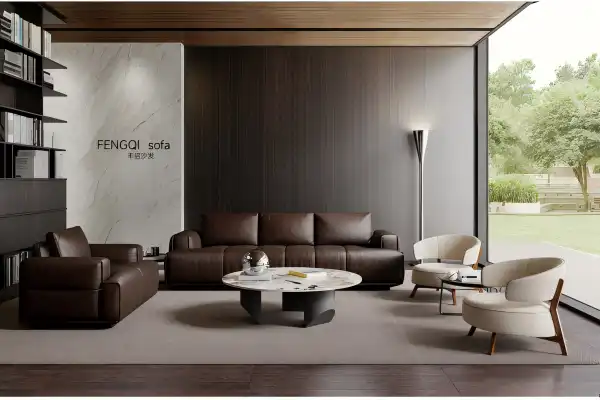
This idea is shown by our dark brown leather straight sofa. With its square back cushions that are split into three sections and its segmented, plush seats, the design supports both individual comfort and group dynamics. Its calm, elegant shape and wide, rounded armrests make it perfect for executive lounges and places where formal and casual styles mix.
Material Choices That Support Long-Term Use
These couches are made to survive the tough conditions of daily use in the workplace thanks to their commercial-grade construction. The inner frame is made of AAA-grade multilayer plywood sheets and squared foreign larch and eucalyptus wood. This gives it strength that regular furniture can't match. The high-density, high-resilience foam inside keeps you comfortable even after thousands of sitting cycles. The 3.6 serpentine springs that are attached with webbing and stitching give you long-lasting support. The black metal legs are strong and have a modern look that goes with current office design trends.
This way of thinking about building addresses an important issue in purchasing: making sure that the quality of samples matches the quality of mass production. We make sure that every unit meets business durability standards by using the same materials and building methods as the samples when we make a lot of them.
Overcoming Traditional Workplace Communication Barriers with Collaborative Sofas
With standard office furniture, there are walls between team members that you can't see. Arranging desks so that people are facing away from each other, using formal meeting tables that support hierarchy, and using fixed seats that make it hard to move around all make conversation more difficult.
Breaking Down Physical and Psychological Distance
Workplace psychologists often describe spaces featuring a Collaborative Breakout Area Sofa as "third spaces" because they are neither formal meeting rooms nor individual workstations. These areas give employees a comfortable setting where they can communicate more freely and informally. When a project manager and a designer sit together on a Collaborative Breakout Area Sofa rather than facing each other across a boardroom table, the tone of the conversation can become more relaxed and approachable. A Collaborative Breakout Area Sofa can encourage more open feedback, reduce defensiveness, and make it easier for team members to exchange ideas. By creating a comfortable environment, the Collaborative Breakout Area Sofa can also support spontaneous discussions and creative problem-solving. For modern offices, strategically placing a Collaborative Breakout Area Sofa in informal collaboration zones can therefore help create a more flexible and engaging workplace environment.
This effect is amplified by the fact that good breakout furniture is adaptable. Our 1+1+3 arrangement (1150×880×750mm, 1690×880×700mm, and 2250×880×750mm units) is set up in an L-shape that lets teams change the layouts based on their needs at the moment. Small groups could gather around a single section to have a focused conversation, while larger teams could use the whole set-up to come up with ideas for the whole department.
Supporting Diverse Communication Styles
Not everyone can converse well in the way that meetings are usually set up. People who are more introverted tend to offer more when the situation is less formal and more relaxed. Breakout sofas allow for this variety by providing different sitting places, such as corner seats for people who like to be on the edges of things, center seats for people who are natural leaders, and end seats for people who like to have clear personal space.
Designing and Arranging Collaborative Breakout Area Sofas to Maximize Communication
How useful breakout furniture is depends on how well it is placed and designed. If it's not used, it just takes up room.
Spatial Planning for Optimal Flow
Breakout areas that work well balance ease of entry with sound privacy. Placing chairs near busy areas like kitchenettes or print stations encourages people to use them on their own during breaks, but they shouldn't cause traffic jams. We suggest leaving at least 900 mm of space around seating groups so that people can move around easily and wheelchairs can get through.
Lighting is also very important. Natural light makes meeting rooms more appealing, but staying away from direct glare is best for eye health when working together on a computer. Adding low-profile side tables, power outlets built into nearby walls, and acoustic panels suspended above simple seating turns them into fully functional work zones.
Material Selection Aligned with Corporate Values
Companies' environmental and quality goals are becoming more and more reflected in the things they buy. Leather furniture lasts a very long time and doesn't need to be replaced as often, which saves money and reduces waste. The low ongoing costs are due to the material's ease of maintenance—simple cleaning with pH-neutral solutions keeps the look.
The dark brown leather finish we offer strikes a balance between the seriousness of a professional look and the warmth that "resimercial" design is becoming more and more popular in. This approach to aesthetics helps companies hire people who want to work in places that feel less bureaucratic and more focused on people.
Color Psychology and Brand Alignment
Although basic tones are practical, color selection also plays an important role in shaping the atmosphere around a Collaborative Breakout Area Sofa. Warm earth tones, such as dark brown, can create a sense of comfort and familiarity, making a Collaborative Breakout Area Sofa in these shades suitable for spaces where employees discuss private project issues or exchange constructive feedback. These colors can also complement a wide range of interior design styles, allowing a Collaborative Breakout Area Sofa to remain visually relevant even when office design trends change. Choosing versatile colors for a Collaborative Breakout Area Sofa can therefore reduce the need for frequent furniture replacement or major interior updates. With the right color and placement, a Collaborative Breakout Area Sofa can contribute to a comfortable and professional environment that encourages informal communication and collaboration.
Choosing the Right Collaborative Breakout Sofa: Balancing Functionality and Procurement Needs
When choosing furniture for big office projects, procurement managers and building heads have to make tough choices. Beyond how it looks, the success of a project depends on practical factors like longevity, customization, logistics, and the dependability of the provider.
Evaluating Supplier Capabilities
For B2B buying, there are clear benefits to working with integrated makers instead of furniture stores. Customization is possible through direct factory ties that aren't possible with trade companies alone. Our 200,000-square-meter building has a modern, standardized production plant that lets us change sizes, tweak material specs, and find the best useful combinations without the delays and communication problems that come with multi-tier supply chains.
During the design development phase, our engineering team provides 2D and 3D technical drawings to make sure that the solutions we suggest fit your specific space limitations and aesthetic needs. This way of working together cuts down on expensive shocks during installation and speeds up the project schedule.
Quality Assurance Throughout Production
A common problem in international furniture procurement is making sure that sample approval and bulk production are always the same. Our quality control system uses inspection methods at every stage of production, including checking materials with SGS and CEC-certified parts, keeping an eye on production while it's going on, and checking finished units before they are shipped.
The structural parts of our collaborative chairs are guaranteed to last for five years, which shows that we trust them to last in a business setting. This long life has a direct effect on your total cost of ownership because it means you won't have to replace them as often, which means less downtime at work.
Logistics and Installation Efficiency
Export-oriented product design takes into account the difficulties of buying furniture from other countries. Our knock-down buildings make the best use of container space, which lowers the cost of moving each unit for large orders. Protective wrapping keeps things from getting damaged in transportation, and building methods that are meant to be efficient cut down on the amount of work that needs to be done.
Our Foshan warehouse has a lot of stock, so we can handle both big project orders and smaller purchases without having to wait for longer lead times. This inventory feature gives you options when project deadlines get pushed back or when you need to expand breakout areas that are working well based on feedback from employees.
Maintenance and Longevity of Collaborative Breakout Area Sofas
To protect your furniture purchase, you need to know how to care for it properly and set up regular repair schedules.
Leather Care for Commercial Environments
High-quality leather upholstery on a Collaborative Breakout Area Sofa is relatively easy to maintain and can retain its appearance and comfort with proper care. Using a soft, dry cloth to dust a Collaborative Breakout Area Sofa once a week helps remove surface dust before it contributes to unnecessary wear. Cleaning the leather of a Collaborative Breakout Area Sofa once a month with a cleaner specifically formulated for commercial leather can help remove accumulated oils and minor stains. Avoiding harsh chemicals is important because unsuitable cleaning agents may damage the leather's surface, reduce its natural flexibility, or cause premature cracking. With consistent maintenance, a Collaborative Breakout Area Sofa can remain comfortable and presentable in busy workplace environments for longer. Proper care also helps preserve the professional appearance and long-term value of Collaborative Breakout Area Sofa installations.
In places with a lot of foot traffic, we suggest having professional cleaning services three times a year, which should include conditioning treatments. This keeps the leather's moisture balance, which makes it last a lot longer than leather that hasn't been treated.
Structural Inspection and Repair
Frame joints, spring systems, and leg parts are checked once a year to find small problems before they become dangerous or uncomfortable. During routine maintenance windows, tightening connection points, replacing worn springs, and fixing loose upholstery stitching stop small wear from getting worse and needing expensive repairs or replacement too soon.
Our warranty help includes giving you advice on how to do inspections and giving you access to new parts that are the same as the originals. This availability of parts makes sure that fixes keep the furniture's structural stability and overall look.
Usage Policies That Extend Lifespan
Setting clear rules for how to use the break-out area helps employees know what they need to do to keep the furniture in good shape. Simple steps, like not letting people eat on fabric surfaces, telling them to spread their weight out instead of leaning on the armrests, and changing the seating arrangements every so often, can add years to the useful life of something.
Conclusion
Collaborative Breakout Area Sofa options are more than just pieces of furniture; they can serve as strategic investments in workplace culture and productivity. A well-designed Collaborative Breakout Area Sofa can reduce physical and psychological barriers to communication, creating a comfortable setting for natural conversations that encourage new ideas, strengthen team relationships, and support employee satisfaction. When companies evaluate Collaborative Breakout Area Sofa options, they should consider commercial-grade construction, thoughtful ergonomic design, durable upholstery, and dependable suppliers. Selecting the right Collaborative Breakout Area Sofa can help businesses create flexible workplaces that adapt to changing employee needs while providing long-term value. By combining physical comfort with attractive design, a Collaborative Breakout Area Sofa can transform underused transitional office areas into productive spaces for informal meetings, creative discussions, and team interaction. Ultimately, Collaborative Breakout Area Sofa installations can contribute to a more open, flexible, and collaborative workplace environment.
FAQ
How long do commercial-grade collaborative sofas typically last in high-traffic environments?
If you take good care of quality collaborative sofas made with hardwood frames, high-density foam, and long-lasting upholstery materials, they should last for 7 to 10 years in business settings. Our structural guarantee of five years is based on conservative estimates, as many of our clients report good performance well after this timeframe. Cleaning, inspecting, and following weight limits on a regular basis all greatly increase the useful life of something.
Can collaborative breakout sofas be customized to match our existing office design?
Of course. We offer full customization, which includes changing the size to fit certain floor plans, choosing different upholstery materials and colors to match the look of your brand, and adding functional changes like power outlets or storage compartments. During the planning process, our engineering team offers detailed drawings to make sure that any suggested changes do not affect the structure or the efficiency of production.
What maintenance is required to keep leather breakout sofas looking professional?
When compared to fabric options, leather upholstery doesn't need as much upkeep. Cleaning with a commercial leather cleaner once a month, dry dusting once a week, and conditioning treatments every three months will keep the leather looking good and feeling good. With every order, we include full care instructions, and if you need a deep cleaning every so often, we can suggest cleaning services in your area.
How does modular breakout furniture adapt as our workspace needs change?
With modular design, you can change the way things are set up without having to buy all new furniture. Our 1+1+3 setup can be set up in a tight space as a line, in an L-shape for installations in corners, or with separate units spread out in different areas. As your business grows or changes how it works, you can add on to existing pieces by adding more modules that fit the original requirements.
Partner with PENGPAI for Your Collaborative Breakout Area Sofa Needs
PENGPAI has been making office furniture for fifteen years and can help you change the way your desk looks. As a producer and seller of Collaborative Breakout Area Sofas, we have full control over quality from choosing the raw materials to delivering the finished product. This gives us a level of consistency that trading operations alone can't match. Our Foshan facility keeps a lot of our dark brown leather collection in stock, so we can quickly fill orders for both urgent installations and phased rollouts. We make complicated furniture projects easier by having SGS and CEC certificates that prove our quality standards, dedicated project managers who oversee every step of the buying process, and the ability to customize to meet your exact size and style needs. Email our team at kiki@pengpaifurniture.com to talk about how our joint sitting options can help your company communicate better.
References
1. Becker, F., & Steele, F. (2019). Workplace Design and Human Behavior: The Psychological Dimension of Office Furniture. Boston: Workplace Psychology Press.
2. Haynes, B. P. (2021). "The Impact of Office Furniture Configuration on Team Communication Patterns." Journal of Corporate Real Estate, 23(4), 289-305.
3. Knight, C., & Haslam, S. A. (2020). Office Environments and Employee Well-Being: Evidence-Based Design Strategies. London: Organizational Architecture Publications.
4. Rashid, M., Kampschroer, K., Wineman, J., & Zimring, C. (2018). "Spatial Layout and Face-to-Face Interaction in Offices: A Study of the Mechanisms of Spatial Effects on Communication." Environment and Planning B: Urban Analytics and City Science, 45(2), 388-406.
5. Sailer, K., & McCulloh, I. (2022). "Social Networks and Spatial Configuration: Understanding Workplace Collaboration Through Furniture Layout." Facilities Management Quarterly, 38(1), 67-83.
6. Wohlers, C., & Hertel, G. (2021). "Informal Communication Spaces and Organizational Innovation: A Meta-Analysis of Workplace Design Research." Applied Psychology: An International Review, 70(3), 1142-1178.
Online Message