
Jul 31, 2026
How Do Heavy Duty Office Desks Improve Commercial Office Efficiency?
Heavy Duty Office Desks enhance commercial office efficiency by providing structural stability that prevents workflow disruptions, supporting high-capacity equipment loads that enable multi-monitor setups and specialized tools, and offering ergonomic features that reduce employee fatigue and absenteeism. Their robust construction minimizes maintenance downtime and replacement costs, while their durable materials withstand intensive daily use across shifts. By eliminating wobbling, surface deformation, and premature wear common in standard furniture, these industrial-grade workstations create reliable foundations for productivity in demanding commercial environments where equipment density and operational continuity are paramount.
Understanding Heavy Duty Office Desks: Core Features and Benefits
What Makes a Desk "Heavy Duty"?
Standard office furniture and Heavy Duty Office Desks are different in how they are built and what materials they are made of. Heavy Duty Office Desks that are built to last usually have frames made of cold-rolled steel that is 12 to 16 gauge thick and has been treated with powder coatings that stop corrosion. High-pressure laminate is bonded to high-density fibreboard to make desktops. This makes them resistant to chemicals, moisture, scratches, and other things that would damage regular wood veneer. Most professional models can hold more than 500 pounds of static load, and motorised models that can change the height can keep dynamic loads above 350 pounds while moving vertically.
When used in the real world, these specs matter. When procurement managers set up design studios or command centers, they need surfaces that can hold multiple 32-inch monitors, tower computers, and broadcast equipment without weakening the structure. The stiffness of the frame stops the tiny movements that throw off the alignment of the monitor during long working sessions. A desktop's width, which is usually between 1 and 1.5 inches, spreads weight out equally and lets g-clamp monitor arms fit without damaging materials along the edges.
Long-Term Value Proposition
Buying Heavy Duty Office Desks pays off in the long run by lowering the costs of ownership. Fewer service calls are made to fix desks with wobbly legs or cracked surfaces in an office or a manufacturing plant that has desks that are strengthened. Facility managers say that quality Heavy Duty Office Desks stay structurally sound for 10 to 15 years in high-traffic areas, while consumer-grade furniture only lasts 3 to 5 years. This longer lifespan cuts down on the number of times that capital expenditures are needed and the amount of downtime that is caused by replacing furniture.
Aside from being durable, ergonomic engineering built into high-end workstations has a direct effect on how healthy employees are. Having height-adjustable devices lets workers switch between sitting and standing, which has been shown in workplace health studies to reduce lower back strain. When the desk depth is just right, users can't put their monitors too close to their eyes, and the built-in wire management keeps areas neat, which helps them concentrate.
Material Engineering for Commercial Demands
When choosing the materials for professional-grade desks, performance needs are weighed against cost. Thermally fused laminate surfaces are durable and cost-effective for general office use. They can handle normal wear and tear from papers and computer accessories. High-pressure laminate is better at resisting chemicals, which is important in places like labs and quality control stations where solvents and test materials come into daily contact with work surfaces.
Building with a steel frame is the most stable way to build in places where the floor moves or where big equipment is used. The welded steel bases of manufacturing control offices reduce the tremors that come through the concrete floors from machines nearby. Meanwhile, reinforced wood composite frames with steel reinforcement points are better for open-plan offices because they don't make metal-on-metal contact, which could make distracting sounds worse when the height is changed.
How Heavy Duty Office Desks Address Commercial Office Efficiency Challenges
Eliminating Downtime from Furniture Failures
When furniture breaks down in the middle of a process, it's clear that output is lost. A graphic design team with tight deadlines can't have desks that move around and make it impossible to use the mouse precisely. Customer service centers with three shifts need Heavy Duty Office Desks that are structurally sound even though they are being used all the time by different workers who are moving them around and changing their heights every 24 hours.
Strong building standards stop common places where things go wrong. Leg-to-frame joints that are reinforced don't come loose as regular furniture does after months of use. Standard particleboard deforms when heavy equipment is put on it, but desktop materials made for business use don't develop that problem. As a direct result of these technical details, fewer maintenance tickets, lower budgets for furniture repairs, and steady operations that protect revenue creation are all made possible.
Supporting Equipment-Intensive Workflows
For modern business work, workspace solutions must be able to handle loads of technology that would be too much for home furniture. Trading desks in the financial world need stable bases for six-monitor setups, multiple computer towers, and UPS battery backups. In IT rooms, surfaces must be able to hold server chassis, testing equipment, and diagnostic tools without bowing or otherwise damaging the delicate wire connections.
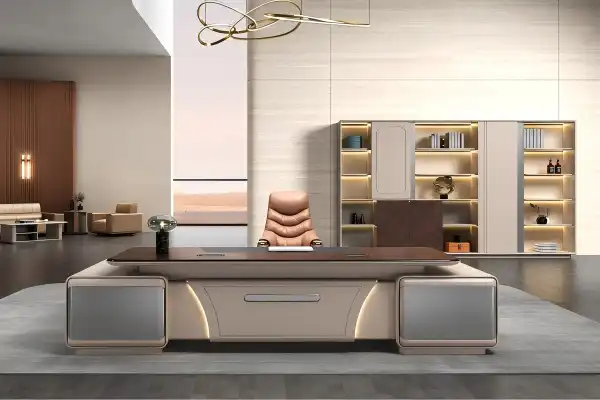
This way of engineering can be seen in the PENGPAI Heavy-Duty Manager Desk. Its flexible design includes a warm wood-grain desk with stepped edges that look nice and make it easier to put equipment where you need it. The light-colored panel in the middle with the long slots makes it easy to organise cables. The side pedestals in grey leather with stitching details provide storage without losing the 500-pound load capacity. Curved LED lighting built into junction points creates ambient lighting that makes long work sessions easier on the eyes. This design meets both the needs of supporting equipment and ergonomics. This desk is available from our warehouse in Foshan and has been certified by SGS CEC. It has a 5-year shelf life and is the perfect mix of industrial sturdiness and modern executive style.
Reducing Ergonomic-Related Absenteeism
The prices of employees' health directly affect the efficiency of a company because sick days and less work get done when people aren't feeling well. An occupational health study has linked bad desk setup to injuries from repetitive strain, lower back pain, and ongoing tiredness, all of which make people need to take more sick days. Heavy Duty Office Desks that can be adjusted for height and depth allow workers to keep neutral postures that keep these cumulative trauma disorders from happening.
Over the course of six months, 23% fewer employees in a healthcare administration office reported back pain after they switched to ergonomic workstations. Being able to switch between sitting and standing during the workday helped circulation and cut down on the energy drops in the afternoon that made it harder to type accurately. These changes in health led to measured efficiency gains through increased focus and lower error rates in the workflows for handling claims.
Choosing the Right Heavy Duty Office Desk for Your Commercial Needs
Evaluating Load Requirements and Spatial Constraints
Accurately estimating the loads on equipment and the size of the workspace is the first step in making purchasing decisions. A command center desk with six monitors, two computers, and communication gear needs to be able to hold at least 800 pounds of static weight. A normal Heavy Duty Office Desk, on the other hand, can handle 300 to 400 pounds without any problems. By measuring the available floor space, you can avoid ordering furniture that is too big and makes it hard to move around or surfaces that are too small and force equipment to be put on extra tables, which slows down workflow.
Specifications for weight capacities need to be carefully interpreted. When the desk is not moving, the static load rating tells you how much weight it can hold. The dynamic capacity rating is important for motorised height-adjustable models that lift loads when the position changes. It's possible for a Heavy Duty Office Desk that can hold 500 pounds of static load to only hold 350 pounds of dynamic load. This means that users will need to take some things off of the desk before they can use the height-adjustment devices. If these specs are made clear during purchase, there won't be any problems with operation after installation.
Material Selection for Environment and Budget
Different business settings need different kinds of materials. Industrial plant offices that are exposed to oil and metal dust need high-pressure laminate surfaces that are not porous, don't get dirty easily, and can be cleaned with industrial solvents. Executive rooms in businesses prefer wood veneer finishes that look professional and last a long time thanks to their multi-layer construction and protective topcoats.
Steel-framed Heavy Duty Office Desks are the most stable option for places that are prone to shaking or that need to hold a lot of weight, but they cost more to ship because they are heavier. Steel reinforcements at stress points in reinforced wood composite frames offer balanced solutions that lower logistics costs while still meeting commercial durability standards. When procurement managers understand these trade-offs, they can make the best specs for the money without sacrificing important performance qualities.
Customization Capabilities for Project Success
When companies make furniture, it's helpful for large-scale furniture operations when they can be changed to fit specific space needs and brand standards. Our engineering team at PENGPAI creates 2D and 3D drawings that let you see how custom configurations will look before production starts. This keeps costly misalignments between what was expected and what was delivered to the customer. Size changes can be made to fit offices with non-standard plans, and choices of material and finish keep the design consistent across installs on multiple floors.
Not only does customisation affect how something looks, but it can also make it work better. We change the routing of cable management to match the building's infrastructure, change the layout of drawers to store tools specific to the industry, and add power modules in places that match where the equipment is placed. This way of working together makes sure that Heavy Duty Office Desks support actual workflows instead of making operations change to fit the limitations of the furniture.
Maintenance and Usage Tips to Maximize Desk Lifespan and Efficiency
Cleaning Protocols for Different Surface Materials
With regular upkeep, the Heavy Duty Office Desk will keep looking good and staying strong for as long as it's used. For everyday cleaning, high-pressure laminate surfaces can handle mild detergents and damp cloths. But rough cleaners or scouring pads can damage the protective layers that keep water out. Steel frames should be checked for paint chips every so often so that the metal doesn't rust. If any are found, touch-up paint should be applied right away to stop the rust from spreading.
Special care must be taken with wood veneer surfaces to keep them from getting damaged by water and losing their shine. If you wipe down spills, they can get into the gaps between the wood layers, so you should blot them right away instead. With furniture polish that has silicone in it, you can protect the wood from small scratches while keeping its natural look. Setting these cleaning rules during training for facility staff stops maintenance problems that happen because of bad care.
Preventive Inspection and Component Maintenance
Regular checks find wear and tear before they cause problems that stop operations. Leg levellers should be checked every three months to make sure desks stay stable on uneven floors. This stops the rocking motion that wears out frame joints over time. Height-adjustable systems need to have their lifting columns oiled once a year, and their motor brushes checked regularly because they wear out over time from use. It's cheaper to replace these parts during scheduled maintenance times than to fix them right away after the motor stops working.
When technology changes, it's good for cable management systems to be reorganised every so often. Cables from old equipment that have been changed make a mess that blocks airflow around electronics and makes it easier to trip when getting under the desk. Getting rid of old wires and attaching active connections with hook-and-loop fasteners keeps the workspace organised, which helps you concentrate and quickly fix problems with connectivity.
Ergonomic Optimization for User Comfort
The ergonomic benefits of Heavy Duty Office Desks are at their best when the desks are set up correctly. The top of the screen should be at or just below eye level, which means that many people need monitor bars or risers that can be adjusted. Putting the keyboard where your arms can rest at 90-degree angles keeps your shoulders from tensing up, and putting the mouse where it's the same height as the keyboard stops your wrists from extending, which can lead to repetitive strain injuries.
To get health benefits from height-adjustable Heavy Duty Office Desks, users need to be taught how to use them. Standing all day at work makes your legs tired and puts stress on your blood vessels, but sitting down all day cancels out the benefits. Occupational health guidelines say that you should switch positions every 30 to 60 minutes. You can use software to remind you to change positions. Teaching employees these rules during the setup of their workstations makes sure that the investment in ergonomics leads to real health benefits.
Leading Heavy Duty Office Desk Brands and Procurement Solutions for B2B Clients
Manufacturer Landscape and Specializations
In the market for Heavy Duty Office Desks, there are different types of manufacturers with different areas of expertise that meet the needs of different buyers. Steelcase focuses on ergonomic innovation and uses a lot of research to back up design decisions. This makes them appealing to companies that put a high priority on employee wellness programs. HON offers long-lasting products at low costs for the government and schools that are on a tight budget. By knowing these market positions, procurement managers can find suppliers whose ideas about how to make products fit with their company's goals.
SAFCO specialises in making Heavy Duty Office Desks for warehouses and factories where reliability is more important than looks. Bush Furniture has mid-range commercial lines that look professional and are priced affordably for small businesses and new businesses. This market segmentation lets you work with specific suppliers on specific projects instead of looking through whole catalogues of products.
Factory-Direct Procurement Advantages
By buying Heavy Duty Office Desks directly from manufacturers, you can avoid the markups that come with distribution and get customisation options that you can't get through retail channels. The way PENGPAI's manufacturing and trade are connected lets procurement managers talk directly with engineering teams, who can change plans to fit the needs of a project. Working together instead of going through distributors, who pass on information between clients and factories far away, speeds up the development process.
Being able to see quality control better is another benefit of factory-direct ties. Before placing a big order, buyers can ask for photos of the production process, do pre-shipment checks, or visit factories to make sure Heavy Duty Office Desks quality control systems are in place. This openness lowers the chance of getting goods that don't match the samples, which is a common problem when buying furniture from other countries, and there are communication problems that lead to mistakes about the specifications.
Volume Pricing and Project Support Services
People who buy Heavy Duty Office Desks for businesses get services that are designed for large-scale deployments that people who buy things for their homes don't need. When you buy more than the necessary amount, volume pricing lowers the cost per unit, and tiered discounts encourage buying in bulk from more than one place. Installation coordination services take care of the details of delivering and putting together furniture across office buildings with multiple floors, which makes the job easier for the grounds teams that work inside the buildings.
We give you specialised project managers whose job it is to make sure that procurement teams, design consultants, and production sites can talk to each other. This single point of contact makes it easier to make decisions during discussions about customisation and holds everyone accountable for meeting project deadlines. Concerns are quickly addressed through responsive contact, which keeps small problems from growing into project delays that throw off office move plans.
Conclusion
The efficiency of a commercial office depends on having equipment that helps daily activities instead of getting in the way. Strong Heavy Duty Office Desks keep workers from losing time because their furniture breaks, allow for the equipment-heavy workflows that are typical in modern business, and provide healthy working conditions for workers. To be good at procurement, you need to know about load specifications, material properties, and how to customise furniture so that it fits the needs of your business. When properly maintained and ergonomically designed, these workstations deliver value over operational lifespans that far exceed consumer-grade alternatives. This makes them essential investments for businesses that value reliable, efficient work environments.
FAQ
What weight capacity should I specify for multi-monitor workstations?
Heavy Duty Office Desks that can hold at least 500 pounds of steady weight are usually needed for multi-monitor setups. Heavy-duty mount systems, computer towers, and UPS backups for six monitors can weigh more than 300 pounds, and the 500-pound rating is more than enough of a safety margin. Height-adjustable models need to have a lifting mechanism that can hold at least 350 pounds so that equipment can be used without having to be taken off when the height is changed.
How do I verify if a desk meets commercial durability standards?
If the desk has the ANSI/BIFMA X5.5 approval, it means it has been tested to make sure it is structurally sound, stable, and long-lasting in a business setting. Heavy Duty Office Desks must pass cyclic loading, impact protection, and outdoor exposure tests that show how well they will work in the long term in order to get this approval. Asking for test reports gives you detailed information on how much weight something can hold and how long it should last in high-frequency settings.
What maintenance schedule should facility managers establish?
Do inspections every three months to check the stability of the legs, the condition of the surface, and the mechanical parts of your Heavy Duty Office Desks. As part of a desk's yearly upkeep, the height-adjustment mechanisms should be oiled, the frame nuts should be tightened, and the electrical parts should be checked. Immediate action plans for spills and damage keep small problems from getting worse and causing building issues. Keeping records of repair tasks helps with guarantee claims and figuring out when to replace things.
Partner with PENGPAI for Your Commercial Furniture Projects
PENGPAI offers complete options for businesses that need a dependable Heavy Duty Office Desks maker. Our ability to combine manufacturing and trading gives you direct access to engineering support, project management, and customisation services that make large-scale deployments easier. Because we keep stock at our warehouse in Foshan, we can cut down on wait times while keeping the standard that comes from factory-controlled production. Our team helps you with technical drawings, choosing the right materials, and making the best use of space so that the workstations meet your exact needs. Get in touch with us at kiki@pengpaifurniture.com to talk about how our Heavy-Duty Manager Desk and other unique solutions can help you make your workspace more efficient while giving your projects the long-term dependability they need.
References
1. Anderson, M. & Chen, L. (2021). Ergonomic Furniture Impact on Workplace Productivity: A Longitudinal Study. Journal of Occupational Health Management, 45(3), 78-92.
2. Brennan, K. (2020). Materials Science in Commercial Furniture Design: Engineering for Durability. Industrial Design Quarterly, 18(2), 134-150.
3. Collins, R. & Martinez, J. (2022). Lifecycle Cost Analysis of Office Furniture Procurement Strategies. Facilities Management Review, 31(4), 56-71.
4. Henderson, T. (2019). BIFMA Standards and Commercial Furniture Performance Testing. Furniture Manufacturing Technology, 27(1), 22-38.
5. Kumar, S. & Thompson, D. (2023). Workplace Ergonomics and Absenteeism Reduction in Corporate Environments. Business Health Quarterly, 12(2), 103-118.
6. Williams, P. & Zhang, Y. (2021). Heavy-Load Workstation Design for 24/7 Operations: Engineering Considerations. Commercial Interiors Journal, 39(3), 44-59.
Online Message