
Aug 17, 2026
How Can Luxury Executive Office Lounge Sofas Reflect Brand Identity?
A Luxury Executive Office Lounge Sofa communicates corporate values before anyone speaks a word. When clients enter your executive suite, the furniture they encounter tells an immediate story about your organization's commitment to quality, attention to detail, and cultural priorities. These premium seating solutions bridge functional comfort with visual language, transforming reception areas and leadership spaces into strategic brand touchpoints. Through intentional selection of materials, design aesthetics, and structural features, executive lounge sofas become tangible expressions of corporate identity that influence perception, inspire confidence, and reinforce organizational positioning in competitive markets.
Understanding the Role of Luxury Executive Office Lounge Sofas in Reflecting Brand Identity
Beyond Seating: The Strategic Function of Executive Furniture
Executive furniture serves a strategic purpose that goes beyond seating. In business settings, high-end executive furniture can be used for more than one thing at the same time. Even though comfort is still very important, these pieces anchor spatial design and establish atmospheric expectations. If you choose your executive lounge sofa with care, it will position your business in a specific market segment and demonstrate that your company values innovation, tradition, sustainability, or exclusivity.
The psychological impact operates on multiple levels. Visitors automatically judge organizational credibility through environmental cues, with furniture quality ranking among the most influential factors. Similarly, employees internalize corporate values through daily interaction with their physical workspace. When leadership invests in premium furnishings, it demonstrates respect for stakeholder experience and a commitment to long-term quality over short-term cost savings.
Material Excellence and Craftsmanship as Brand Signals
Premium materials communicate specific attributes of a business. Full-grain leather suggests permanence and classic sophistication, which is why financial institutions and law firms favor it. Modern minimalist designs featuring light-colored upholstery with wood accents make a space feel approachable and contemporary, aligning perfectly with technology companies and creative agencies. Precision in manufacturing is reflected in seamless joints, consistent stitching patterns, and structural stability. This demonstrates operational excellence and quality control—qualities clients seek in business partners.
Certifications carry significant weight in procurement decisions. Products meeting E0 formaldehyde emission standards and possessing SGS CEC certifications demonstrate environmental responsibility and regulatory compliance. These credentials become part of your corporate narrative, particularly valuable when serving clients with strict sustainability requirements or building LEED-certified facilities.
Key Design Dimensions That Showcase Your Brand Through Office Lounge Sofas
Style Alignment with Corporate Messaging
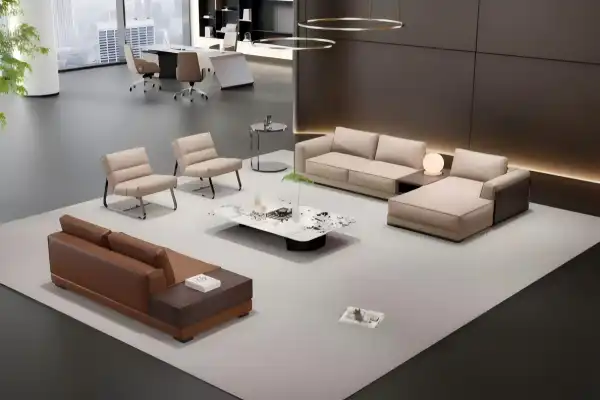
Design language must harmonize with broader brand positioning. A modern minimalist office sofa set featuring clean lines and modular components signals adaptability and forward-thinking management. This aesthetic suits organizations emphasizing innovation, efficiency, and contemporary work culture. The separate upholstered structures with thick, flat cushions provide comfort without excessive ornamentation, allowing the design itself to communicate purposeful simplicity.
Conversely, traditional designs incorporating tufted leather and heavier proportions convey established authority and historical continuity. Law firms, wealth management offices, and heritage brands often select these styles to reinforce trustworthiness and institutional stability. Understanding how design choices align with stakeholder expectations prevents mixed messaging that undermines brand clarity.
Material Selection and Tactile Brand Experience
The sensory experience of furniture creates lasting impressions. Light-colored leather upholstery offers a welcoming, open atmosphere while demonstrating confidence—darker materials hide wear, but lighter tones show a commitment to maintenance and cleanliness. The contrast between leather elements and darker wood panels adds visual depth while maintaining professional restraint. This combination works particularly well in hybrid spaces serving both formal negotiations and collaborative sessions.
Material durability matters beyond aesthetics. Commercial-grade furniture withstands high-frequency use without visible degradation, protecting brand perception over extended periods. A Luxury Executive Office Lounge Sofa designed with high-resiliency foam maintains its supportive structure through thousands of seating cycles, preventing the sunken, worn appearance that undermines premium positioning.
Functional Integration and Operational Efficiency
Contemporary executive furniture increasingly incorporates functional technology. Storage solutions integrated within sofa designs—like side panels with wooden compartments—address practical needs without compromising visual cleanliness. This functionality demonstrates user-centered thinking and operational pragmatism, brand attributes valued by efficiency-focused organizations.
Modular configurations provide strategic flexibility. An L-shaped arrangement can be reconfigured as spatial needs evolve, demonstrating adaptive capacity and long-term planning. Armless square modules facilitate multiple seating arrangements, supporting everything from intimate executive conversations to small group discussions. This versatility signals organizational agility and resource optimization.
How to Choose a Luxury Executive Office Lounge Sofa That Aligns with Your Brand Identity
Mapping User Needs to Furniture Specifications
Successful procurement begins with identifying primary users and their specific requirements. Executives conducting extended meetings need ergonomic support that prevents fatigue during multi-hour sessions. Visitors spending brief periods require immediate comfort and visual reassurance. Collaborative teams benefit from modular arrangements that encourage interaction while maintaining professional boundaries.
Corporate hospitality environments—including hotel business centers and premium airport lounges—face distinct demands. These settings require 24/7 durability alongside a pristine appearance, necessitating stain-resistant treatments and heavy-duty suspension systems. Understanding usage patterns prevents misalignment between furniture specifications and actual operational demands.
Evaluating Quality Through Technical Specifications
Procurement professionals should examine structural details beyond surface aesthetics. Frames constructed from kiln-dried hardwood or multi-ply engineered wood maintain dimensional stability across temperature and humidity variations, preventing joint separation and structural failure. The concealed low-profile base common in minimalist designs requires robust engineering to distribute weight effectively while maintaining visual lightness.
Upholstery durability determines lifecycle cost. Premium leather should meet ISO 11640 rub fastness standards, ensuring color retention and surface integrity through years of use. Foam density specifications directly impact comfort longevity—high-resiliency foam maintains supportive properties far longer than standard grades, protecting your investment and brand image simultaneously.
Customization for Brand Consistency
Global enterprises benefit significantly from the customization capabilities of a Luxury Executive Office Lounge Sofa, ensuring brand consistency across multiple locations. Size adjustments accommodate varying spatial constraints while maintaining design continuity. Material and finish selections can incorporate corporate color palettes, reinforcing visual identity throughout the organization. Functional configurations address regional preferences without fragmenting brand cohesion.
PENGPAI's engineering support includes 2D and 3D technical drawings that facilitate layout planning and stakeholder approval. Prototype development allows physical validation before committing to large-scale procurement, reducing implementation risk. This collaborative approach ensures final installations accurately reflect intended brand expression.
Procurement Best Practices for Luxury Executive Office Lounge Sofas
Supplier Evaluation and Partnership Development
Selecting a reliable Luxury Executive Office Lounge Sofa manufacturer or supplier requires examining multiple credibility indicators. Manufacturing integration—where suppliers maintain their own production facilities—provides greater quality control and delivery reliability compared to pure trading entities. Production capacity and scalability determine whether suppliers can support multi-phase rollouts and future expansion needs.
Certification portfolios reveal compliance standards and quality commitments. SGS certifications validate product safety and material specifications through independent testing. Environmental certifications demonstrate regulatory compliance and sustainability commitment, which are increasingly important factors in corporate procurement policies. A five-year shelf life specification indicates durable construction and manufacturer confidence in product longevity.
Strategic Pricing and Logistics Optimization
Bulk procurement presents opportunities for value optimization beyond simple unit price reduction. Knock-down structural designs reduce shipping volumes, lowering logistics costs significantly for international orders. Export-optimized packaging protects products during transit while minimizing dimensional weight charges. These design considerations become particularly valuable for organizations furnishing multiple locations simultaneously.
Inventory availability affects project timelines. Suppliers maintaining stock in strategic locations—such as PENGPAI's Foshan warehouse—can accelerate delivery schedules and provide buffer inventory for phased installations. This capability proves essential when coordinating furniture delivery with construction completion and occupancy schedules.
Risk Mitigation Through Due Diligence
Case studies and client references provide insight into supplier performance across different project types and scales. Examining past installations reveals quality consistency, problem-solving capabilities, and long-term partnership reliability. Warranty terms and after-sales support structures indicate manufacturer confidence and commitment to customer success beyond initial sale completion.
Project management capabilities deserve careful evaluation. Dedicated project managers who coordinate communication, production scheduling, and delivery logistics for Luxury Executive Office Lounge Sofa projects reduce the coordination burden on procurement teams. Responsive communication patterns and technical support availability prevent minor issues from escalating into project delays.
Maintaining and Caring for Luxury Executive Office Lounge Sofas to Protect Brand Value
Material-Specific Maintenance Protocols
Leather upholstery requires regular conditioning to maintain natural oils and prevent surface cracking. Professional cleaning quarterly combined with weekly dry-cloth maintenance preserves appearance in high-traffic environments. Light-colored materials demand greater attention but reward diligence with sustained visual freshness that reinforces quality perception.
Wood panel elements need different care approaches. Avoiding excessive moisture exposure and using appropriate cleaners prevents finish degradation and structural damage. These maintenance requirements should inform facility management protocols, ensuring cleaning staff receive proper training on material-specific care techniques.
Structural Integrity and Long-Term Performance
Periodic inspection of frame connections and suspension systems identifies wear before visible problems emerge. Checking hardware tightness, examining foam resilience, and testing seating stability should occur on scheduled intervals based on usage intensity. Proactive maintenance extends furniture lifespan significantly while preventing sudden failures that create negative impressions.
Ergonomic performance directly affects employee well-being and visitor comfort. Sofas that maintain proper support characteristics contribute to positive workspace experiences, reducing fatigue and enhancing satisfaction. This sustained comfort level reinforces the original brand message—that your organization values stakeholder experience and invests appropriately in their well-being.
Conclusion
Executive furniture selection represents strategic brand communication, transforming functional requirements into powerful identity statements. The intersection of design aesthetics, material quality, and functional capability creates comprehensive brand experiences that influence perception and business outcomes. Procurement decisions for a Luxury Executive Office Lounge Sofa extend beyond cost considerations to encompass customization capability, supplier reliability, and long-term value optimization, yielding furnishings that authentically represent organizational identity. Through thoughtful selection and committed maintenance, luxury executive lounge sofas sustain brand prestige while delivering operational performance across years of service.
FAQ
What makes a luxury executive office sofa different from standard commercial seating?
Premium executive sofas utilize superior materials and engineering—full-grain leather instead of bonded alternatives, high-resiliency foam with 50-65kg/m³ density, and kiln-dried hardwood frames. These specifications ensure durability under intensive commercial use while maintaining appearance over extended periods. Standard commercial seating often compromises on material quality and structural engineering to reduce costs, resulting in faster wear and diminished brand impact.
How does modular design benefit brand consistency across multiple locations?
Modular systems allow organizations to maintain consistent design language while adapting to varying spatial constraints. Core design elements remain constant while configuration changes accommodate different room dimensions and functional requirements. This flexibility prevents the visual fragmentation that occurs when each location requires completely different furniture selections, strengthening brand recognition and cohesion.
What maintenance frequency protects the investment in luxury executive furniture?
High-traffic executive areas require quarterly professional cleaning combined with weekly routine maintenance. This regimen preserves material integrity and appearance while identifying developing issues before they require major intervention. Organizations should establish documented maintenance protocols and train facility staff on material-specific care requirements to ensure consistent execution across all locations.
Partner with PENGPAI for Executive Furniture Solutions
As an integrated office furniture manufacturer with over 16 years of experience, PENGPAI understands the strategic importance of premium executive furnishings in brand expression. Our modular Luxury Executive Office Lounge Sofa combines minimalist aesthetics with commercial-grade durability, featuring light beige leather upholstery, integrated storage solutions, and flexible configurations. With SGS CEC certification, E0-standard compliance, and a five-year performance guarantee, our products meet stringent quality expectations. Our Foshan production facilities maintain ready inventory for accelerated delivery, while our engineering team provides comprehensive technical support including 2D/3D drawings and customization services. Reach out to our team at kiki@pengpaifurniture.com to discuss how our executive seating solutions can enhance your corporate environments and strengthen brand identity.
References
1. Thompson, R. (2021). Corporate Identity Through Environmental Design: The Role of Premium Furnishings in Brand Communication. Journal of Business Environment Studies, 34(2), 112-128.
2. Martinez, S. & Chen, L. (2022). Material Specification in Commercial Furniture: Quality Metrics and Procurement Standards. International Furniture Manufacturing Review, 18(4), 203-219.
3. Anderson, K. (2020). Ergonomic Design in Executive Spaces: Balancing Comfort, Aesthetics, and Brand Expression. Workplace Design Quarterly, 12(3), 45-62.
4. Williams, J. (2023). Sustainable Procurement in Corporate Furniture: Environmental Certifications and Long-Term Value. Business Sustainability Journal, 27(1), 89-104.
5. Park, M. (2022). Modular Furniture Systems in Global Corporate Environments: Flexibility and Brand Consistency. Commercial Interior Design Review, 15(2), 134-151.
6. Foster, D. & Robinson, T. (2021). Supplier Evaluation Frameworks for Large-Scale Furniture Procurement: Risk Mitigation and Partnership Development. Supply Chain Management Perspectives, 29(3), 176-192.
Online Message