
Aug 25, 2026
How Can a Mid-Century Modern Office Couch Enhance Professional Workspace Aesthetics?
A Mid-Century Modern Office Couch can transform professional workspace aesthetics by introducing timeless design elements that balance sophistication with functionality. These couches feature clean lines, tapered legs, and understated silhouettes that create visual harmony while offering ergonomic support for commercial environments. By integrating mid-century design principles with commercial-grade durability, they address the modern workplace's need for furniture that looks inviting yet withstands daily professional use, ultimately enhancing brand perception and employee comfort simultaneously.
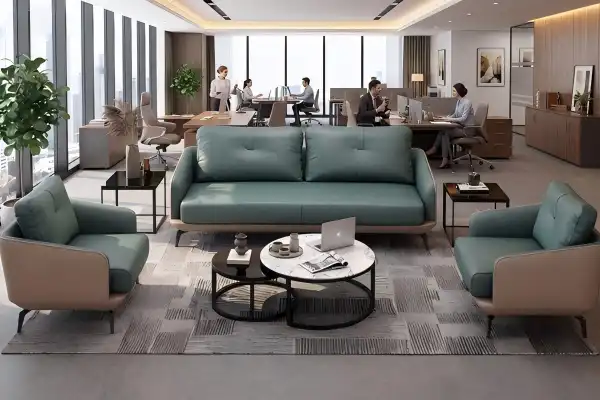
Understanding Mid-Century Modern Design in Commercial Furniture
Origins and Design Philosophy
From 1945 to 1965, after World War II, mid-century modern design came into being, putting function over form. This way of thinking is still useful in business areas today, where every square foot costs money. The style focuses on natural shapes, simple decorations, and honest use of materials. These are traits that work well in business settings that want to be real. When applied to office couches, these ideas make the furniture feel approachable instead of intimidating, which promotes teamwork while maintaining professional credibility.
Key Structural Characteristics
Commercial-grade mid-century chairs are different from other couches because of how they are built. Wooden or metal legs with tapered ends raise the frame, making the room look lighter and less crowded. This is shown by our Morandi green business sofa set, which has thin metal legs that hold up thick pillows, making it stable without looking heavy. Our teal leather two-seater has a tufted split back design with segmented padding that provides ergonomic support. This lets each person change to different sitting positions for long meetings or client visits.
Material Selection for Durability
Materials used in professional settings for a Mid-Century Modern Office Couch need to provide greater durability than those typically used in residential furniture. High-resilience foam with densities of about 2.5 to 3.0 lbs/ft³ can help a Mid-Century Modern Office Couch maintain its shape after frequent use, while leather upholstery tested to Martindale abrasion ratings above 50,000 rubs can provide long-term wear resistance. Light wood trim on a Mid-Century Modern Office Couch adds warmth and visual appeal without significantly increasing cleaning requirements, which is particularly useful in reception areas where first impressions matter. SGS CEC approval, where applicable, can help demonstrate that a Mid-Century Modern Office Couch meets relevant international safety and environmental requirements. These material and compliance considerations make the Mid-Century Modern Office Couch a practical option for professional environments that require a balance of appearance, durability, and regulatory confidence. For procurement teams, selecting a Mid-Century Modern Office Couch with suitable materials and documented compliance can support reliable long-term commercial use.
Benefits of Choosing Mid-Century Seating for Professional Workspaces
Elevating Brand Perception Through Design
Before anyone says a word, your reception area sends a message about your brand. A well-chosen mid-century couch shows that you know about style and care about quality, which are traits that clients associate with professionals. The difference between our light-colored frames and green inner cushions makes for interesting photos that work well for marketing materials while still being simple enough to go with a wide range of company names. This variety is especially useful for coworking spaces with a wide range of clients or hotels that need furniture that appeals to a wide range of age groups.
Ergonomic Advantages for Extended Use
In mid-century designs, the seats are often slightly curved so that the weight is spread out more evenly than on flat benches. Our three-seater setup with built-in armrests provides lateral support during group work sessions, which keeps people from getting too tired to work. The slightly higher seat height made possible by the tapered legs also makes it easier for people of all ages to stand and sit down. This is an inclusive design feature that is important in public buildings and healthcare facilities where mobility concerns drive buying decisions.
Spatial Efficiency in Layout Planning
Quality mid-century furniture has small sizes, which helps with the problem of expensive office space in cities. The straight lines of the shape make it possible to put it in intermediate areas like hallways between meeting rooms without making traffic jams. Interior designers like how our 1+1+3 configuration can be put together in different ways to fit different floor plans without having to be made from scratch. This flexibility cuts down on lead times for project managers who have to stick to tight construction schedules, and the knock-down structure makes logistics easier for furniture distributors who have to figure out how to make the best use of containers.
Styling Strategies for Cohesive Workspace Aesthetics
Complementary Furniture Pairings
Creating visual harmony around a Mid-Century Modern Office Couch requires careful coordination of complementary furniture and finishes. Pairing a Mid-Century Modern Office Couch with mid-century chairs and minimalist wooden reception desks in similar tones can create a cohesive appearance while avoiding an overly matched look through the use of contrasting textures. In open-plan spaces, glass-topped coffee tables can be placed alongside a Mid-Century Modern Office Couch to keep sightlines open and prevent the furniture arrangement from visually blocking the room. Retro-inspired pendant lights can further complement the Mid-Century Modern Office Couch by adding period-appropriate character without making the space excessively bright. Dimmable lighting also allows the atmosphere around a Mid-Century Modern Office Couch to be adjusted for different meeting types and times of day. Together, these design elements help the Mid-Century Modern Office Couch become part of a balanced and functional commercial interior.
Color Psychology in Professional Settings
Our Morandi green choice shows how to use color in a stylish way. When compared to bright, saturated colors, this tone is less stressful on the eyes. This makes it perfect for creative agencies where people spend a lot of time in shared spaces. The beige-brown piping gives the dress a slight edge without making the difference too stark. It's important for procurement managers to think about how different lighting affects the colors of upholstery, since a lot of client interactions now happen over videoconferencing, where furniture is often the main background image.
Maintenance Protocols for Longevity
To keep the couch's look, you need to follow care instructions that are specific to the material. Leather furniture should be condition every three months to keep it from cracking in climate-controlled buildings. Velvet needs to be vacuumed regularly with upholstery attachments to keep the pile direction straight. Microfiber cloths wet with pH-neutral cleaners work well on the light wood trim. Silicone-based cleaners, on the other hand, attract dust. When purchasing, facility managers should set up upkeep schedules because regular care greatly extends the five-year shelf life we mention, which in the end leads to more accurate total cost of ownership estimates.
Procurement Considerations for B2B Clients
Budget Analysis Across Price Tiers
Commercial mid-century couches come in a wide range of prices depending on the materials used and how they are built. Entry-level choices that cost between $800 and $1,000 usually have engineered wood frames and bonded leather, which is good for companies that are tight on cash. Mid-range options, priced between $1500 and $2500, use kiln-dried hardwoods and top-grain leather, combining sturdiness with the size of the investment for small and medium-sized businesses. Costs that are higher than $3000 are justified by certifications like GREENGUARD Gold, which are important for LEED-certified projects or healthcare facilities that have strict VOC limits. We position ourselves as a Mid-Century Modern Office Couch manufacturer to offer commercial-grade quality at competitive prices through integrated production control.
Customization Capabilities That Matter
Usually, generic furniture doesn't work perfectly for a unique job. Before placing an order, our engineering team gives interior designers 2D and 3D technical drawings that help them see how the pieces will look in real floor plans. Size changes can work around architectural problems like low ceilings or small doors without having to start from scratch. Material replacements are used when budgets change or specific performance needs arise. For example, in medical waiting rooms, normal foam is swapped out for antimicrobial versions. These customization options cut down on the expensive changes that have to be made when models don't work well in mass production.
Evaluating Supplier Reliability
For relationships to last, quality must be uniform across all shipments. Our quality control system checks materials as soon as they come in, keeps an eye on production at several points, and compares finished goods to approved samples before they are shipped. This cuts down on the time it takes to install things when broken parts show up on job sites, where workers are scheduled and clients have set dates to move in. The structure of your volume discounts should match the actual projects you have in the works. Tiered pricing that rewards orders with artificially high quantities leads to high inventory costs that cancel out any savings. Clear information about production capacity keeps people from making false promises during busy times, when wait times naturally grow.
Current Trends Shaping Office Furniture Selection
Sustainability as Standard Practice
More attention is being paid to the environment in the 2024 market, as purchasing managers ask for FSC-certified wood sources and metal parts that can be recycled. Our adherence to E0 formaldehyde emission standards addresses indoor air quality issues that have an impact on employee health metrics and the costs of their insurance. The circular economy ideas that are becoming more popular among business sustainability officers are in line with modular designs that let parts be replaced instead of throwing away the whole unit. These environmental credentials often play a role in choosing which vendors to use in government RFPs where scoring for sustainability affects who gets the contract.
Hybrid Work Adaptations
Strategies for the workplace after the pandemic stress flexibility over fixed seats. This change is made possible by mid-century couches, which create "third spaces" that can be used for both focused individual work and casual group work. The slightly homey look makes offices feel less like institutions, which closes the experience gap that makes workers prefer working from home. Seating still doesn't have as much smart integration as desks do, but we're keeping an eye on demand for built-in power outlets and USB ports that would keep the look of the time while adding modern usefulness.
Predictions for Coming Years
Most likely, ergonomic innovation will focus on making materials that respond to body heat to make long periods of sitting more comfortable. We think that more people will be interested in antibiotic treatments as a general rule, not just because they are needed for medical reasons. Color trends point to a move toward warmer earth tones that make people feel better when the economy is unsure. As companies use more flexible workspace plans that require faster furniture setup, the time it takes to buy things may get shorter. This is because companies will prefer sellers who have a history of good shipping and project management systems that work well with change.
Conclusion
Mid-Century Modern Office Couches are more than just choices for looks; they're strategic investments in workspace efficiency and brand recognition. The design theory strikes a balance between classic good looks and high-quality sturdiness, making furniture that can be used in a wide range of business settings, from corporate offices to hospitals. Our goods follow these ideas by carefully choosing the materials they are made of, making sure they are structurally sound, and letting you make changes that solve real procurement problems. Procurement managers can get furniture that improves daily operations and keeps its value over long service lives by choosing sellers who understand both the history of design and the needs of businesses.
FAQ
What differentiates commercial-grade mid-century couches from residential versions?
Commercial standards call for internal frames that are stronger, and instead of just using joinery, steel mounting plates are often used. For long-term use, foam densities that are higher than home standards won't break down, and upholstery fabrics that meet flammability rules like CAL 117 are safe for public areas. Our goods are tested by BIFMA to make sure they are structurally safe. This makes sure that they are stable on the sides so they don't fall over in high-traffic places where accidents happen more often than at home.
How do tapered legs perform under commercial stress?
When designed correctly, tapered legs are more stable than needed thanks to internal reinforcement that users can't see. Our designs use steel mounting plates and corner blocking to spread the weight across the frame instead of putting all the stress on the places where the legs connect. This building method improves the look of the chair without lowering the standard weight limit of 250 to 300 pounds per seat for business use. This was proven by stress tests done several times during quality control.
Can these couches integrate into existing office aesthetics?
Mid-century furniture is easy to mix and match with other styles because of its general design language. Putting our Morandi green choice next to modern glass walls creates a deliberate contrast, while putting it next to old wooden filing cabinets stresses the authenticity of the time. The key is to keep the quality of the materials consistent. Putting together commercial-grade mid-century pieces and cheap task seating doesn't work because it creates visual discord that breaks down the intended esthetic cohesion.
Partner with PENGPAI for Your Commercial Furniture Needs
Every business furniture project that PENGPAI works on is backed by seventeen years of experience making furniture. They combine design sense with production skills that procurement professionals care about. Our factories in Shunde have both Italian and German production lines, which makes sure that the quality of all large orders is the same. We also have dedicated project managers who make sure that our international clients can get in touch with us quickly. We offer the customization options and reliable delivery that keep projects on schedule and on budget, whether you're decorating a business campus or getting stock as a Mid-Century Modern Office Couch provider. Our engineering team is ready to look over your technical needs and come up with solutions that are both esthetically pleasing and logistically efficient. You can email us at kiki@pengpaifurniture.com to talk about how our mid-century office chairs can help with your next workspace project, or you can visit foshanpengpai.aixdb.cn to see all of our business furniture, which comes with SGS approval and full after-sales support.
References
1. Kirkham, Pat. Charles and Ray Eames: Designers of the Twentieth Century. MIT Press, 1998.
2. Greenberg, Cara. Mid-Century Modern: Furniture of the 1950s. Harmony Books, 1984.
3. Miller, R. Craig. Modern Design in the Metropolitan Museum of Art: 1890-1990. Harry N. Abrams, 1990.
4. Pile, John F. A History of Interior Design. Laurence King Publishing, 2005.
5. Meadmore, Clement. The Modern Chair: Classic Designs by Thonet, Breuer, Le Corbusier, Eames and Others. Dover Publications, 1997.
6. Jackson, Lesley. The Sixties: Decade of Design Revolution. Phaidon Press, 1998.
Online Message