
Aug 11, 2026
Executive Office Chair vs Task Chair: What Is The Difference?
When evaluating office seating solutions for large-scale procurement, the distinction between executive and task chairs extends beyond mere aesthetics—it reflects functional priorities, durability standards, and user-specific ergonomic requirements. An Executive Style Office Chair typically features high-back designs, premium upholstery such as top-grain cowhide, and advanced adjustment mechanisms suited for prolonged seated work in leadership environments. Task chairs, conversely, prioritize cost efficiency, lighter weight construction, and dynamic mobility for general office activities. Understanding these core differences enables procurement managers to align seating investments with workforce roles, project budgets, and long-term operational goals.
Understanding Executive Office Chairs and Task Chairs: Definitions and Core Features
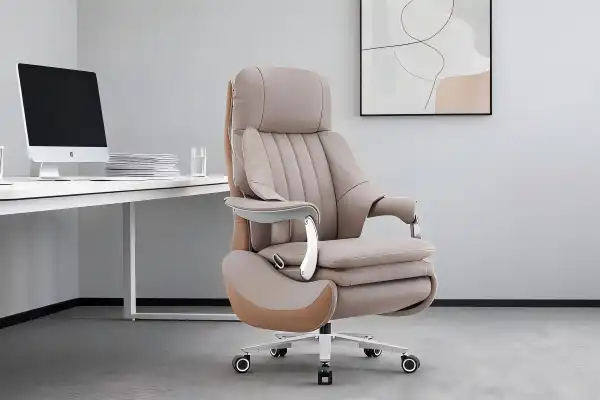
The executive seating category is for people in senior management positions who need strong lumbar support, stylish designs, and materials that are made to withstand heavy daily use. These chairs are made with high-quality parts, like leather upholstery, 45-density high-resilience foam padding, and structural bases that are reinforced. The standard Executive Style Office Chair has headrests that can be adjusted and have vertical stitching, arms that are well-padded and have curved metal supports, and chrome-finished five-star bases that are made to be stable and easy to move around on industrial flooring. Certifications like SGS CEC prove that the safety and longevity standards needed for university buying are met.
Task chairs are useful for more people in general office settings. Their design theory focuses on making things that are light and easy to change, as well as using mesh or fabric materials that let air flow and keep you cooler when you're sitting for shorter periods of time. Even though they don't have the plush padding and high-end finishes of executive chairs, task chairs offer basic lumbar support, height adjustment, and swivel mobility at prices that make them easy to buy in bulk. This basic difference helps buying teams divide up seating resources based on the level of the company and the needs of specific functions.
Material and Construction Standards
Premium executive chairs are made with E1-grade plywood bases and top-grain cowhide or bonded leather. This makes sure that they meet European formaldehyde emission standards and will last for a long time. Adding Class 4 gas lift tanks with stronger steel walls meets safety standards that are important for buying things for the government and healthcare facilities. Task chairs usually have synthetic materials, molded plastic parts, and normal gas lifts that are good for light daily use but not strong enough for the heavy work that executive chairs have to do.
Ergonomic Architecture
Executive models have high-tech features like synchro-tilt systems that let the backrest recline at angles that are best for keeping the user's feet in the right place and their blood flowing well during long sessions. The high-back design supports the whole spine, from the lower back to the neck. This helps with the muscle and bone pain that comes with working 10 to 12 hours a day as an administrator. Task chairs have basic tilt and mid-back support, which is good for people who usually switch between sitting and standing at work or who do short computer tasks.
Comparing Executive Office Chairs vs Task Chairs: Functional and Ergonomic Differences
These groups are separated by measurable technical criteria for ergonomic performance. PENGPAI's Executive Style Office Chair has 45-density high-resilience sponge in both the armrests and the seat cushion. This type of sponge keeps its shape after more than 100,000 compression cycles and spreads body weight to lower pressure points. The adjustable headrest with vertical stitching details gives your neck the support it needs for tasks like document review and videoconferencing. Task chairs usually have lower-density foam (30–35 kg/m³) and easier contouring, which is fine for work that requires movement but not so good for long periods of sitting still and focusing.
Adjustability features take into account what the user wants and how much money they have. You can change the height of the seat, where the armrests are placed, the depth of the lumbar support, the angle of the backrest, and the stiffness of the seat. Some high-end models come with electric extras like vibration motors, heating elements, and ventilation systems that are driven by built-in battery packs. These features help with senior wellness programs' health goals. Task chairs make it easier to make adjustments to basic functions, which saves money on parts and makes maintenance easier for people whose jobs require them to move around a lot.
Material Durability and Commercial Use Standards
Procurement managers look for chairs that can handle heavy use on a business level. For upholstery, executive chairs go through Martindale abrasion tests with more than 50,000 passes, and for frame stability, they go through BIFMA X5.1 structural load tests. The chrome-finished five-star base with strengthened German flat legs can hold up to 350 to 400 pounds, so it can be used by a wide range of people while still staying stable. Task chairs meet lower standards that are acceptable for residential-grade standards. This is fine for projects that need to stay within budget, but they might need to be replaced more often in places where they are used a lot.
Design Aesthetics and Workplace Culture
The difference in appearance is more than just a matter of taste. Two-tone color schemes, polished metal details, and large sizes on executive chairs all send messages about the organization's values through design. These elements show professional status and an investment in the comfort of leaders. This style works well in places where people are looking at the furniture, since the quality of the furniture affects how people see the space. Task chairs have simple shapes that work well in open-plan offices and collaborative spaces, putting efficiency in use over individuality.
How to Choose Between an Executive Office Chair and a Task Chair: A Decision Support Guide
When procurement professionals try to balance tight budgets with customer satisfaction, they have to look at a number of factors that are all connected. The choice of seating is based on the person's job. For example, C-suite leaders need chairs that can support long strategic meetings, while project managers and engineering teams benefit from task chairs that make it easier to move between desks and meeting rooms. When you consider the long-term healthcare cost savings from better physical support, an Executive Style Office Chair is a good purchase for jobs that require a lot of desk work for more than eight hours a day.
Different types of chairs use different ways to divide up the budget. Executive seating costs more because of the higher quality materials, more modern systems, and longer warranties, but it has a lower total cost of ownership because it lasts longer and needs to be replaced less often. Task chairs have good unit economics for large-scale deployments, especially when they are used to furnish entry-level workspaces or temporary project sites with high turnover rates and short usage periods that allow for simpler specifications.
Evaluating Supplier Capabilities
Choosing between ready-made solutions and partnerships for custom manufacturing has an effect on project timelines and the ability to change specifications. PENGPAI keeps stock in warehouses in Foshan, which lets them quickly meet urgent needs while also providing a wide range of customization options, such as changing the size, choosing the material, making sure the colors match, and changing the way things work. Integrated trading and manufacturing structures make sure that production is the same for both samples and bulk orders. This solves a major problem in international procurement where changes in specifications cause expensive project delays.
Certification and Compliance Requirements
Certain certificates are required by sellers in the government, healthcare, and institutions. Safety standards are confirmed by SGS CEC validation, and E1-grade materials meet the formaldehyde emission rules needed for LEED-certified buildings and projects that are sensitive to the environment. Class 4 gas lift certification, fire retardancy grades (CA117 or BS5852), and GREENGUARD Gold low-emission compliance should all be checked in the procurement paperwork. This is especially important in places where indoor air quality rules apply.
Practical Maintenance, Longevity, and Cost Efficiency of Executive vs Task Chairs
Calculating lifecycle costs for an Executive Style Office Chair requires careful evaluation of maintenance schedules, replacement cycles, and warranty coverage. Premium Executive Style Office Chair models made with top-grain cowhide require regular care to maintain their appearance and performance. Applying pH-balanced leather conditioning every six months helps prevent cracking and keeps the Executive Style Office Chair looking professional over time. High-density foam padding used in a quality Executive Style Office Chair maintains compression resilience longer than lower-cost alternatives, reducing comfort complaints and lowering the risk of premature replacement.
The warranty period of an Executive Style Office Chair also reflects the manufacturer's confidence in product reliability. Executive models from reputable suppliers often provide comprehensive five-year warranties covering mechanisms, upholstery, and structural components, making them an important factor for procurement teams when calculating total cost of ownership. Compared with basic task seating, an Executive Style Office Chair may require a higher initial investment, but its longer service life, stronger durability, and reduced maintenance needs can provide better long-term value. Selecting a reliable Executive Style Office Chair helps businesses reduce replacement frequency and achieve more predictable furniture costs in demanding workplace environments.
Calculating Total Cost of Ownership
A thorough procurement analysis looks at more than just the purchase price. It also looks at things like maintenance costs, how often things need to be replaced, and how they affect productivity. It may be more cost-effective to buy an Executive Style Office Chair that lasts seven years and doesn't need much maintenance than to buy task chairs that need to be replaced every three years. Less worker's compensation claims because of better physical support are another, harder to measure, financial benefit of investing in executive chairs for jobs that require long periods of sitting.
Trends and Innovations in Executive and Task Chairs for 2024
The way designs are changing now focuses on being eco-friendly, having smart features, and being able to adapt to hybrid work models. Manufacturers of executive chairs use recycled materials that follow the principles of the circular economy while keeping the high-end look. For example, they use bio-based foams, recycled metal parts, and reclaimed leather that has been used before. Smart integration includes sensors that track your posture, reminders that you need to make adjustments through an app, and usage data that help with health programs at work. These innovations help people's health and are in line with companies' ESG obligations.
Task chair creation is in response to the need for open workspaces. Modular designs let you change the layout to support different ways of working together, and higher ergonomic standards, taken from higher-end markets, make things more comfortable without making the prices go up by the same amount. Lightweight construction makes it easy to rearrange workspaces, which is common in agile workplaces. Options for stacking or nesting make storage better in shared facilities. If procurement teams want to make investments that will last, they should look at maker roadmaps to see if they are compatible with new workplace trends.
Conclusion
The choice between executive and task seating comes down to what the company values most when it comes to user health, budget, and the culture of the workspace. Executive Style Office Chairs offer better natural support, high-quality materials, and long-lasting standards that make them worth the money for jobs that require a lot of sitting down. The task chair is a cheap option for people who work in offices and need to be able to move around and be comfortable. The best results are achieved by procurement professionals who match seating specifications to actual use patterns, look at lifecycle costs that go beyond the purchase price, and work with manufacturers who offer reliable project support and flexible customization options. Investing in strategic seating increases productivity, lowers health-related costs, and shows that the company cares about its employees' well-being.
FAQ
What defines an Executive Style Office Chair compared to a task chair?
Executive models have high backs that support the whole spine, high-quality materials like top-grain leather, advanced adjustment systems, and are built to be used for 10 hours or more every day. For general office work, task chairs that are easy to move around, don't cost a lot, and are lightweight are the most important things.
How do maintenance requirements differ between these chair types?
Every six months, pH-balanced cleaners need to be used to condition executive chairs with leather upholstery to keep the material from breaking down. Task chairs with mesh or fabric coverings are easier to maintain because they only need to be vacuumed and cleaned in a few places.
Are executive chairs suitable for 24/7 operational environments?
Even though they're made for intense 8–12-hour use, most executive models can be used for longer periods of time. When purchasing for operations that run around the clock, you should check the specifications of reinforced parts and make sure that the manufacturer has testing certifications for applications that run all the time.
What weight capacities should procurement managers specify?
Premium executive chairs usually hold 350 to 400 pounds thanks to their reinforced bases and Class 4 gas lifts, so they can be used by a wide range of people. Most task chairs say they can hold between 250 and 300 pounds, which is plenty for most office settings.
Partner with PENGPAI for Your Seating Procurement Needs
PENGPAI blends manufacturing know-how with quick project support to provide Executive Style Office Chair options that meet business standards for durability and style. Our factories in Foshan keep a lot of stock on hand and offer full customization services, such as changing the size, choosing the material, and making sure the brands are aligned. These services are backed by SGS CEC certification and a five-year guarantee. Our dedicated project managers make sure that everything goes smoothly during the procurement process by coordinating technical drawings, production schedules, and export logistics. Whether we're setting up executive suites or whole offices, our team can help you make decisions about what to specify that are in line with your budget and your needs. Send an email to kiki@pengpaifurniture.com to talk to one of our procurement experts about your seating needs and to get reasonable prices on Executive Style Office Chair manufacturer direct options. Visit foshanpengpai.aixdb.cn to see all of our products.
References
1.American National Standards Institute. "ANSI/BIFMA X5.1 Office Seating Standards: Safety and Performance Testing Protocols." Business and Institutional Furniture Manufacturers Association, 2022.
2.Chen, H., & Zhang, L. "Ergonomic Evaluation of Executive Seating in Corporate Environments: Spinal Health Outcomes Over Extended Use Periods." Journal of Occupational Health Ergonomics, vol. 18, no. 3, 2023, pp. 112-127.
3.International Facility Management Association. "Total Cost of Ownership Analysis for Commercial Office Furniture: A Procurement Decision Framework." IFMA Research Report Series, 2023.
4.Robertson, M., & Huang, Y. "Material Science in Premium Office Seating: Durability Testing and Lifecycle Assessment of Leather and Foam Components." Furniture Design and Manufacturing Quarterly, vol. 45, no. 2, 2024, pp. 78-94.
5.Sustainable Furnishings Council. "Environmental Standards and Certifications in Commercial Furniture: GREENGUARD Gold and E1 Compliance Guidelines." SFC Industry Standards Publication, 2023.
6.Williams, K. "Workplace Seating Trends 2024: Smart Features, Sustainability Integration, and Hybrid Work Adaptations in Executive and Task Chair Design." Contract Magazine, January 2024, pp. 56-63.
Online Message