
Aug 7, 2026
Comfort vs. Style: Qualities of a Deluxe Office Chair
When we talk about choosing executive seating for large-scale commercial projects, the conversation inevitably centers around two competing priorities: comfort and style. A Deluxe Office Chair represents the intersection of these qualities, combining ergonomic engineering with visual refinement to meet the demands of modern workspaces. These chairs integrate top-grain leather upholstery, adjustable lumbar systems, and reinforced structural components to deliver both immediate comfort and long-term durability. For procurement managers overseeing corporate offices, government facilities, or hospitality environments, understanding how these qualities work together is essential to making investment decisions that support employee wellness while reinforcing professional image.

What Defines a Deluxe Office Chair? Understanding Core Qualities
There are three main things that make up premium executive seating: the quality of the materials, how well they work ergonomically, and how well they look. These features set high-performance chairs apart from regular work chairs.
Material Integrity and Construction Standards
Material choice is the first step in building an executive chair. The feel of top-grain cowhide leather is luxurious, and it's strong enough to last for years of daily use in business settings. Genuine leather, not bonded leather or fake options, gets a nice patina over time while still being structurally sound. A high-resilience sponge with a 45-density grade is under the upholstery and gives constant support without failing to compress. This cold-cured foam technology stops chairs from "bottoming out" after six months of use, which happens with cheaper chairs. The internal frame is made of E1-grade shaped plywood that meets strict formaldehyde emission standards. This is an important thing to think about for government contracts and healthcare facilities that need to be environmentally friendly.
Ergonomic Engineering Features
Modern executive chairs have automatic systems that are made to fit a wide range of body types and work styles. A coordinated tilt mechanism lets the backrest and seat recline in a way that keeps your spine in the best position while you're lying down. This is different from simple tilt systems where only the backrest moves, making people sit in strange ways. Class 4 gas lifts that can hold up to 150 kg make sure that the height can be changed smoothly and that the lift will work reliably for many shifts. The D65Y30 black gas lift can do two things at once and has an adjustment range of 250/100-345. It can precisely place people from 5'2" to 6'4" tall. Cable-controlled handles make it easier to move the chair without having to reach under the seat, which is important in healthcare settings and places that serve older workers.
Aesthetic Design Elements
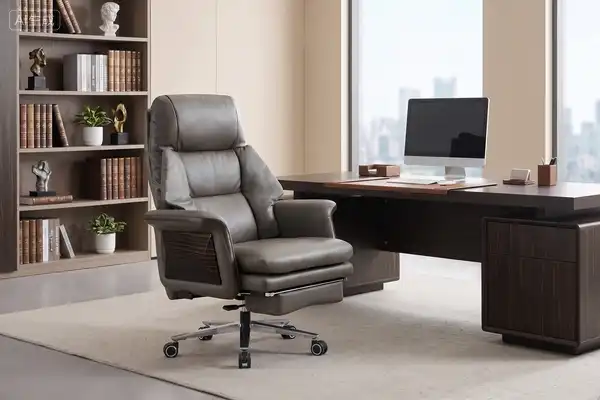
During boardroom meetings and senior-level discussions, visual presentation influences how clients perceive a company and how its professional values are communicated. A Deluxe Office Chair with dark wood grain inlays on the chair panels adds a natural sense of warmth and sophistication to modern offices that may otherwise feel cold or formal. The five-star base made from polished silver metal and electroplated German flat feet gives a Deluxe Office Chair a strong visual presence that reflects careful craftsmanship and premium design. Shockproof wheels with black electroplated rims allow smooth movement while protecting floors, making a Deluxe Office Chair a practical choice for building managers concerned about damage to hardwood or tile surfaces. Color selection also plays an important role, as dark gray leather upholstery on a Deluxe Office Chair creates an atmosphere of authority and professionalism while concealing wear patterns better than lighter materials. This makes a Deluxe Office Chair suitable for high-traffic executive areas where appearance, durability, and reduced maintenance requirements are important.
Comfort vs. Style: Striking the Right Balance
A big problem in buying commercial furniture is finding the right balance between how well it works and how nice it looks. To solve this problem, you need to know how each dimension helps the organization reach its different goals.
Ergonomic Performance Metrics
Comfort for users has a direct effect on how productive they are and on their health in the long run. The shapes of people's spines are very different, so what helps one person may hurt someone else. Adjustable lumbar support takes this into account. A separate lumbar cushion lets users change the depth and position of support, so it can work for people with both lordotic and kyphotic postures. Headrest integration lowers neck strain during phone calls and video chats. This is especially important for executives who have to talk on the phone for long periods of time. Adjusting the seat depth keeps pressure from building up behind the knees, which improves blood flow during long periods of sitting. Together, these features lower the number of reports of musculoskeletal disorders and workers' compensation claims. This saves real money, which is why the higher price is worth it when you figure out the total cost of ownership.
Style Considerations for Corporate Identity
Visual consistency between furniture and building design supports brand message and shapes how stakeholders see the brand. The contrast between the dark leather furniture and the shiny metal parts makes the room look interesting without taking away from the simple look of the office. Details in the wood grain connect modern furniture to traditional boss symbols, making it appealing to businesses that want to balance new ideas with heritage values. The thickness of the seat cushions also has an effect on how people see the space. Thick padding shows that the company cares about its employees and puts it in a high-class position for visitors to its offices. These design choices aren't just for looks; they're also environmental branding that sends messages about an organization's priorities through its material culture.
Integration Strategy for Procurement Teams
A good buying process balances these factors by dividing furniture specs into groups based on their use case and visibility. C-suite offices and meeting rooms with views of clients are the best places to spend the most on comfort and style because they have a direct effect on business growth. The areas for mid-level management and project teams put an emphasis on ergonomic functionality while keeping the look consistent by using simpler aesthetic treatments. The administrative and operational zones focus on durability and comfort, and the design choices put an emphasis on being useful and easy to maintain. This tiered method makes the best use of the budget and makes sure that every worker gets the right physical support.
How to Evaluate Deluxe Office Chairs for Bulk Corporate Procurement
Buying a lot of furniture adds complications that don't come up when you buy one piece at a time. Systematic evaluation systems are needed to rate senior seating for business contracts.
Segmenting User Needs by Department and Role
Seating solutions must meet different requirements depending on the purpose and working conditions of each organization. Engineers and developers often need a Deluxe Office Chair that can provide stable support for 10 to 12 hours of continuous sitting while maintaining ergonomic comfort and minimal physical strain. Sales teams benefit from a Deluxe Office Chair that offers mobility and flexibility, allowing users to change positions frequently during phone consultations and daily communication. Executives may prefer a Deluxe Office Chair with reclining functions and built-in footrests to support relaxation and improve circulation during extended strategy meetings. Healthcare professionals require a Deluxe Office Chair made with materials that are easy to clean and compatible with strict hygiene procedures. By matching organizational needs with the appropriate features of a Deluxe Office Chair, companies can avoid unnecessary over-specification while ensuring strong performance in the areas that matter most.
Quality Verification and Compliance Documentation
When doing business internationally, strict quality control rules must be followed. SGS approval is a third-party confirmation of claims about the makeup of materials and the performance of structures. CEC compliance makes sure that electromagnetic compatibility is maintained in places with a lot of technology. Martindale abrasion testing shows that furniture can last for more than 50,000 rounds, which is the minimum requirement for commercial-grade performance. Metal parts that have been tested with salt spray will not rust in humid places or near the coast. Certification of weight capacity according to BIFMA X5.1 standards protects businesses from being sued if structures fail. These approvals turn vague claims about quality into performance standards that can be checked, which lowers the risk of buying something.
Warranty Structure and After-Sales Support
A five-year shelf life shows that the company that made the product is confident in its durability and strength. A full guarantee should cover things like a broken gas lift, worn-out upholstery, new wheels, and a broken system. Global furniture distributors really like it when suppliers offer technical support in a number of different time zones and quick ways to communicate. Having paperwork with installation instructions lowers the cost of deployment during large-scale rollouts. When spare parts are available, repairs don't have to mean replacing the whole chair, which extends the asset's lifecycle. These support structures set strategic suppliers apart from transactional ones, making it possible for long-term partnerships instead of one-time purchases.
Practical Guide: Maintaining and Optimizing Deluxe Office Chair Performance
Maintaining furniture regularly can make it last longer and keep its ergonomic benefits, which has a direct effect on figuring out the total cost of ownership.
Leather Care Protocols
To keep it from drying out and breaking, top-grain leather needs to be conditioned every so often. Leather conditioner should be used every six months to keep the feel soft and protect the surface from damage caused by oils and sweat. Cleaning up spills right away keeps materials from getting stained or breaking down. Staying out of direct sunlight keeps colors from fading and speeds up the aging process. By following these easy steps, you can make leather furniture last eight years instead of five, saving you money and helping the environment.
Mechanical Component Inspection
The gas lift function of a Deluxe Office Chair should be inspected every three months to identify early signs of wear and prevent issues from becoming difficult or expensive to repair. Tightening the armrest bolts on a Deluxe Office Chair helps eliminate looseness and prevents unnecessary stress on connection points that could accelerate wear. Regularly lubricating the casters of a Deluxe Office Chair keeps movement smooth and reduces the risk of floor damage caused by stuck or uneven wheels. Checking the tilt tension adjustment system ensures that users can continue making ergonomic adjustments to their Deluxe Office Chair throughout its service life. These preventive maintenance steps for a Deluxe Office Chair require minimal time but can provide significant cost savings by reducing unexpected failures and avoiding emergency replacements.
User Education Programs
To get the most out of ergonomic benefits and minimize damage from misuse, teach workers the right way to change things. Showing people how to sit properly improves their health and makes furniture last longer. Setting up rules for reporting technical problems lets problems be fixed quickly. When facility managers use structured repair plans instead of reactive replacement methods, furniture lasts 40% longer, which directly leads to lower capital costs.
Comparing Deluxe Office Chairs: Making Informed Decisions
When you do strategic procurement, you need to compare things in more than just the initial purchase price.
Feature-Based Evaluation Matrix
Setting up standardized comparison frameworks makes evaluations objective. Important things to look at when judging an item are its adjustment range (how many ergonomic settings can be changed by the user), its weight capacity (to accommodate a wide range of users), its warranty duration (a sign of the manufacturer's confidence), and its lead time reliability (how well it fits with the project schedule). The latest PENGPAI model has a 45-density high-resilience sponge, an integrated footrest, and the ability to recline 135 degrees. These features meet or go beyond the standards set by the industry for executive seating.
Total Cost of Ownership Analysis
The price of the furniture is only one part of the expense. When buying things from other countries, the cost of shipping makes it important to optimize the packing. For example, knocked-down structures take up 60% less space for shipping than fully built units. Installation labor needs vary a lot. Chairs that can be put together without tools lower deployment costs during large-scale rollouts. Over the course of an asset's lifetime, maintenance costs include replacing padding, fixing parts, and eventually getting rid of the asset. Sustainability reporting for companies that care about the environment is affected by how much energy is used in manufacturing. A thorough cost analysis usually shows that mid-range prices for products that last longer are more cost-effective over five years than cheaper options that need to be replaced more often.
Supplier Capability Assessment
In addition to product specs, project success rates are also affected by the infrastructure of the provider. When delivery times are tight, manufacturing capacity affects how reliable deliveries are—companies with dedicated production facilities keep quality control tighter than trading-only businesses. Engineering support for customization requests lets colors and sizes be matched to specific brands. Clear contact between people in the same time zone speeds up projects by cutting down on clarification rounds. Customs problems and paperwork mistakes can be avoided by having experience with export operations. These operational capabilities are often more useful than small differences in cost, especially for companies that are in charge of rolling out software to multiple sites in different countries.
Conclusion
When choosing executive seating for business environments, companies need to balance short-term comfort requirements with the long-term durability of a Deluxe Office Chair. In addition to functional performance, the aesthetic design of a Deluxe Office Chair should reflect the organization's professional image and workplace identity. Premium Deluxe Office Chair models feature advanced mechanical functions and high-quality materials that provide measurable ergonomic benefits while creating a sophisticated appearance. Product specifications should be evaluated according to different user roles, quality should be verified through third-party certifications, and suppliers should be assessed based on their overall capabilities rather than only the initial purchase price. Implementing proper maintenance procedures for a Deluxe Office Chair can significantly extend product service life and improve the return on investment. By selecting the right Deluxe Office Chair, organizations can support employee well-being, strengthen brand values, and maximize the long-term value of their office furniture investments.
FAQ
What distinguishes commercial-grade executive chairs from residential models?
Commercial seating goes through strict testing procedures, such as an impact test that simulates ten years of heavy use (100,000 cycles), while most home chairs meet guidelines for 25,000 cycles. Material requirements are very different. For example, commercial upholstery must last more than 50,000 Martindale abrasion cycles, while residential thresholds are only 15,000 to 20,000 cycles. In business settings, gas lifts have Class 4 certification, which means they can hold up to 150 kg and are made of thicker steel. In domestic settings, gas lifts have Class 2 or 3 certification, which means they can hold less weight. These differences in engineering have a direct effect on how long things last in high-frequency office settings.
How do material choices affect maintenance requirements?
Top-grain leather needs to be conditioned every so often, but it doesn't stain easily and gets a nice patina over time. Mesh upholstery lets more air pass through and only needs to be vacuumed once in a while, but it may stretch after a while of use. Leather works best in climate-controlled offices and senior settings that value physical quality, while mesh works better in warm places or situations that value airflow. Knowing about these trade-offs makes it easier to choose materials that work well in certain situations.
What warranty coverage should procurement teams expect?
Under normal use, full commercial warranties cover structural parts for five years, gas lifts for three years, and upholstery for two years. Coverage should clearly include issues like device failure, premature wear, and flaws in the production process. During contract negotiations, making it clear how to change parts, when extra parts are available, and how long it will take for service to arrive helps avoid disagreements. Warranty length shows how confident the manufacturer is in the product's quality and durability, and can be used as a substitute for expected lifespan.
Partner with PENGPAI for Your Executive Seating Procurement
At PENGPAI, we know how hard it is for buying managers to coordinate big furniture projects in the business, government, and leisure sectors. Our manufacturing and trade structure is combined, so there are no communication gaps between the design purpose and the production execution. This makes sure that trials and big supplies are the same. Based in Foshan, which is Asia's largest furniture manufacturing hub, we have over 200,000 square meters of production space and instant stock in our regional warehouse, which lets us quickly complete projects that need to be finished by a certain date. Since 2008, we've been a well-known supplier of Deluxe Office Chairs, helping over 2,000 institutional clients with custom solutions like changing the size of their chairs or matching the color to their brand. Our engineering team helps with all kinds of technical drawings, and project managers are in charge of every step, from figuring out what needs to be done to putting it all together. Quality approvals like SGS and CEC compliance, along with E1-grade environmental standards, meet the strict buying needs of healthcare facilities and government agencies. Email our team at kiki@pengpaifurniture.com to talk about how our executive seating options can make your workspace better while also helping you meet project deadlines and stay within your budget. We offer prompt communication, clear pricing, and dependable delivery, which are the building blocks of long-term partnerships that work.
References
1. Anderson, M. (2021). Ergonomic Design Principles in Modern Office Furniture. Journal of Workplace Health and Safety, 45(3), 112-128.
2. Chen, L. & Roberts, K. (2022). Materials Science in Commercial Seating: Durability and Performance Standards. International Furniture Manufacturing Review, 18(2), 67-89.
3. Harrison, T. (2020). Total Cost of Ownership Analysis for Corporate Furniture Procurement. Business Operations Quarterly, 34(4), 201-219.
4. Martinez, S. (2023). Balancing Aesthetics and Functionality in Executive Office Design. Corporate Interior Design Journal, 12(1), 45-63.
5. Peterson, R. & Liu, Y. (2022). Quality Assurance Protocols in Global Furniture Supply Chains. Supply Chain Management Review, 29(3), 134-152.
6. Williams, J. (2021). Maintenance Strategies for Extending Commercial Furniture Lifecycles. Facility Management Today, 37(2), 78-94.
Online Message