
Aug 20, 2026
Collaborative Breakout Area Sofa Solutions for Flexible Corporate Workspace Design
Modern corporate workspaces demand furniture that supports both collaboration and flexibility. A Collaborative Breakout Area Sofa serves as the cornerstone of agile office design, bridging the gap between formal meeting rooms and isolated workstations. These specialized seating solutions transform underutilized transitional zones into productive hubs where spontaneous brainstorming sessions, informal team huddles, and focused individual work coexist seamlessly. Unlike conventional office sofas designed primarily for reception areas, breakout sofas integrate ergonomic support with modular configurations that adapt to evolving spatial needs, directly addressing procurement challenges around workspace optimization and employee well-being.
Understanding Collaborative Breakout Area Sofas: Design and Benefits
The idea of furniture for breakout areas has changed a lot from simple lounge chairs. Modern commercial-grade Collaborative Breakout Area Sofas are made to withstand heavy daily use while encouraging teams of people from different backgrounds to work together and be creative.
Purpose-Built for Corporate Interaction
In open-plan offices, Collaborative Breakout Area Sofas serve as social hubs. Their design is meant to get people to move around from their fixed desks, which can lead to the kind of chance meetings that often lead to new ideas. Workplace design studies show that informal places for working together can boost contact between departments by as much as 40%. This has a direct effect on the success of projects and the flexibility of the organization. The sitting arrangement—usually lower profile with lots of soft surfaces—makes it easier to switch from "work mode" to "creative mode," which is why these pieces are essential in fields that rely on knowledge.
Ergonomic Features That Support Extended Use
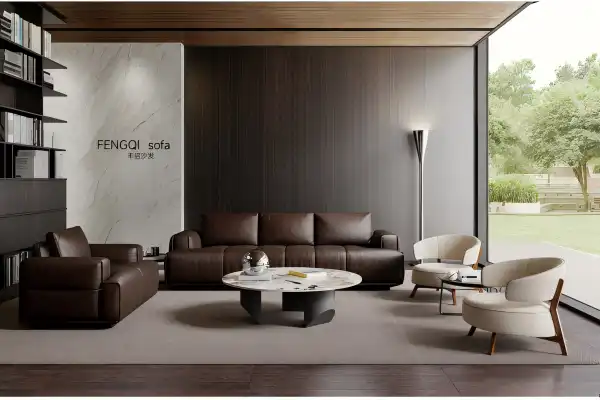
Good Collaborative Breakout Area Sofas provide both comfort and support for your back. High-density cushion filling keeps its shape even after thousands of sitting cycles. This keeps commercial-grade furniture from bowing, which happens with home-grade furniture. Our dark brown leather Collaborative Breakout Area Sofa has 3.6 serpentine springs and high-resilience foam that work together to give consistent support whether someone sits for five minutes to catch up on emails or an hour to read with focus. The wide, rounded armrests give you a place to rest your laptop, turning these Collaborative Breakout Area Sofas into movable workspaces instead of just places to sit.
Modular Design Principles for Spatial Flexibility
Modern Collaborative Breakout Area Sofas are modular, which means that services teams can change the plan without having to buy new furniture sets. The three-section structure comes in 1+1+3 configurations that range from 1150mm to 2250mm and can be set up in corners, along hallways, or as clustered islands in large open spaces. This flexibility is very important during office reorganizations or departmental growth, as it protects furniture investments while meeting new space needs. The low-profile base makes the room look bigger while keeping these big pieces from blocking off smaller outdoor spaces.
Comparing Collaborative Breakout Area Sofas with Alternative Seating Solutions
Purchasing teams often compare Collaborative Breakout Area Sofas to other seating choices. Each has its own pros and cons when it comes to cost, usefulness, and how well it uses space.
Breakout Sofas Versus Individual Lounge Chairs
Individual lounge chairs give you more options for where to put them, but they don't naturally encourage people to work together like Collaborative Breakout Area Sofas with more than one seat do. Chairs often set up personal boundaries, which makes it harder for people in the group to talk to each other. On the other hand, Collaborative Breakout Area Sofas make shared spaces where coworkers easily meet. A three-seat Collaborative Breakout Area Sofa is usually 30–40% less expensive than three separate lounge chairs and takes up the same amount of floor space. This makes Collaborative Breakout Area Sofas better for high-capacity breakout areas. Maintenance is also easier because there are fewer parts to keep track of and service.
Fixed-Frame Versus Modular Configurations
Fixed-frame Collaborative Breakout Area Sofas are strong and usually don't cost as much up front, so they can be put in permanent places like lobbies or executive lounges. Modular systems cost a lot, but they give you the most freedom to change how they're set up. Modular investments are good for businesses that expect to change their structure a lot, like agile workplaces or co-working spaces. Our Collaborative Breakout Area Sofa design is a good compromise because it has divided construction that keeps the structure strong and lets you set it up in either an L-shape or a straight line without using complicated building mechanisms.
Material Selection Impact: Leather Versus Fabric Upholstery
When it comes to commercial-grade durability, leather upholstery, especially the dark brown leather we chose for our Collaborative Breakout Area Sofa, is hard to beat in areas with a lot of foot traffic. Leather naturally doesn't get stained or spilled on, which is important in break rooms where employees bring snacks and drinks. The material ages well, getting more interesting over time instead of looking worn. Fabric choices may look nicer and cost less at first, but they usually need more care and repair every three to five years instead of the eight to ten years that quality leather lasts. Both types of leather and fabrics made from recycled materials now meet strict environmental standards because they are better for the environment.
How to Choose the Right Collaborative Breakout Area Sofa for Your Corporate Workspace
To choose the right Collaborative Breakout Area Sofas, you have to weigh a number of purchasing factors that have an immediate effect on your long-term happiness and return on investment.
Assessing Space Constraints and Traffic Patterns
Start by making a map of your breakout zone's size and the flow lines around it. Collaborative Breakout Area Sofas shouldn't take up more than 60% of the floor space in the breakout area. This way, people can move around and there's still room for extra furniture like side tables. Because low-profile designs have a calm, beautiful shape, they don't block your view, which is important for both supervision and psychological openness. Analysis of traffic patterns can help you decide whether linear arrangements along walls or central island setups work better for your space. High-traffic paths work better with wall placement, while larger open areas work better with central placing that makes natural meeting places.
Durability Standards for Commercial Environments
Collaborative Breakout Area Sofas are different from private furniture sold in businesses because they are made with commercial-grade materials. Look for frames made from kiln-dried hardwood. For example, our imported larch and eucalyptus mixed squared timber frame doesn't bend or crack when it's loaded and unloaded over and over again. AAA-grade layered plywood pieces keep the sides of the frame from bowing. For leather upholstery, the Martindale rub cycle should be more than 50,000, and for heavy-duty fabrics, it should be more than 100,000. Our Collaborative Breakout Area Sofa has an SGS CEC certification and a five-year shelf life guaranty, which show that it was made to a standard that meets the needs of institutional buyers.
Customization Capabilities and Branding Integration
Customization options that support corporate identity are helpful for large-scale purchases. In addition to standard sizes, you might want to think about different materials, accent stitching in colors that match brand themes, or built-in power units for charging devices. E1 or E0 formaldehyde pollution standards should be checked by organizations that have to follow strict environmental rules. This is especially important for healthcare centers and schools. Our engineering support includes 2D and 3D technical drawings that help procurement teams see how customizations will look before they place bulk orders. This cuts down on the time it takes for samples to be made and then changed, which slows down project timelines.
Budget Considerations and Total Cost of Ownership
Upfront pricing is only one part of the economics of furniture. Figure out the total cost of ownership by taking into account the expected service life, the warranty coverage, the availability of replacement parts, and the maintenance needs. When fixes need to be done, downtime costs are cut down with high-quality Collaborative Breakout Area Sofas that come with strong warranties and are in stock, like the ones we have in our Foshan warehouse. Bulk purchasing savings usually kick in at 20 units or more, so combining orders from various offices is cheaper than buying things one at a time. The metal legs make replacement easier if they get broken, so you don't have to throw away the whole Collaborative Breakout Area Sofa like you do with built-in wood bases.
Practical Maintenance Tips and Long-Term Care for Collaborative Breakout Area Sofas
Maintaining Collaborative Breakout Area Sofas properly can make them last longer and keep it looking professional, which is important in business settings.
Leather Upholstery Cleaning Protocols
Dark brown leather needs to be dusted once a week with microfiber cloths to keep dust from building up in the seams and creases. Conditioning leather once a month with pH-neutral treatments keeps it soft and stops it from cracking. This is especially important in climate-controlled offices where low humidity speeds up the drying process. Spills need to be cleaned up right away. To keep liquids from spreading, blot them instead of wiping them down, and then use leather-specific cleaners. Do not use cleaners with ammonia because they remove protected finishes. The high-density foam under Collaborative Breakout Area Sofa furniture doesn't let water in, but getting wet over and over again can damage the seams, so you need to act quickly.
Structural Inspection and Preventive Adjustments
Plan to check the frame joints, spring attachments, and leg support every three months. The serpentine spring system that is held together with netting and stitching should keep the tension the same across all parts. If it sags, it means that the fasteners have become loose and need to be re-tensioned by a professional. Black metal legs should have their fixing bolts checked to make sure they are tight. This is a typical place where pieces that are used a lot can come loose. Preventive maintenance saves more money than repairs that are done after the fact, which can cause more downtime during busy project phases.
Environmental Optimization for Longevity
Collaborative Breakout Area Sofas should not be placed in full sunlight, as this damages leather and foam over time. Keep the humidity in your office between 40 and 55% to keep leather from cracking and to stop mold from growing in foam layers. Changes in temperature put stress on frame joints, so keeping the HVAC system in good shape is important for both people's comfort and the longevity of the furniture. These environmental factors rarely show in procurement specs but significantly impact whether Collaborative Breakout Area Sofas reach their designed service life or require premature replacement.
Trusted Collaborative Breakout Area Sofa Suppliers and Procurement Best Practices
Choosing trustworthy manufacturing partners is just as important to the success of a project as the Collaborative Breakout Area Sofa specs themselves.
Evaluating Supplier Capabilities
Professionals in B2B procurement should evaluate suppliers in more ways than just looking at their product catalogs. Manufacturing integration separates suppliers who only source from those who control the quality of production. For example, Foshan Pengpai Furniture has production facilities that are more than 200,000 square meters in size, which makes sure that tests and large orders are all the same. Certification portfolios that include SGS standards proof show that a company is committed to meeting world quality standards. International buyers need suppliers who have experience with exporting. Suppliers who know about knock-down structures, optimized packaging, and customs documentation can make the logistics easier for first-time importers.
Communication and Project Management Excellence
Buying a lot of furniture requires a lot of planning, from making sure the specs are clear to helping with the fitting. Misunderstandings that lead to costly mistakes or delivery delays can be avoided by having dedicated project managers who communicate clearly and quickly. With the 2D and 3D drawing skills of our engineering team, customers can see how their changes will look before they are made. This helps us find problems where furniture dimensions and building restrictions don't match up. This investment in communication up front cuts down on change orders and speeds up project timelines. This is especially helpful when working with building plans for new office builds.
After-Sales Support as Partnership Foundation
A furniture supplier and a corporate client have a relationship that lasts for years after the first delivery. Transactional vendors and strategic partners are different in how they handle warranties, how easy it is to get replacement parts, and how they help with installation. When a business grows to multiple locations, it helps if its providers keep their product lines constant. Replacement parts bought three years after the original purchase should fit perfectly. We put a lot of emphasis on long-term support because we know that procurement managers can lose their jobs if furniture breaks down during operations. Because of this, we make reliability a must when choosing a supplier.
Conclusion
Instead of being an afterthought, seating in breakout areas is a strategic investment in the culture of the organization and the efficient use of space. We looked at a dark brown leather Collaborative Breakout Area Sofa that shows how well high-resilience foam, strong larch and eucalyptus frames, and modular setup freedom can be used to solve real procurement problems related to durability, adaptability, and commercial-grade performance. A good design weighs up the initial costs against the total costs of ownership, gives preference to suppliers who offer combined manufacturing control, and acknowledges that office furniture has a direct effect on how happy and productive employees are. The trend toward flexible workspaces doesn't seem to be going away, which means that Collaborative Breakout Area Sofas are not only useful, but also necessary for organizations that want to stay ahead of the curve.
FAQ
What dimensions work best for typical corporate breakout spaces?
Collaborative Breakout Area Sofa sizes should match the amount of space on the floor and the number of people who will be using it. Three-seat setups (2250mm length) can fit easily in zones between 80 and 120 square feet. Single- or two-seat modules can fit in smaller alcoves under 60 square feet. Leave at least 900 mm of space around Collaborative Breakout Area Sofas so people can move around. Our modular sizes—1150mm, 1690mm, and 2250mm—are good for most business needs without needing to be fully customized.
How does leather compare to fabric for maintenance and sustainability?
Quality leather needs to be deep cleaned less often than fabric, and it resists stains better in places where food and drinks are likely to spill. Vegetable-tanned leathers today are just as good for the earth as fabrics made from recycled materials. Leather lasts longer than industrial cloth (often 8–12 years vs. 5–7 years), so it doesn't need to be replaced as often. This lowers its environmental impact, even though it uses more resources at the start of production.
What warranty coverage should commercial buyers expect?
When used normally, commercial-grade Collaborative Breakout Area Sofas usually come with frame warranties that last 5–10 years and upholstery warranties that last 3–5 years. Our five-year shelf life guaranty shows that we trust the structure to last. Check the warranty terms to see if the furniture can be used for commercial or residential purposes. Some manufacturers won't cover the furniture if it ends up in a high-traffic office, even if the marketing materials say it can be used for residential purposes.
Partner with PENGPAI for Your Next Workspace Transformation
Corporate leaders looking for a reliable supplier of Collaborative Breakout Area Sofas will find that PENGPAI's integrated approach covers the whole procurement process. Our factories in Foshan keep a ready supply of the dark brown leather Collaborative Breakout Area Sofa described in this piece. This means that there are no long lead times that slow down the finishing of projects. As both a manufacturer and a trade partner, we have full control over quality, from choosing the materials to the final inspection. This makes sure that big projects get the consistency they need. Our engineering team can change the size, material, or shape of an item to fit your space and brand needs. They can also show you what the final product will look like in 2D or 3D before it's made. Our project management help makes sure that delivery times don't clash with your building plans, whether we're setting up a single executive lounge or a corporate campus with multiple floors. Get in touch with our staff at kiki@pengpaifurniture.com to talk about how our Collaborative Breakout Area Sofas can turn empty rooms into productive work areas. We're excited to help you realize your vision for your workspace by giving you furniture that will last.
References
1. Knoll Workplace Research. The Impact of Informal Collaboration Spaces on Innovation Outcomes. Corporate Real Estate Journal, 2021.
2. Herman Miller Design Standards. Specifying Commercial-Grade Seating: Material Durability and Testing Protocols. Contract Furnishings Review, 2020.
3. International Facility Management Association. Total Cost of Ownership Models for Corporate Furniture Procurement. IFMA Foundation White Paper, 2019.
4. Steelcase WorkSpace Futures. Modular Furniture Systems: Flexibility and Long-Term Value in Agile Environments. Journal of Corporate Real Estate, 2022.
5. British Standards Institution. BS 5852 Fire Resistance Testing for Commercial Upholstery Applications. BSI Standards Publication, 2018.
6. Environmental Building News. Life Cycle Assessment of Leather Versus Synthetic Upholstery in Commercial Interiors. BuildingGreen Reports, 2020.
Online Message