
Aug 13, 2026
Classic Office Chair Designs Combine Comfort with Professional Style
When evaluating workspace seating solutions, a Classic Office Chair stands out by merging ergonomic functionality with timeless professional aesthetics. These chairs are engineered to support extended work sessions while maintaining a refined appearance that complements corporate, institutional, and commercial environments. Unlike trendy models that quickly become outdated, traditional office seating designs prioritize durability and visual consistency, making them strategic investments for procurement managers overseeing large-scale projects. The balance between comfort and style ensures these chairs meet the physical demands of daily use while projecting the professionalism essential to modern workspaces.
Understanding Classic Office Chairs: Design, History, and Materials
What Defines a Classic Office Chair?
The Classic Office Chair style is more than just a matter of taste. Focusing on structural integrity and functional adaptability, these chairs are based on design principles that have been improved over decades of workplace change. Frames that are strengthened, materials that breathe, and parts that can be adjusted to fit different user needs without losing visual harmony are some of the things that make them unique. When buying for a business, these Classic Office Chairs are a reliable choice for places like government buildings and company offices where durability and consistency are more important than passing design trends.
Historical Evolution and Ergonomic Integration
Since the middle of the 20th century, when designers started using ergonomic research in furniture engineering, Classic Office Chairs have changed a lot. Early models were mostly about how they looked, but as people became more aware of how to keep their workplaces healthy, new features like back support, seat depth change, and dynamic movement became available. Modern takes on classic styles now include medical-grade comfort features while keeping the straight lines and businesslike looks that made the category famous in the first place. As a whole, the business is moving toward finding a balance between maintaining a consistent look and using scientific knowledge to better understand how the human body works.
Material Selection and Sustainability Considerations
Material choices have a direct effect on both how well something works and how environmentally friendly it is. High-density breathable mesh is better at controlling temperature than solid foam, so you don't get too hot when you sit for long periods of time. Nylon and fiberglass Classic Office Chair bodies are strong and light, but they aren't as bad for the earth as metal ones. Premium models have high-resilience seat pillows made of pure cotton. These cushions keep their shape over years of use, unlike lower-grade foam that often breaks down too soon. As the need for healthier living settings grows, many makers now put E0 and E1 formaldehyde emission standards at the top of their list of priorities. Metal parts, like electroplated gas lifts, are certified by SGS and BIFMA 5.1 USA. This makes sure that safety standards are met in all foreign markets. These new materials show how traditional designs can be updated to meet today's demands for sustainability without losing their main functions.
Key Ergonomic Features and Styles of Office Seating
Essential Ergonomic Components
Modern versions of traditional Classic Office Chairs have important support features that keep your muscles and joints from straining. Lumbar support systems with adjustable tension let users tailor the support for their lower backs to their own unique spinal curves. Height-adjustable gas lifts make it possible to properly align your desk, which keeps your shoulders and neck from getting tense from sitting at a fixed height. Tilt systems with synchronized tilt ratios keep your posture straight while you move by spreading your weight across the seat pan instead of putting all of your weight on a few points. T-shaped armrests support your elbows securely without limiting your ability to move laterally. This makes them useful for a wide range of work tasks, from typing to reviewing documents.
When you look at these features next to completely new designs, you can see some big differences. Modern chairs tend to focus on large adjusting ranges, but Classic Office Chairs are more concerned with how well they apply basic ergonomic principles. This method cuts down on the complexity of the mechanics while keeping the features that most users need for their daily work. The result is furniture that is both more comfortable and easier to maintain, which is helpful for facilities managers who are in charge of large equipment inventories.
Popular Style Variations and Material Comparisons
There are a lot of different styles of traditional Classic Office Chairs. Mid-century modern designs have smooth shapes and simple fixings that make them appealing to creative workspaces that want a warm look. Executive vintage models have bigger bodies and taller backs, which are signs of authority in leadership settings. Swivel bases with silent PU casters make it easy to move around on both hard floors and carpets. Stationary four-leg frames keep things stable in conference rooms where they don't need to be moved around often.
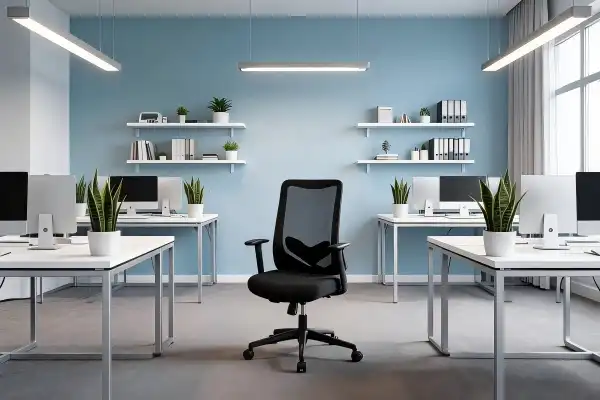
Choosing between mesh and leather as a material comes with different efficiency trade-offs. Because they are made of open-weave fabric, mesh backrests are great for places that are hot or have a lot of people because they keep the air moving. When it comes to places where spills or stains are a problem, fabric and leather upholstery offer firmer structural support and easier surface maintenance. The all-black mesh design with padded seating is a good balance because it lets air flow where heat builds up along the spine and provides cushioned support where weight is being carried. This setup works well for general office uses where budget limits mean that user comfort and realistic upkeep needs must coexist.
How to Choose the Best Office Chair for Your B2B Needs
Demand-Matching Framework for Procurement Decisions
To choose the right seats, you need to look at the operational context in a planned way, not just look at a list of features. Base diameter and caster type are affected by the size and layout of the office. For example, compact five-star bases are easy to move around in workstation clusters, while wider bases make the furniture more stable in open-plan areas. Adjustment ranges depend on the job of the employee. For example, administrative staff can use standard height and tilt mechanisms, but design professionals who need to change their posture often need multi-position locking options. When making a budget, it's important to think about the total cost of ownership, which includes how often things need to be replaced and how much it costs to keep them in good shape.
When buying managers look at chair specs, these are the most important things they should think about:
Adjustability Assessment: Make sure that the height adjustment ranges can fit the different body types of your employees. For the sake of comfort, gas lifts should have seat heights that range from 17 to 21 inches. Check to see if tilt mechanisms have tension adjustments that let lighter users relax without too much effort and keep heavy users from bottoming out the mechanism.
Base Construction and Mobility: The patented plastic bases with strengthened radial ribs evenly spread weight so that the total weight of the chair is easy to handle. Shock-absorbing silent casters keep floors from getting damaged and lower background noise in working areas. Dual-wheel casters roll more smoothly than single-wheel ones, so moving chairs around the office during the day takes less physical effort.
Ergonomic Certification and Ratings: Look for chairs that have been tested according to BIFMA 5.1 guidelines, which check how durable the structure is under real-life conditions of use. SGS approval makes sure that gas tanks meet safety standards for not exploding, which is an important requirement when buying equipment for operations that run on multiple shifts and where failures could stop work in progress.
These things make sure that the seating chosen fits the needs of the actual workplace and not just hypothetical needs that might never come up in real life.
Cost-Efficiency and Warranty Evaluation
Long-term value calculations include more than just unit prices. They also take into account expected lifespans and service coverage. When it comes to value for money, a Classic Office Chair with a five-year guarantee and full coverage is better than cheaper options that need to be replaced every two years. When you buy in bulk from a manufacturer, you can save money and make sure that the quality of all of your installations is the same. This is a huge help when you're trying to standardize equipment across multiple locations. When you have direct relationships with suppliers, you can make changes to specifications without having to pay extra for markups, which is common in multi-tier distribution channels. This helps you stick to quality standards and project budgets.
Maintenance and Care Tips for Longevity
Material-Specific Cleaning Procedures
Following the right maintenance steps will keep the equipment looking good and working well for as long as it's used. Every week, you need to use an upholstery attachment to hoover your mesh backrest to get rid of the dust that builds up and clogs the open-weave construction, making it less breathable over time. Spot-cleaning padded seat pillows once a month with mild detergent solutions and microfiber cloths is recommended. Do not soak the foam cores, as this will cause them to hold water and smell bad. Standard industrial cleaners can be used on plastic parts, but alcohol-based products may damage surface finishes after a while of use. Instead of making up random cleaning plans, base cleaning times on how often the area is actually used. Focus your cleaning efforts on areas that get a lot of use because that's where dirt builds up the fastest.
Routine Mechanical Upkeep
By checking the gear on a regular basis, small problems can be stopped before they become major ones. Every three months, check to see if the fasteners are still tight. Everyday use causes the connection points between the seat pans and mechanisms to gradually become less tight. Apply silicone-based oils to tilt pivot points once a year to keep them running smoothly. These don't attract dust like petroleum products do. Check the caster wheels for buildup of dirt that makes them hard to turn. Hair and cloth fibers can wrap around axles, making them harder to roll and speeding up bearing wear. These simple steps greatly increase the useful lives of Classic Office Chairs, which lowers the cost of replacement before its time and keeps users happy with how well the things work.
Common Maintenance Pitfalls to Avoid
Bleach or ammonia-based harsh chemical cleaners should not be used on upholstery surfaces because they break down foam bonding glue and cause materials to separate too soon. Don't push adjustment mechanisms past the range of motion they were meant to handle. Too much torque can damage internal parts that were intended to move smoothly within certain limits. Do not use Classic Office Chairs as stepladders or to help you position yourself for jobs that are above your head. This puts lateral loads on frames that they were not built to handle. By teaching people how to use tools correctly, you can cut down on damage caused by abuse that voids warranties and raises lifecycle costs.
Trusted Brands, Suppliers, and Procurement Channels
Manufacturer Selection Criteria
To find reliable suppliers, you have to look at more than just what the marketing says about their output skills. When a company's design and engineering departments work together, they can customize specifications without outsourcing, which can leave gaps in quality control. More than 200,000 square meters of factory floor space means that production can be scaled up to meet the needs of a multi-phase project without any delivery delays. Established dealer networks with more than 2,000 locations suggest that the Classic Office Chair is reliable, which helps keep business relationships going for a long time. In competitive markets, unstable quality quickly destroys distribution partnerships.
Certification files provide objective proof of quality. SGS testing proves that important safety parts meet international standards, which lowers the risk of liability in situations where institutions buy things. CEC approval shows that you follow environmental rules, which are being required more and more by government and business sustainability policies. These badges tell the difference between companies that have quality systems that can be checked and those that make performance claims that can't be backed up.
Procurement Strategy Development
Buying in bulk from a direct maker cuts out middlemen and makes sure that all big orders are the same in terms of specifications. Well-known sellers can help with technical drawings and make prototypes, which lets you make changes that fit your workspace without having to wait for engineering to finish. For foreign projects, export knowledge is very important. Suppliers who know about knock-down packaging and container optimization can save money on shipping costs and make it easier to put things together at the target sites. As part of the warranty, spare parts must be available for as long as the equipment is supposed to last. This is to make sure that minor component failures don't make whole Classic Office Chairs useless because parts have been taken off the market.
Rather than transactional sales relationships, procurement managers should give more weight to suppliers who offer dedicated project management. Coordinated communication during design development, production schedule, and transportation execution cuts down on mistakes that cause projects to take longer than planned and cost more than planned. After the sale, responsive support helps with installation and quickly fixes problems in the field, keeping the workplace productive during the equipment rollout phases.
Conclusion
When choosing the right Classic Office Chairs, you have to find a balance between how well they work ergonomically, how they look, and how long they will last while staying within the project's budget. Instead of the uncertainty that comes with new ideas that haven't been tested, traditional designs offer performance traits that have been fine-tuned over decades of use in the workplace. Modern improvements in breathable mesh construction, certified safety components, and reinforced structural engineering have brought these designs up to date without taking away from the professional look that these designs are known for. To be successful at procurement, you need to look at total lifecycle costs instead of just the initial buy price and work with makers who have quality systems and project management skills that can be checked. The comfort of the workplace and the dependability of tools will depend on the strategic buying decisions made today for years to come.
FAQ
Are traditional office chairs suitable for modern corporate environments?
Traditional designs are still very useful in modern workplaces because they focus on basic ergonomics and look good for a long time. These Classic Office Chairs can be adjusted to fit different body types and provide the support needed for long computer sessions. They also look professional and go with a wide range of interior design styles. Because they are known to last a long time, they are perfect for places where replacing furniture would cause problems or put a strain on capital funds.
What customization options exist for ergonomic needs?
Specification changes can be made by reputable makers. These changes can include changing the armrest layout, the lumbar prominence, and the seat depth. Different types of materials can be used depending on the climate. For example, mesh construction works best in humid places, while upholstered Classic Office Chair options work better in cooler places. Customizing colors lets you stay true to your brand, and you can choose colors other than black that match your company's colors and help you stand out in the workplace.
What lifespan should procurement managers expect?
Classic Office Chairs that meet BIFMA standards for durability and are well taken care of should last between 10 and 15 years in normal office settings. Because they are used continuously during multiple shifts, places with a lot of foot traffic, like call centers, may cut this to 7–10 years. A guarantee that lasts for five years shows that the maker is confident in the structure's strength and provides replacement security during the time when manufacturing flaws usually show up.
Partner with PENGPAI for Superior Office Seating Solutions
PENGPAI brings almost 20 years of experience making furniture to every project. They combine professional international trading services with factory-direct production control. Our wide range of services includes custom size adjustments, choosing the right materials, and making sure that the Classic Office Chair functions work as best possible. We also have in-house engineering teams that provide technical drawings and test prototypes. We have 200,000 square meters of production space in Foshan, which is Asia's most important furniture manufacturing hub. This gives us the stable capacity and quality systems needed for large-scale institutional procurement. Dedicated project managers oversee every step, from analyzing requirements to delivering the product around the world, making sure that the plan stays on track and that the specifications are followed exactly. Get in touch with us at kiki@pengpaifurniture.com to talk about your workspace needs and find out how our manufacturer-direct approach makes partnerships with Classic Office Chair suppliers more valuable.
References
1. Cranz, Galen. The Chair: Rethinking Culture, Body, and Design. W.W. Norton & Company, 2000.
2. Hedge, Alan. "Ergonomic Workplace Design for Health, Wellness, and Productivity." Cornell University Department of Design and Environmental Analysis, 2016.
3. Lueder, Rani and Karl H.E. Kroemer. Sitting at Work: Ergonomics in Theory and Practice. Taylor & Francis, 2021.
4. Pheasant, Stephen and Christine M. Haslegrave. Bodyspace: Anthropometry, Ergonomics and the Design of Work. CRC Press, 2018.
5. Steelcase Research Group. "The Science of Sitting: Biomechanics and Office Chair Design." Steelcase Applied Research + Consulting White Paper, 2019.
6. Watkins, Rosemary. "Material Innovation in Contract Furniture: Sustainability and Performance Standards." Journal of Interior Design, Volume 44, Issue 3, 2019.
Online Message