
Oct 8, 2026
Are Commercial Office Chairs Suitable for Multi-Location Office Furniture Projects?
Yes — commercial office chairs are well-suited for multi-location office furniture projects. Unlike residential seating, a commercial office chair is engineered for 8 to 12 hours of daily use, built with reinforced structures, multi-point ergonomic adjustability, and materials tested for long-term wear. For procurement managers coordinating furniture across several sites, this category of seating offers the consistency, durability, and customization range needed to standardize the workplace experience without compromising budget control or delivery reliability.
Understanding Commercial Office Chairs in Multi-Location Contexts
What Sets Commercial Seating Apart?
There is a big difference between a business office chair and living room furniture. It needs to pass safety and building tests like those done by SGS or BIFMA, and a lot of different people need to be able to use it every day. Strong bases, high-density foam, and fabric that won't wear out quickly make these chairs great. In places with a lot of foot traffic, they will last years, not months.
Ergonomic Features That Matter at Scale
There are no extras that come with business seats; they all come with adjustable back support, backrest height, armrest placement, and reclined tension. These traits make it less likely that musculoskeletal disorders will happen when chairs are used in different places by different types of workers. The Bureau of Labor Statistics says that 31% of all work-related injuries in the US each year are caused by problems with the muscles, bones, or joints.
Material Options Across Locations
Mesh that lets air flow is best for places that are hot or busy. On the other hand, high-end leather, like Nappa-pattern microfiber, is best for executive floors or rooms where clients will be staying. Instead of using a "one-size-fits-all" method, choosing the right upholstery for each type of space makes the whole job easier in terms of both comfort and care.
Evaluating Suitability for Multi-Location Office Furniture Procurement
Consistent Quality Across Bulk Orders
An important thing to keep in mind when buying in bulk is the difference between tests and production runs. It can be a problem if a sample chair looks and feels great but the real chairs look and feel different. This can cause problems in the future, like angry workers and expensive replacements. When you work with makers who check the quality of their work at every step of the way before shipping, this risk is much lower.
Standardized Design With Flexible Application
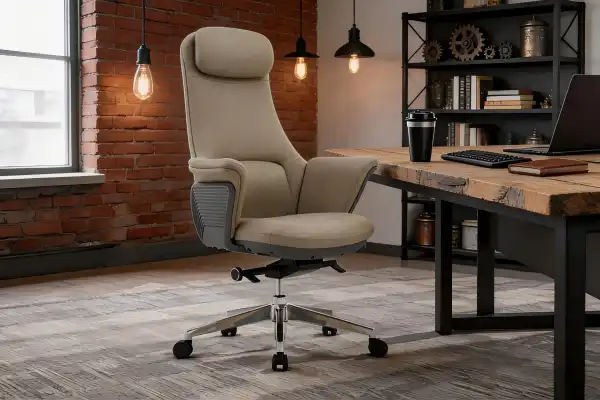
For projects that need to be done in more than one place, it's helpful to have a standard Commercial Office Chair product base that can be changed for each site. One type of core executive chair that can be chosen on all floors is one that is light gray or light orange. It is possible to change the back support's stiffness, the width of the seat, and the height of the arms. This way keeps the brand's look consistent while letting the area be used for different things.
Scalable Procurement Logistics
For multiple-site procurement, providers must be able to ship buildings that are already put together but in protective packing. This saves money on freight and makes it easy to put together on-site. Shipping chairs in small boxes saves money on logistics costs per unit. When you buy a lot of units to send to different places, this saves you money.
Three things separate a good business seating provider from one that makes it hard to finish your job on time: uniform quality, standard designs, and smooth processes.
How to Choose the Right Commercial Office Chair for Multi-Location Projects?
Matching Chair Specifications to User Roles
When you work in more than one place, not all of them need the same things. An executive office chair with a high back, a separate seat, and built-in lumbar support works well for office floors for people in charge. For open-plan rooms, task chairs that are lighter and have changes that are easier to use work better. If you link chair specs to real user jobs, you can keep some floors from having too many specs and others from not having enough support.
Evaluating Structure and Load Capacity
If you want to buy a chair, you should always look at the data from the technical tests. A well-made executive chair should have a five-star base made of aluminum metal that can handle standing pressure of more than 1,100 kg, a gas lift that has been tested 100,000 times, and wheels that are meant to last the same amount of time. Different types of furniture break down at different times. Five-year furniture breaks down in five years. This is not marketing speak for these numbers.
Assessing Supplier Customization Capability
When working on projects in more than one place, it's just as important for suppliers to be flexible as it is for products to be good. Your project plan will depend on how quickly you can add branding elements, change sizes, or change the fabric finish or seat arrangement without having to wait for a major remake. Procurement managers should ask for samples early on and make sure that mass production can properly copy those examples before choosing to buy in bulk.
Managing Procurement, Logistics, and Maintenance for Multi-Location Orders
Negotiating Volume Pricing and Lead Times
You can really get better deals when you buy a Commercial Office Chair in bulk, but only if the seller can back up their claims with stable production. Make sure that your maker can keep wait times the same even if they have to make more things. More often than not, sellers who own their own factory and oversee production will be on time for deliveries. This is not the case when they hire someone else to put the parts together.
Coordinating Delivery Across Multiple Sites
Shipping coordination needs more than one freight booking for projects that take place in more than one place. Where you are may have different receiving windows, floor entry needs, and times for putting things together. When knock-down chair frames are delivered in protective packaging with labels by location, it takes less time to put them together and there is less chance of getting the wrong item. A good way to get organized is to work with a service provider who knows how to handle foreign business.
Maintaining Chairs Across Locations
For the chair to work well in the long run, it needs to be cared for regularly. It's best to clean microfiber leather with a soft, damp cloth instead of strong chemicals. Wheels and gas lifts should be checked every so often to make sure they work well. This installation will last longer if you teach the building managers at each place basic maintenance steps. This will protect both the initial investment and the comfort of workers over time.
Future Trends and Strategic Recommendations for Multi-Location Projects
Ergonomics as a Procurement Standard, Not a Premium
In the U.S., ergonomic versatility is no longer a selling point but a must-have for office chairs. People are becoming more aware of how much it costs to have health problems at work, and OSHA's ergonomics rules are being followed. This means that facility managers have to check chair specifications with the same care they use to check the safety of buildings.
Sustainable Material Selection
More and more, environmental compliance is being used to judge sellers by buying teams. Companies must include in their sustainable reports that chairs meet E0 or E1 formaldehyde emission standards, are made to last a long time, and use synthetic leather that doesn't wear down easily instead of natural materials that use a lot of resources.
Building Long-Term Supplier Relationships
For programs that will grow over time in more than one place, it's best to treat the person who sells you chairs like a long-term partner instead of a one-time offer. When you have a good relationship with your suppliers, you can get production orders faster, get new models as your needs change, and get help quickly when something goes wrong. People who work in procurement build ties with providers. In the long run, this leads to better customer service and fewer project delays.
Conclusion
Commercial office chairs are not just suitable for multi-location projects — they are the right choice when quality consistency, ergonomic support, and procurement scalability are priorities. By selecting chairs built to commercial standards, matching specifications to user roles, and partnering with manufacturers who support the full project lifecycle, procurement teams can deliver a consistent, durable workplace experience across every site. The investment in properly specified seating pays back in lower replacement rates, reduced health-related absenteeism, and smoother project execution.
FAQ
What is the difference between a commercial and a home office chair?
That a business office chair is safe and can be used for 8 to 12 hours a day is something that it has to show. It can be certified by BIFMA or SGS. Most chairs people have at home aren't used very often, and they aren't all made to the same mechanical or material standards.
Can commercial office chairs be customized for different locations within the same project?
Yes. Well-known manufacturers let you change the item's size, color, material, and how it works. This means that a line of goods can be changed to fit any place without having to start from scratch.
How important is warranty consistency across multiple sites?
Very important. A guaranty policy that is the same everyplace makes it easier to handle things after the sale. There are the same steps for repair processes, service requests, and new parts, no matter which spot is having trouble.
What certifications should I look for when sourcing office chairs?
Structure certificates from SGS, BIFMA, or a related group should be easy to find. For something to be environmentally friendly, it needs to meet formaldehyde emission rules of E0 or E1. This is especially true for projects in healthcare or the government, which are controlled areas.
How do knock-down structures benefit multi-location procurement?
Chair structures that are easy to take apart and put together at each place mean that less stuff needs to be moved. Also, they are less likely to get broken while being shipped than units that are already built.
Partner With PENGPAI for Your Next Multi-Location Seating Project
Commercial Office Chairs have been sold by PENGPAI to businesses, the government, and hotels since 2008. They do this in Foshan, China, in a plant and store that are 200,000 square meters big. Our Commercial Office Chair manufacturer is SGS-approved and can make anything you want, make a lot of them, and handle the logistics of exporting them. The goods in our Foshan warehouse are guarantyd to stay fresh for 5 years. Please email our project team at kiki@pengpaifurniture.com or visit pengpai-furniture.com to get examples and a quote for your project.
References
1. U.S. Bureau of Labor Statistics — Employer-Reported Workplace Injuries and Illnesses, 2022.
2. BIFMA International — BIFMA X5.1 Office Chairs Standard, 2017.
3. OSHA — Ergonomics: Solutions to Control Hazards, U.S. Department of Labor, 2000.
4. Journal of Occupational and Environmental Medicine — "Workplace Ergonomics and Musculoskeletal Disorder Prevention," 2019.
5. Facilities Management Journal — "Procurement Strategies for Large-Scale Office Furniture Projects," 2021.
6. SGS Group — Consumer and Retail Testing: Furniture Safety and Durability Standards, 2023.
Online Message